


Forged Heritage: The ‘Classic’ Cars Rolling Off China’s Production Lines
POLICY WIRE — Shanghai, China — Look, if you really wanted to stun the seasoned gearheads, the guys who treat antique autos less like vehicles and more like sacred relics, you wouldn’t talk about...

POLICY WIRE — Shanghai, China — Look, if you really wanted to stun the seasoned gearheads, the guys who treat antique autos less like vehicles and more like sacred relics, you wouldn’t talk about electric conversions or skyrocketing auction prices. Nope. You’d drop this bombshell: some of their most cherished classic car body shells – those glistening, meticulously crafted tributes to automotive history – now sprout from the very soil of Communist China.
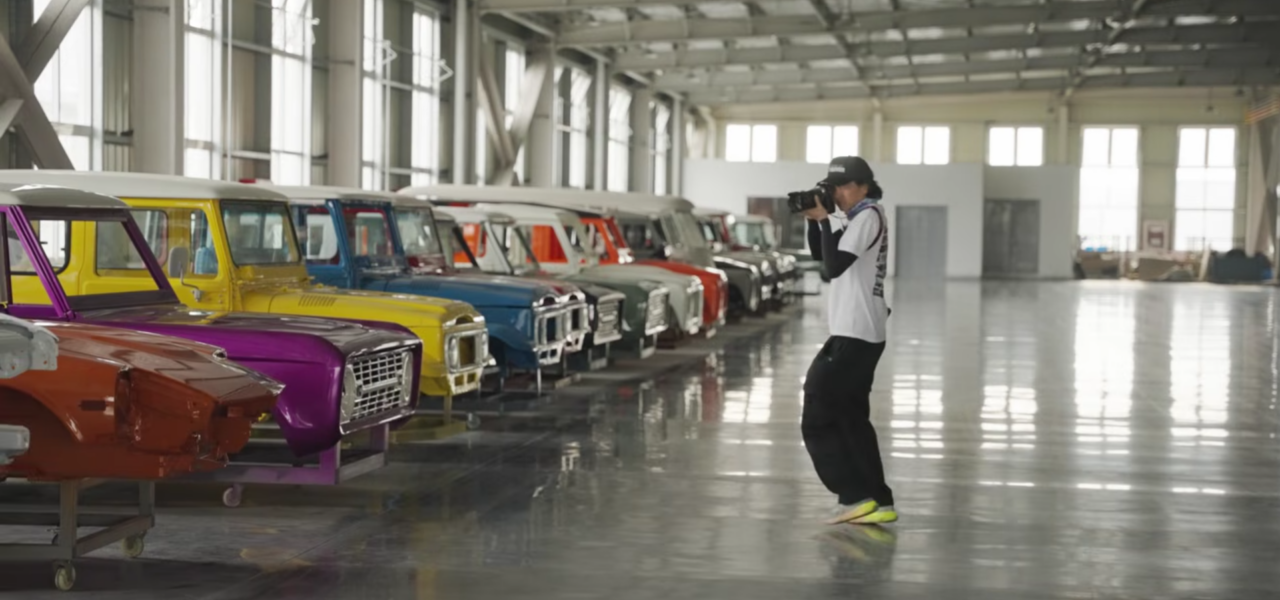
It’s a peculiar irony, isn’t it? The same nation often associated with mass-produced, often derided, imitation goods is now the quiet architect behind the very framework of historical authenticity for Western luxury collectibles. Photographers like Larry Chen—he’s a big deal in the automotive world, let’s be clear—have gone deep, showing us these sprawling Chinese facilities where craftsmen painstakingly replicate sheet metal that hasn’t rolled off an original European assembly line in half a century. And they’re not just building knock-offs; they’re supplying a global market thirsty for unobtainable parts, making old, rusted out carcasses whole again.
But the purists, they’re having a collective fit. “It dilutes the essence,” grumbled Wallace ‘Wally’ Thompson, chairman of the German Historic Vehicle Federation, speaking from his office near Stuttgart (he’s generally a man of few words, but this clearly rankles). “You restore an E-Type Jaguar, you expect components steeped in Coventry’s history, not, you know, Suzhou’s. Where’s the romance in that? It’s like replacing a Baroque ceiling with a 3D-printed replica.” His sentiment isn’t unique; it echoes across enthusiasts’ forums and club meetings from Silverstone to Monterey.
However, from a purely economic standpoint, this shouldn’t be a surprise. China’s manufacturing prowess isn’t some new discovery. It’s an industrialized powerhouse, with vast pools of skilled labor — and efficient production chains. “The market demands these components, — and we can deliver quality and volume,” stated Dr. Jian Li, Deputy Director of the Shanghai Automotive Industry Development Center, during a rare public statement last week. “Our engineers and artisans are as capable as any. This isn’t about mere imitation; it’s about industrial precision meeting specific global needs. We’re supplying the infrastructure for passion, pure and simple.” He made it sound like they were doing everyone a favor, and maybe, just maybe, they’re.
And because, let’s face it, no one else is stepping up in a big way to produce bespoke chassis for a 1960s Aston Martin. This niche market, driven by the truly wealthy (the global classic car market, for instance, was valued at over $31 billion in 2022, according to industry analysts), relies on a sophisticated supply chain that can source rare materials and employ highly specific fabrication techniques. Turns out, China’s got the chops.
This trend has interesting parallels far beyond just the high-end luxury auto world. In places like Pakistan, for instance—a country I’ve reported on extensively—there’s a deep, often under-recognized history of bespoke fabrication and highly skilled mechanics. From intricate truck body modification shops in Peshawar to the local ingenuity that keeps decades-old vehicles running with custom-made parts, the craftsmanship isn’t absent. It’s just often operating on a different scale, perhaps with less institutional support, and definitely without the international marketing of a ‘Made in China’ stamp. But the principles of engineering resourcefulness — and skilled hand-production? They’re practically neighbors. There’s a certain lesson there, a blueprint for other developing nations looking to carve out specialized manufacturing niches rather than just mass-producing trinkets.
But there’s also the bigger picture: what does this mean for economic dependencies? When your very definition of ‘classic’ is increasingly reliant on a single foreign source, things can get dicey. Imagine the outcry if geopolitical tensions—like those simmering around Taiwan or the South China Sea—disrupted the supply of these historically authentic shells. The collectible car market, for all its pomp — and circumstance, is beholden to global logistics. You think vintage car auctions are expensive now? Wait till the raw steel for that Ferrari 250 GTO recreation gets stuck in port because of a tariff spat. It’s not just a niche curiosity; it’s a telling symptom of our deeply interconnected, and increasingly delicate, global economy.
What This Means
This isn’t merely about where a shiny fender gets hammered into shape; it’s a stark reminder of China’s omnipresence in the global manufacturing hierarchy, even in unexpected corners. For Western economies, it exposes a continuing reliance on Chinese industrial capacity for everything from basic commodities to hyper-specialized luxury goods. This dependence poses economic security risks, particularly when these manufacturing processes—be they green energy solutions like those Germany’s investing in Pakistan, or, bizarrely, classic car parts—are centralized.
It forces us to re-evaluate our notions of authenticity in a globalized market. If a classic car part is fabricated to original specifications with modern metallurgy by skilled artisans in China, is it any less ‘authentic’ than one produced in a bygone British factory? This isn’t a simple philosophical question for hobbyists; it affects valuation, provenance, and the very cultural narratives we construct around material objects. Because what’s history, really, if its physical manifestations are subject to today’s supply chains? The shift also suggests other emerging markets could chase similar, specialized manufacturing opportunities if they cultivate highly skilled labor and niche expertise, much like the automotive sub-sectors seen in parts of Pakistan. They’re all trying to get a slice of the global pie. Perhaps they could leverage bespoke skills, avoiding direct competition with large-scale Chinese factories, and instead, target specific gaps, much as these shell factories have done.