
Modi’s India and the Expanding Global Debate on Press Freedom
When Norwegian journalist Helle Lyng asked Indian Prime Minister Narendra Modi why he refuses to take questions from “the world’s freest press,” she exposed more than Modi’s discomfort with scrutiny....
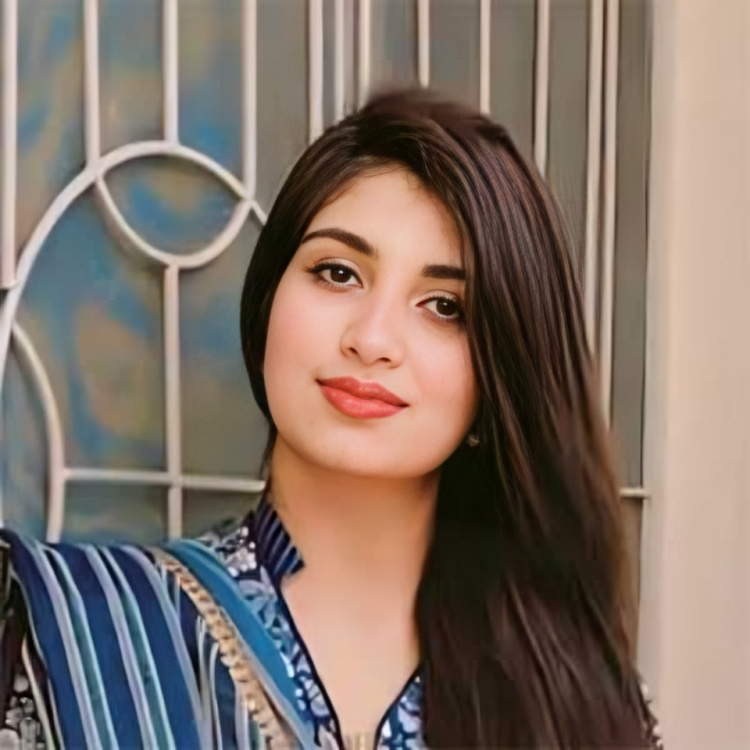
When Norwegian journalist Helle Lyng asked Indian Prime Minister Narendra Modi why he refuses to take questions from “the world’s freest press,” she exposed more than Modi’s discomfort with scrutiny. She pointed out the irony in modern Indian politics, a government that constantly touts itself as the “world’s largest democracy”, and severely curtails any room for dissent and criticism, or independent journalism.
Eve of the Oslo press conference only reinforced those fears. Shortly after the exchange went viral, Lyng’s Instagram and Facebook accounts were suspended, she admitted later. This could be due to a combination of reporting by BJP affiliates on online platforms, pressure by these platforms, decryption efforts by algorithms, or a mix of all three; and will never be definitively established. In Modi’s India, however, these kinds of things don’t seem preordained. They represent a trend that is well established and well documented and appears to be following an upcoming trend.
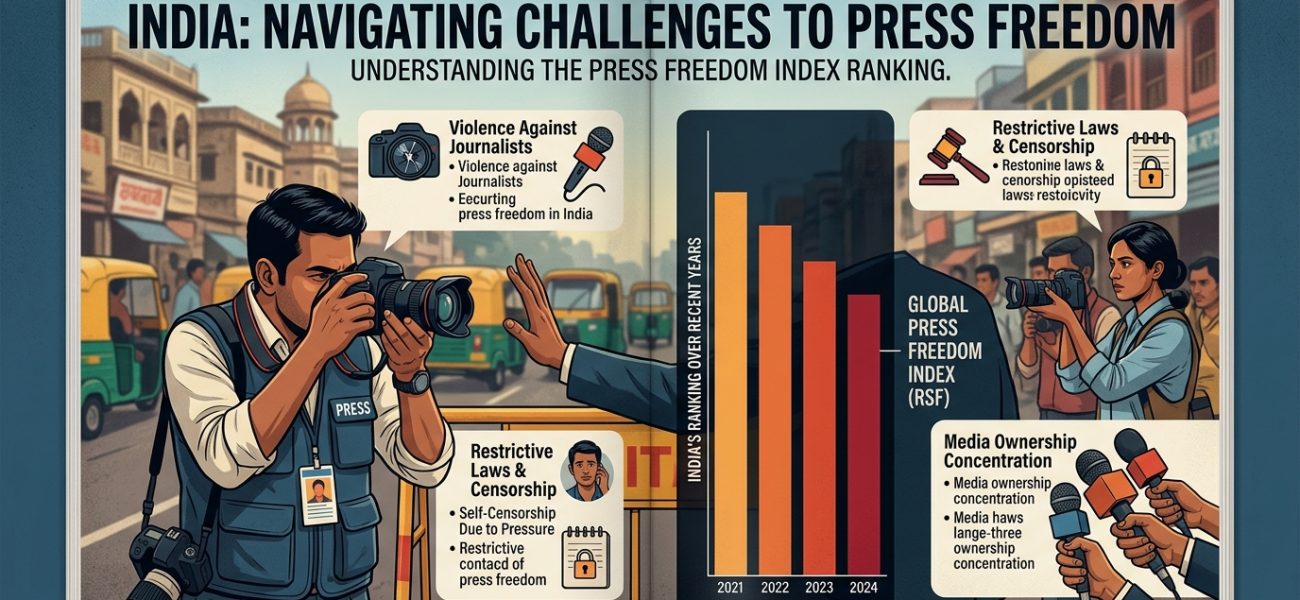
India is one of the fastest emerging countries in terms of press freedom restrictions in the past decade. Reporters without Borders, which publishes the World Press Freedom Index, placed India at 157th position out of 180 countries in 2026, falling from the ranking at 151st in 2025. The watchdog, which assessed the situation as ‘very serious,’ the worst percentile for the media, dubbed India’s media environment.
This is no ranking that is arrived at by India’s rivals or geopolitical wielders. It is the assessment of one of, if not the most, frequently used monitors of press freedom around the world. The results are bad news for a nation which warns the world about democratic values but, at home, is becoming more intolerant of criticism.
RSF directly blamed the Modi government for establishing a climate where independent journalism is stunted. The organization pointed out that Modi has not held an open press conference since day 1 and has provided access primarily to positive interviewers and presided over a media landscape that is becoming more and more politically loyal.
That seems an accurate assessment. Modi has been in office since 2014 and has generally shied away from impromptu press meet, press interviews and discussions in which he might slip up. In established democracies, leaders are subjected to the usual scrutiny at the hands of die-hard oppositional forces, but not always in this manner.In other democracies, leaders are examined with rigid attacks from hardened opponents occasionally, not everything here. Journalists are being targeted for asking hard questions in order to make themselves into enemies of the state.
When India claims that she has democratic freedoms and then condemns countries like China who refused to implement those freedoms.The hypocrisy is starker in the world’s turnaround when she comes up with the epithet of democratic freedom and then speaks against China, a country where the freedom is not there. When journalists ask questions, it isn’t something a government with a strong sense of its own authority should be afraid of. But the Modi government has always been very sensitive about critical reporting in the past, particularly of any material that unfairly tugs into the string of Hindu nationalism, minority rights, Kashmir, or state accountability. The crackdown has been more than symbolic. This has led to police raids, anti-terror legislation, financial investigations, arrests and online harassment.
A prominent one was the targeting of NewsClick in 2023. Indian security forces raided the news outlet, while founder Prabir Purkayastha was arrested by police under the draconic Unlawful Activities Prevention Act (UAPA), a law originally enacted to crackdown on terrorism. The move was seen as an attempt by government of India to silence one of the very few independent digital platforms in India.
Later, India’s Supreme Court ruled that the arrest of Purkayastha was unlawful, due to their failure to provide him with adequate reasons for his detention. However, it was too late to be fixed. As punishment in Modi’s India becomes more of the process, the raids, investigations, endless court battles, frozen funds and protracted intimidation are all increasingly becoming more common.
Such was the case with the government’s attitude to BBC. In the aftermath of broadcast of a documentary about Modi’s role during the Gujarat riots in 2002 the Indian tax authorities raided the BBC offices in Delhi and Mumbai. RSF characterized the raids as being “all the appearance of a reprisal.” The message was clear. Any mediums that question Modi’s record would face government interference.
Meanwhile, worries have also been raised against journalists revealing misinformation and extremist rhetoric related to the ruling BJP. In 2022, Mohammed Zubair, a well-known fact-checker in India, was arrested for debunking falsehoods spread through the web by Hindu nationalist groups. In 2022, a fact-checker from the well-known Indian website “Khal HQ,” Mohammed Zubair, was arrested after years of taking on the task of exposing false narratives spread by Hindu nationalist network online. The detention attracted international condemnations that stood to claim that the Indian government was becoming more intolerant of finding facts on its own.
Organized digital harassment is another device, besides legal intimidation, which is on the side of individuals. RSF has specifically been giving a warning about coordinated trolling networks which target journalists who show antagonism towards the government, who are in agreement with the BJP. Threats, abuse and mass reporting of social media accounts have been particularly vicious applied to women journalists, Muslim reporters and independent fact-checkers.
In fact, because that is what made the Helle Lyng episode so memorable. To a lot of Indian journalists her experience was instantly relatable. Disagreements arise as a reporter prods at an uncomfortable question. Online outrage erupts. Harassment follows. Digital targeting intensifies. Platforms react. The cycle repeats.
This is alarming because there is a growing divide between how India is perceived globally and in its own country. Modi’s government makes a major effort to portray India as a belligerent democratic superpower. However, election victory is not the metric of democracy. But democratic power isn’t about campaign slogans or rallies in the stadium or social media efforts. Measuring by whether or not a government tolerates criticism without retaliation.
Well, the record is getting worse in that area.
Even parts of society these days openly name big chunks of the television media “godi media” meaning “under the government’s arm” rather than doing any real fight with government. RSF itself has spoken up over the issue of “clustering of ownership” and the increasing political convergence in the Indian media with high-profile examples of the divisions between the NDTV and the government team and between Prasanna and the BJP.
It is a democracy in which the key TV channels serve more as boosters of state narratives and less as an anchor. The repeated occurrence of critical journalism, instead of pro-government anchor dominance, in prime-time debates on nationalism, religion and loyalty politics, marginalizes critics while empowering the favorable biased ones.
It wasn’t Helle Lyng’s first discovery. Ignorant of the harsh truth that has been faced by Indian journalists for years. Her awe-road something-or-other question cut through the perfect veneer of confidence and democracy Indians had projected on Modi’s government.
The reaction that came afterwards revealed more: a political environment more and more impervious to the difference between journalism and hostility, criticism and disloyalty, accountability and attack. In a society that insists on its own expatriate leadership in the “world’s largest democracy,” such a contradiction would take a stab at the veil.
Author