

Fortress or Folly? GOP Bill Pushes $1 Billion White House Security Overhaul for Trump’s Ballroom
POLICY WIRE — WASHINGTON, D.C. — The White House, a bastion of American history, typically endures not just the weight of policy but the scrutiny of preservationists. Yet, a recent...

POLICY WIRE — WASHINGTON, D.C. — The White House, a bastion of American history, typically endures not just the weight of policy but the scrutiny of preservationists. Yet, a recent legislative gambit—a seemingly innocuous appropriation—threatens to transform its venerable East Wing into something far more fortress-like, sparking a fresh conflagration over presidential prerogative and public purse strings.
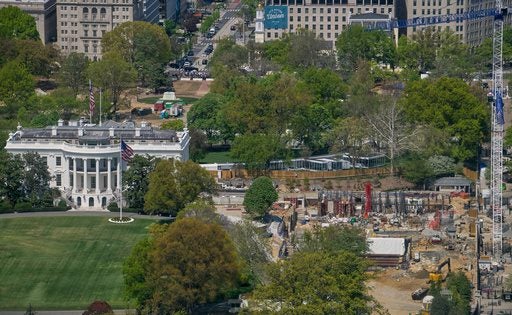
Senate Republicans, with characteristic dispatch, have earmarked a staggering $1 billion for "security adjustments and upgrades" at the executive mansion. This pecuniary commitment, tucked into a broader bill funding contentious immigration enforcement agencies, arrives on the heels of an alleged assassination attempt during the White House Correspondents’ Association dinner last week. The incident, involving one Cole Tomas Allen and a rather ill-equipped arsenal, appears to have expedited President Donald Trump’s long-cherished (and previously privately funded) ballroom project.
This colossal sum, designated for the U.S. Secret Service, purports to fortify the nascent ballroom, an undertaking originally pegged at a comparatively modest $400 million. The language of the GOP measure, released Monday, speaks of "above-ground and below-ground security features," explicitly barring its use for non-security elements. But it’s plain: this isn’t just about a sturdier floor; it’s about making a statement, perhaps even a sanctuary, within the nation’s most iconic address.
At its core, this isn’t solely about presidential safety. But it’s also about legislative leverage. Democrats, you see, have been stonewalling funds for Immigration and Customs Enforcement (ICE) and Border Patrol since mid-February. So, what better way for Republicans to push through those dollars than by stapling them to a popular (or at least, presidential-approved) security initiative? It’s a deft, if transparent, political maneuver, one that bypassed a more traditional bipartisan route for Homeland Security funding enacted just weeks prior.
"It would be insane" to subject the President to such risks again by holding a major public event at an off-site hotel, contended Senator Lindsey Graham (R-SC), one of the bill’s ardent proponents and co-introducer of earlier ballroom funding legislation. But Democrats aren’t buying the security-first narrative. Senator Dick Durbin (D-IL), the top Democrat on the Senate Judiciary Committee, shot back, "While Americans are struggling to make ends meet as a result of President Trump’s failed policies, Republicans are focused on providing tens of billions of dollars for the President’s vanity ballroom project and cruel mass deportation campaign."
The sheer scale of this proposed security enhancement—a billion dollars for what amounts to a single presidential facility—offers a stark contrast to security allocations in other vulnerable capitals. Consider Islamabad’s Red Zone, where the Pakistani parliament, Supreme Court, and diplomatic enclaves require constant, expensive vigilance. While facing existential threats and insurgencies, its security budget is spread thin across vast, complex challenges, often contending with resource scarcity. One might observe a global trend: the ever-escalating costs of insulating leaders, whether from domestic dissent or international menace, often drawing resources from less glamorous, but arguably more pressing, public services.
The White House, in court documents, has already hinted at a "heavily fortified" East Wing: bomb shelters, military installations, even a subterranean medical facility beneath the ballroom. President Trump himself has mused about bulletproof glass — and defenses against drone attacks. Such ambitions, naturally, rile the National Trust for Historic Preservation, which has lodged a lawsuit; a federal appeals court, however, greenlit construction to proceed in the interim. The initial promise of private funding for construction, with public funds for security, now feels like a quaint historical footnote. Some Republicans openly advocate for full public funding, asserting the recent breach underscores a critical need for a secure venue.
What This Means
This legislative move isn’t just about concrete and steel; it’s a potent symbol of partisan priorities and presidential influence. It underscores the GOP’s strategic deployment of "must-pass" legislation (like homeland security funding) to advance other, more contentious, agenda items (like immigration enforcement). For Democrats, it’s a convenient lightning rod—an ostentatious expenditure for a president they routinely accuse of self-aggrandizement, making it a powerful campaign talking point. The funding’s coupling with ICE and Border Patrol dollars also complicates any potential bipartisan negotiation, forcing a difficult vote for moderates. It’s a high-stakes poker game, where the President’s personal security becomes a chip in a larger legislative gamble.
A billion dollars, irrespective of its stated purpose, is a substantial outlay, particularly when it exceeds the proposed construction cost by 150%. This allocation raises questions about fiscal prudence — and alternative investments. Could such funds be better deployed to bolster Secret Service budgets for broader, less visible protective details, or even for critical infrastructure projects elsewhere? It’s a diversion of resources, perhaps justifiable under the banner of national security, but certainly a decision with opportunity costs. it sets a precedent for future presidential security undertakings, implying that any perceived threat could unlock similar, outsized appropriations. The ultimate cost, then, isn’t just the $1 billion specified in the GOP bill, but the political capital expended and the national priorities potentially reshaped.
And so, as the Senate prepares to vote, Washington watches a legislative drama unfold. It’s not merely about fortifying a ballroom; it’s about the evolving definition of presidential security, the perennial tug-of-war over federal coffers, and the ever-present shadow of political expediency—all playing out on the hallowed grounds of a nation’s most iconic residence.