


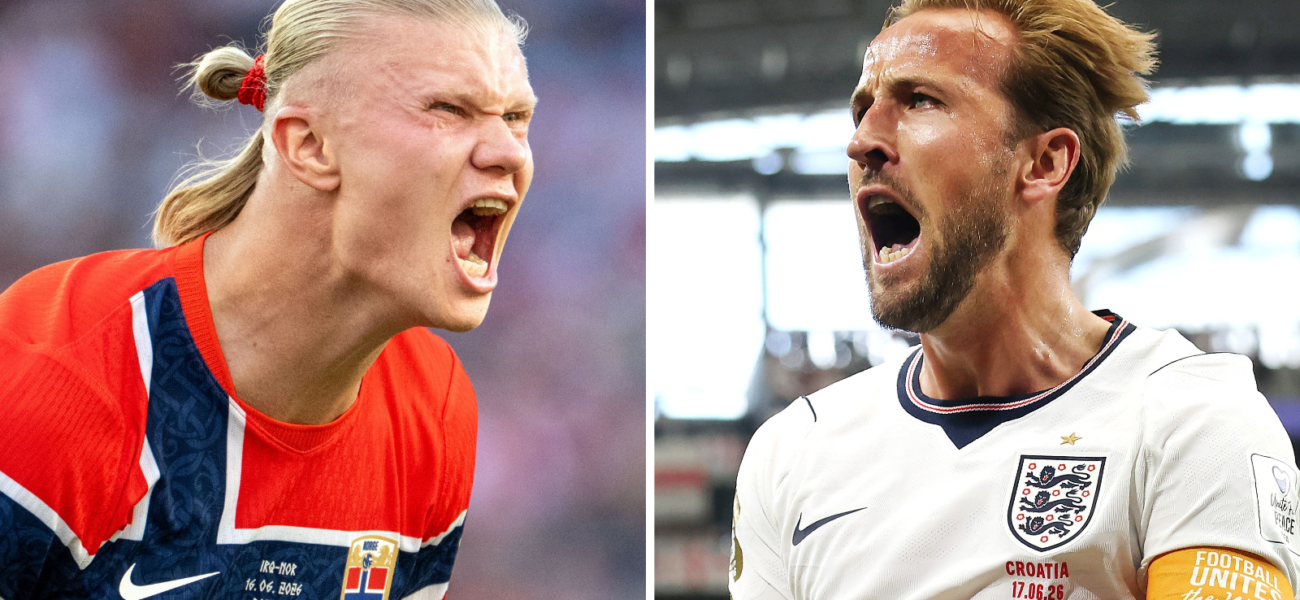
The Global Grind: Kane, Haaland, and Football’s Brutal Economy
POLICY WIRE — London, UK — The rumble in the Azteca Stadium, even for those watching on screens halfway across the globe, was deafening. Harry Kane, England’s stoic frontman, had just slotted a...

POLICY WIRE — London, UK — The rumble in the Azteca Stadium, even for those watching on screens halfway across the globe, was deafening. Harry Kane, England’s stoic frontman, had just slotted a penalty, yet another notch in a career now laden with far more than just what-ifs. For years, the narrative stuck: Kane was the almost-man, the nearly-great, forever trapped in Tottenham’s vortex of valiant failures. But things—they shift fast in this brutal, beautiful game.
It wasn’t so long ago, really, that Kane carried the heavy baggage of a missed World Cup spot-kick against France. A ghost, you might say, clinging to his boots. Fast forward just a bit, and here he’s, leading the line, wiping clean that particular blot on his history as England presses deep into the tournament. That Manchester City saga from 2021, when a big money move imploded, seemed to tie his fate forever to Erling Haaland, the giant Norwegian who swooped into City and delivered a Treble, leaving Kane back in London thinking, [QUOTE_PLACEHOLDER]. Now, a couple of years on, this match against Norway—a quarter-final slugfest—puts these two titans squarely against each other, the stakes stratospheric.
Haaland, for his part, isn’t just a goalscorer; he’s an economic force multiplier for any team lucky enough to claim him. Born in Leeds, yes, but undeniably Norwegian at heart, he’d fancy nothing more than sending Kane and his Three Lions packing. He’s already bagged seven goals in this, his first World Cup tournament, compared to Kane’s six goals at the 2026 World Cup, as reported by the BBC. These aren’t just numbers, understand. These are declarations of intent from players whose careers define, and are defined by, global football’s ceaseless quest for dominance.
Pundits, a famously excitable bunch, can barely contain themselves. Joe Hart, a former England goalie, didn’t mince words about Haaland, calling him [QUOTE_PLACEHOLDER] and observing, [QUOTE_PLACEHOLDER] [QUOTE_PLACEHOLDER] Even Wayne Rooney, a man who knows a thing or two about scoring, proclaimed: [QUOTE_PLACEHOLDER] About Kane, after his crucial goal against DR Congo, Rooney gushed, [QUOTE_PLACEHOLDER] [QUOTE_PLACEHOLDER] Hart added his own poetic flair: [QUOTE_PLACEHOLDER] See? High praise, for performances that don’t just win games, but—critically—fuel economies of expectation and adulation.
But can we reduce these maestros to mere statistics? Yes, goal-scoring remains the core metric, the shiny thing everyone notices. But in the modern game, the demands stretch wider. Kane, it’s argued, offers more. He drifts deeper, threads passes, orchestrates. For Bayern last season, the numbers bear this out: he averaged almost double the number of touches per game than Haaland, created twice as many chances per 90, and consistently notched two dribbles per match to Haaland’s one. That’s range, pure and simple. Yet, Haaland has shown he’s not just a pure poacher. He’s got 24 assists in three Premier League seasons, while Kane has 26 at Bayern. Even in this World Cup, Haaland has created more chances for teammates (six versus four), playing nearly 100 minutes less.
📄 POLICY WIRE WHITEPAPER PUBLISHED: PAKISTAN'S NATIONAL SECURITY POLICY PRIORITIES
👉 READ BY CLICKING HEREBut there’s a distinct edge to this whole narrative, an unspoken tension. Norway’s reliance on Haaland is, shall we say, a touch alarming. When he doesn’t score for his nation, their win percentage falls off a cliff. They crashed out 4-1 against France in a game he sat out. England, on the other hand, can call on the likes of Jude Bellingham, who has notched four goals himself. It’s an ensemble cast versus, well, a superhero — and his valiant but often overwhelmed sidekicks.
What This Means
This isn’t just about football; it’s about national branding, the geopolitical impact of sports, and the commodity-like nature of elite athletic talent. These players, whether Kane or Haaland, are global commodities. Their market value influences not just club finances, but entire sports ecosystems—broadcasting rights, merchandising, national prestige. For instance, in countries like Pakistan, where cricket holds cultural primacy, the burgeoning interest in football, particularly for tournaments like the World Cup, means these athletes become symbols of aspiration. Young fans, whether in Karachi or Lahore, don’t just see a player; they see a global phenomenon. A World Cup deep run, driven by individual brilliance, translates into increased soft power for a nation. Imagine the commercial windfall for Norwegian companies if Haaland were to lift the trophy. It’s an export of culture, a projected image of success, amplified across continents, far beyond the pitch. This intense spotlight on individual prowess also raises questions about team cohesion versus individual dependence, a recurring dilemma for football federations across the Muslim world and beyond as they seek to compete on the global stage. Building a superstar is one thing; crafting a resilient team capable of supporting that star, that’s quite another.