


Germany’s Persistent Price Headache: Fuel Costs Surge, Old Scars Remain
POLICY WIRE — Berlin, Germany — The ghost of Europe’s last big energy panic never quite packs up its bags, does it? Just when you thought the German economy might breathe easy, a familiar chill...

POLICY WIRE — Berlin, Germany — The ghost of Europe’s last big energy panic never quite packs up its bags, does it? Just when you thought the German economy might breathe easy, a familiar chill wafts in. Turns out, German motorists — bless their diesel-guzzling hearts—just got hit with another jolt at the pump. The cost of filling up soared last month, even if the chatter isn’t quite as panicked as it was during the darkest days of 2022.
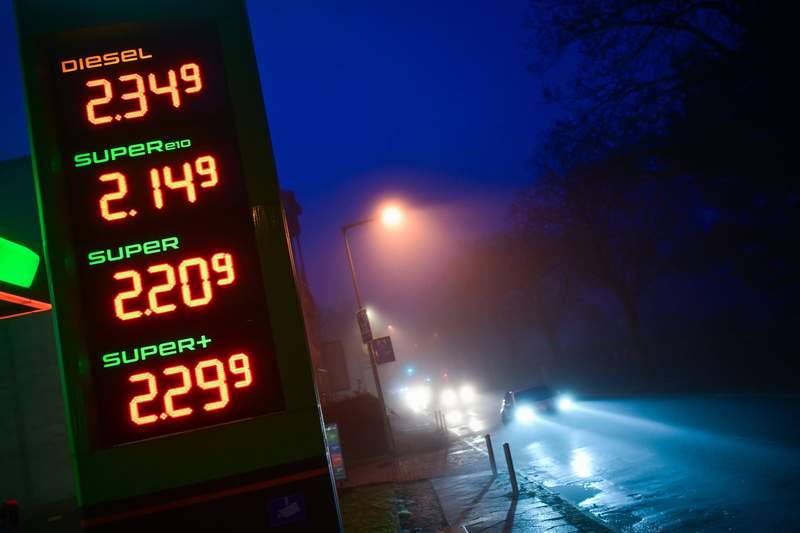
It’s not just a statistic, you know. It’s the silent draining of wallets, the recalculation of household budgets over a late-night cup of tea. Prices jumped in March, a full 20 percent according to calculations from Germany’s Federal Statistical Office, effectively undoing some of the prior months’ tentative dips. That’s a serious chunk of change when every cent counts for ordinary folk. But—and it’s a big but—it remains stubbornly beneath the absolute ceiling reached back in the chaotic aftermath of Russia’s full-scale invasion of Ukraine, when energy markets went absolutely wild. A small mercy, perhaps, or merely the sign of a system holding its breath, rather than exhaling fully.
“We’re seeing volatility, yes. It’s part — and parcel of a market still trying to find its footing,” offered Dr. Stefan Müller, Chief Economist at the German Federation of Industries (BDI), his voice calm but measured. “But it’s not the seismic shock of two years ago. Supply chains are more robust, and the market, while undeniably skittish, has largely priced in a good deal of current geopolitical risk. Consumers are paying more, certainly, but we haven’t seen the systemic breakdowns of supply that truly paralyzed industries before.”
This rise isn’t a bolt from the blue. Geopolitical tremors, particularly those originating from the Middle East, continue to reverberate through global energy supply lines. The Red Sea, in particular, has become a hot zone, pushing up shipping costs and adding layers of expense to everything from crude oil to semiconductors. That Suez Squeeze, as we’ve called it (read more here), isn’t just about UK retailers; it’s a global tax, and Germany, a trading titan, gets its share.
Because German consumers, just like their counterparts across Europe, often gauge the economic temperature through the price of gas, this hike stokes fears of a renewed inflationary spiral. The European Central Bank, desperate to bring inflation to heel, has held interest rates high for what feels like an eternity. A fresh surge in energy costs complicates their calculus, making those much-anticipated rate cuts feel, well, a little further off. And that’s no good for business or borrower.
“Families feel every single cent,” insisted Bettina Richter, Head of Consumer Affairs for the Bundestag’s Economic Committee, her tone firm. “Even if the headlines aren’t screaming ‘record,’ pockets are being emptied. This isn’t some abstract market correction; it’s a persistent, grinding pressure on everyday Germans. We can’t ignore it by simply saying, ‘Well, it was worse in 2022.’ For many, that’s cold comfort when their disposable income keeps shrinking.” She’s got a point. It’s the erosion, not just the spikes, that can really hurt.
The impact ripples outwards, too. Germany is the economic engine of Europe, a major importer of goods from around the globe, — and a key donor. When its citizens pay more for fuel, they’ve less to spend elsewhere. German industries, facing higher operational costs, may trim orders from international suppliers. Think textiles from Bangladesh or intricate manufactured components from Pakistan—economies reliant on exports to Germany suddenly face softer demand. It’s a direct artery connecting the cost of gasoline in Munich to a weaver’s livelihood outside Lahore, a sometimes overlooked but utterly real consequence of global economic entanglement.
What This Means
This latest bump in German fuel prices, while not triggering an immediate systemic crisis like 2022, serves as a stark reminder of Europe’s persistent vulnerabilities. Politically, Chancellor Olaf Scholz’s government faces a delicate balancing act: appease consumers crying foul over living costs without compromising climate goals or overspending precious public funds on subsidies. It’s an economic quagmire with no easy exits. Economically, persistent energy inflation makes the ECB’s job harder, potentially delaying interest rate cuts that are crucial for broader European recovery. For global markets, especially developing nations with close trade ties to Germany, this translates into an expected slowdown in export demand, and potentially, decreased foreign direct investment. The cost of powering Germany’s cars and factories isn’t just a German problem; it’s a global bellwether, chiming a tune of continued uncertainty.