

Berlin’s Africa Pivot: From Benevolence to Brute Necessity, Germany Reimagines a Continent’s Future as Its Own
POLICY WIRE — BERLIN, Germany — It isn’t just the rumble of tanks on Ukraine’s plains or the algorithmic ascent of Chinese influence that keeps Berlin’s strategic thinkers awake these nights....

POLICY WIRE — BERLIN, Germany — It isn’t just the rumble of tanks on Ukraine’s plains or the algorithmic ascent of Chinese influence that keeps Berlin’s strategic thinkers awake these nights. No, there’s a deeper, more insistent hum emanating from the continent directly south, a demographic and economic tsunami whose eventual impact could reshape Europe’s very fabric. Germany, often accused of a tepid post-colonial foreign policy, is finally—and rather urgently—recalibrating its gaze towards Africa, seeing not merely a recipient of development aid, but a crucial lynchpin for its own enduring prosperity and security.
This isn’t altruism, not really. It’s an acknowledgment of cold, hard geopolitical arithmetic. For years, Europe’s relationship with Africa has been a messy mélange of historical guilt, resource extraction, and often ineffectual aid. But the stakes have, frankly, gotten too high for such passive engagement. The Sahel region, a brittle arc of instability, represents a frontline for everything from irregular migration to resurgent jihadism, directly impacting European borders and consciences alike. And that’s before you even consider the aggressive courtship waged by Beijing and Moscow across the continent, carving out spheres of influence with infrastructural loans and security pacts that make Western overtures look decidedly quaint.
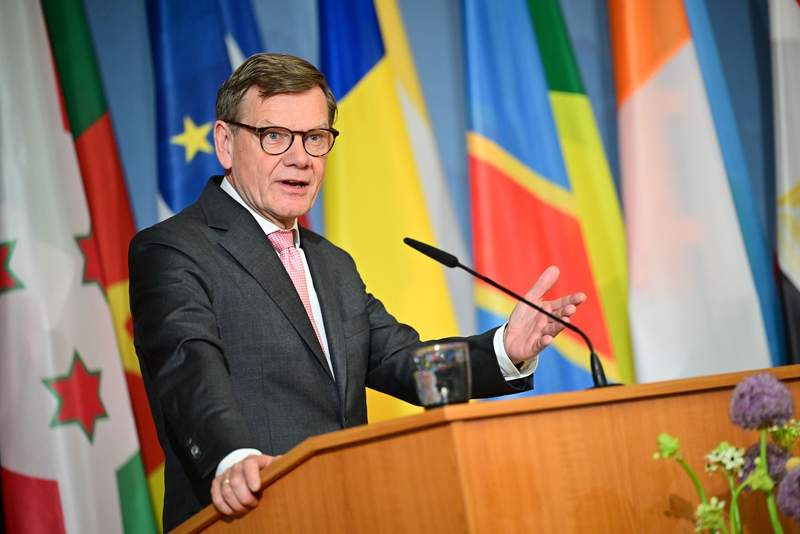
Johann Wadephul, foreign policy spokesman for the conservative CDU/CSU parliamentary group, isn’t mincing words. “We can no longer afford a vacuum in Africa,” he asserted in a recent policy brief, reflecting a growing consensus across Germany’s political spectrum. “Stability and robust economic growth across the continent aren’t just noble goals for Africa; they’re indispensable pillars for Germany’s long-term security interests and economic viability.” It’s a shift from abstract humanitarianism to pragmatic self-interest, a move that’s both jarringly candid and, perhaps, refreshingly honest. Berlin is realizing it’s time to put its money, — and its strategic muscle, where its mouth is.
So, what does this recalibration entail? It’s a multi-pronged offensive, aiming to bolster governance, foster sustainable development, and crucially, enhance security capabilities within African nations. German investments are increasingly targeting sectors like renewable energy, digital infrastructure, and vocational training — areas where Europe believes it holds a competitive edge against the state-backed enterprises of its rivals. They’re also stepping up military training missions and logistical support, recognizing that economic partnership can only flourish amidst a modicum of peace.
And it’s about more than just trade deals or counter-terrorism efforts. Germany, like much of Europe, faces a looming demographic crunch. Africa, conversely, is experiencing an unprecedented youth bulge. According to the United Nations, Africa’s population is projected to reach 2.5 billion by 2050, representing a quarter of the world’s population. This isn’t just a challenge—it’s a colossal opportunity for skilled labor, entrepreneurial spirit, and burgeoning consumer markets, if properly harnessed. Ignoring this demographic reality would be, frankly, economic malpractice.
Behind the headlines, Berlin’s strategists are also watching how its approach resonates in other regions facing similar developmental and geopolitical pressures. Take Pakistan, for instance. A nation grappling with its own climate vulnerabilities, significant youth unemployment, and the perennial dance between external powers seeking influence. The German blueprint for African engagement, emphasizing capacity building, climate resilience, and diversified economic partnerships, isn’t merely an African affair. It offers a potentially transferable model for navigating complex relationships across the broader Muslim world, areas often susceptible to the same global power dynamics and development imperatives. It’s a tacit acknowledgement that the challenges of Kinshasa aren’t so different from those in Karachi – just perhaps, viewed through a different lens.
Still, the path isn’t devoid of internal friction. Critics within Germany caution against a purely transactional relationship, insisting that human rights and democratic values must remain central. Michael Roth, a prominent Social Democrat known for his advocacy on international cooperation, shot back during a recent Bundestag debate, “Development isn’t a one-way street, nor is it merely a transaction. It’s about building genuine partnerships rooted in shared values — and mutual respect for a sustainable future. Anything less is short-sighted and ultimately, self-defeating.” It’s a sentiment that speaks to the delicate balance Berlin must strike: securing its own interests without sacrificing its stated principles.
What This Means
This invigorated German engagement in Africa signals a maturing, more self-aware foreign policy. Politically, Berlin is asserting a stronger, more independent voice on the global stage, challenging the traditional French and British dominance in parts of Africa, and directly confronting Chinese and Russian inroads. It’s a pragmatic move that acknowledges the interconnectedness of global challenges – from climate migration to economic stability – and positions Germany not as a benevolent donor, but as a strategic partner. This posture could also embolden other European nations to adopt a similar, more assertive stance, potentially leading to a more coherent, albeit more competitive, EU policy towards the continent. Economically, German industry is clearly eyeing Africa as both a source of critical raw materials – vital for its green energy transition – and a vast, untapped market for its goods and services. Expect increased German direct investment, particularly in renewable energy, agriculture, and manufacturing, coupled with intensified diplomatic efforts to streamline trade agreements. This isn’t just about Germany; it’s about Europe defining its place in a truly multipolar world, recognizing that its future prosperity is inextricably linked to the continent just across the Mediterranean. And for those nations like Pakistan, watching from afar, Germany’s evolving approach provides a compelling case study in redefining international alliances and strategic priorities.