


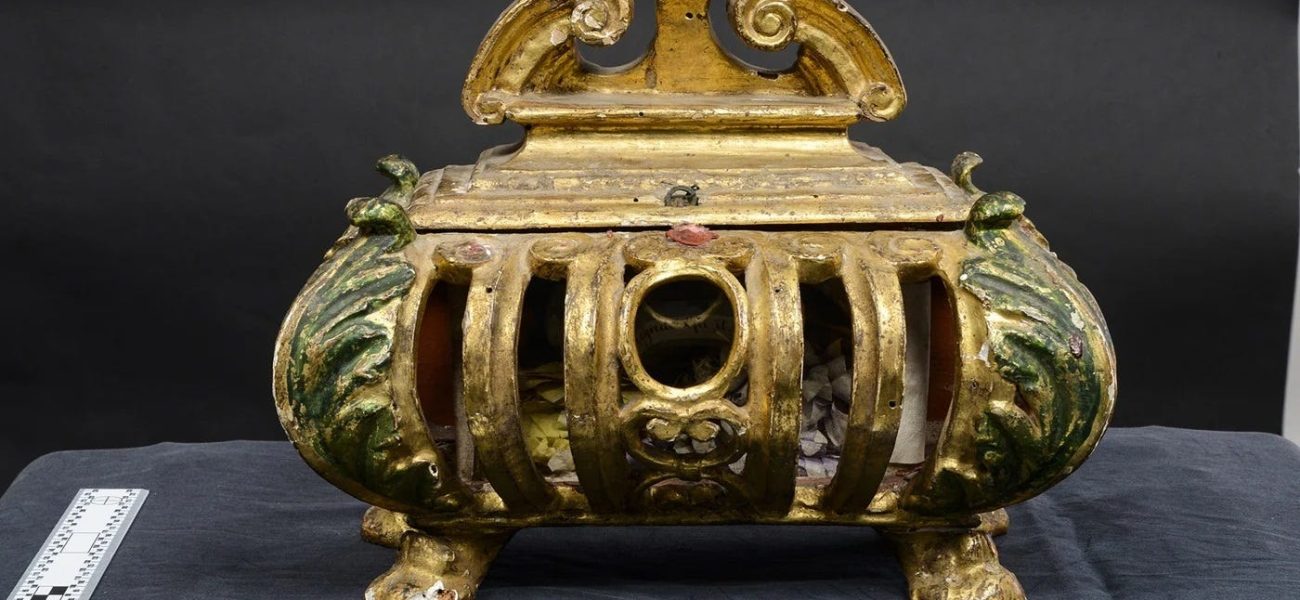
A Silent Witness’s Transatlantic Return: Boston FBI Repatriates 17th-Century Italian Relic
POLICY WIRE — Boston, USA — In the hushed, climate-controlled confines of an FBI evidence vault, amidst a cacophony of digital forensic reports and confiscated contraband, sat an unlikely artifact: a...

POLICY WIRE — Boston, USA — In the hushed, climate-controlled confines of an FBI evidence vault, amidst a cacophony of digital forensic reports and confiscated contraband, sat an unlikely artifact: a piece of sacred European history, nearly four centuries old. It wasn’t a cache of cryptocurrency or a high-tech espionage tool; it was a humble, intricately carved 17th-century church relic, patiently awaiting its journey home. And home it went, a quiet triumph for international cooperation and a subtle reminder that some battles for justice play out over centuries for inanimate objects.
This particular narrative, less a high-octane chase and more a meticulous bureaucratic dance, concluded when agents from the FBI’s Boston Division formally repatriated the pilfered artifact to Italian authorities. Its re-emergence on U.S. soil, after decades (or perhaps even a century or two, who’s counting?) of obscurity following its original disappearance from an Italian church, underscores the persistent global fight against the shadowy, multi-billion-dollar illicit trade in cultural property. But it’s not just about stopping thieves; it’s about reclaiming identity, isn’t it?
The journey of this unnamed relic — its exact nature often deliberately obscured by authorities to prevent further exploitation — mirrors countless other artifacts that have traversed borders without proper provenance. It’s a global industry, rife with complexity — and often intertwined with more nefarious activities. UNESCO estimates the illicit trade in cultural objects to be between $3 and $10 billion annually, making it one of the most profitable criminal enterprises worldwide. So, it’s big business, even if it’s bad business.
“Our commitment to cultural preservation extends beyond national borders,” stated Joseph Bonavolonta, Special Agent in Charge of the FBI Boston Division, during the handover ceremony. His voice, crisp — and measured, cut through the quiet formality. “These aren’t just objects; they’re fragments of a people’s soul, and their illicit trade undermines shared human heritage. We won’t rest until they’re back where they belong, safeguarding history for future generations.” He’s not wrong, you know. That commitment is palpable, even for those of us who tend to view such things with a healthy dose of journalistic skepticism.
Across the Atlantic, the sentiments were equally profound. General Roberto Riccardi, Commander of the Carabinieri Command for the Protection of Cultural Heritage, an Italian unit specifically dedicated to this monumental task, mused, “Every artifact returned is a victory not just for Italy, but for the global community’s unwavering dedication to history. It’s a reminder that even after decades, the threads of our past can be rewoven, making our cultural tapestry whole once more.” He’s seen a lot of these returns, so he knows a thing or two about continuity.
Still, the quiet resolution of this case belies a much larger, often uncomfortable, conversation. This episode, while geographically contained, resonates far beyond the cobblestone streets of Italy or the modern glass towers of Boston. It mirrors a persistent, often painful, global struggle for the return of cultural patrimony — a struggle acutely felt across the developing world, particularly in nations like Pakistan, where centuries of colonial influence and subsequent geopolitical upheavals have led to the dispersal of irreplaceable historical artifacts. Don’t think for a moment that the clamor for restitution is solely a European preoccupation; it’s a deeply felt plea for justice from Karachi to Cairo.
Behind the headlines of returned relics and diplomatic handshakes lies a labyrinthine network of smugglers, collectors, and sometimes, unwitting intermediaries. The art market, for all its glossy auctions and prestigious galleries, remains stubbornly opaque in certain segments, creating fertile ground for these illicit exchanges. The same intricate global pathways that facilitate the Silk Road of Data for digital commerce are, it seems, also traversed by stolen antiquities.
It’s not just about law enforcement either; it’s about proactive diplomacy — and shifting international norms. The process of cultural repatriation often involves delicate negotiations, historical research, and robust inter-agency collaboration, requiring a nuanced understanding of sovereignty and shared heritage. These aren’t simple matters; they’re often steeped in colonial legacies and contemporary political sensitivities, sometimes even playing a role in the intricate dance of international relations, much like when Tehran employs bureaucratic retribution as a diplomatic tool.
What This Means
This seemingly small act of returning a 17th-century artifact carries considerable weight. Politically, it strengthens transatlantic alliances and reinforces Italy’s stance as a global leader in cultural heritage protection, a policy they’ve long championed. Economically, by disrupting the illicit trade, it indirectly protects the legitimate art market from devaluation and helps maintain the integrity of historical narratives, which, for a nation like Italy, are invaluable assets. The implications are clear: cultural heritage isn’t merely decorative; it’s foundational to national identity and increasingly, a point of geopolitical leverage. Nations are realizing that what’s lost isn’t just an object, it’s a piece of their collective soul, and they’re demanding its return.
So, as the once-lost relic settles back into its rightful place, one can’t help but ponder the countless other artifacts still languishing in private collections, waiting for their own quiet triumph. The FBI, the Carabinieri, and their global partners, they’re still out there, patiently piecing together history, one repatriated piece at a time. It’s slow work, but someone’s got to do it, right?