

Donuts and Defeat: The Unexpected Humanity of an MMA Contender
POLICY WIRE — LAS VEGAS, USA — When you picture a combat sports behemoth, freshly bruised from back-to-back losses, strategizing a weighty move to a new division, you’d be forgiven for envisioning...

POLICY WIRE — LAS VEGAS, USA — When you picture a combat sports behemoth, freshly bruised from back-to-back losses, strategizing a weighty move to a new division, you’d be forgiven for envisioning grit, iron-clad resolve, maybe even some menacing vows. What you probably don’t conjure, however, is a man discussing his preferred sitcoms or the singular infuriation of a slow pedestrian.
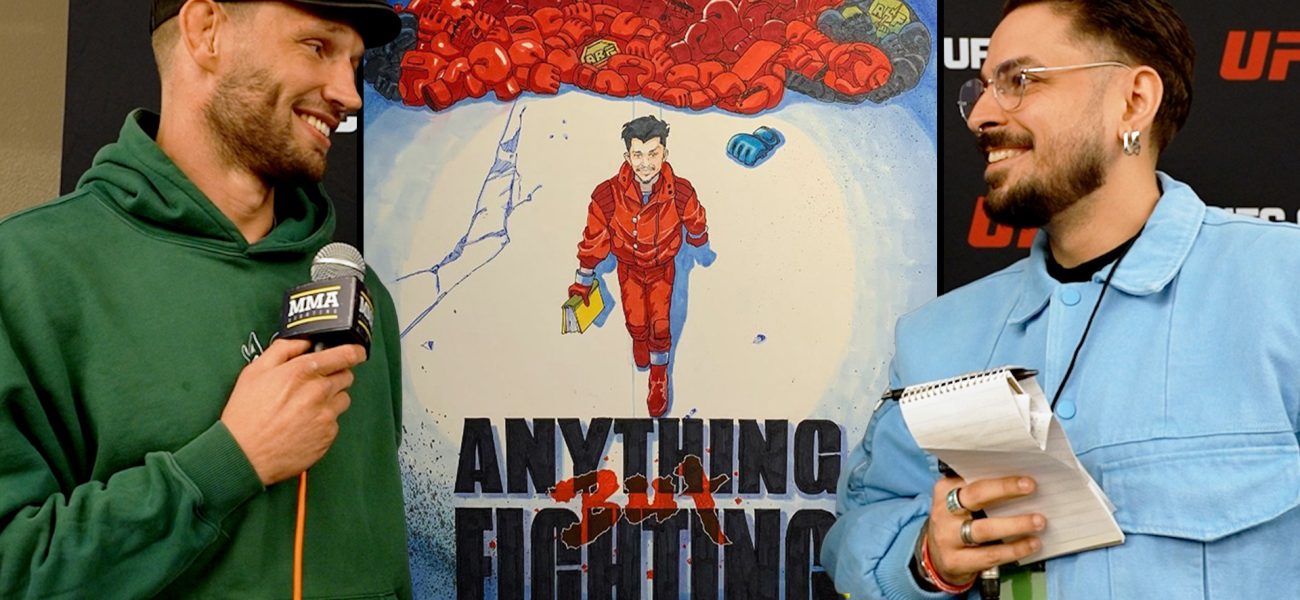
And yet, that’s precisely the territory Dutch fighter Reinier de Ridder — all 205 pounds of him soon, apparently — navigated in a recent sit-down with MMA Fighting’s José Youngs. It wasn’t about jiu-jitsu or knockout power; it was about pet peeves, musical acts, — and his top five movies. It’s an oddly domestic tableau, isn’t it, for someone whose profession involves the calculated application of blunt force trauma? The former two-division champion at ONE Championship, a moniker that suggests dominance, has found himself in an unfamiliar rut within the unforgiving octagon of the UFC. Two consecutive defeats, first by Brendan Allen and then a close, hard-fought loss to Caio Borralho at UFC 326, have apparently spurred an existential-slash-weight-class crisis.
But instead of retreating into the ascetic training rituals one might expect from a fighter nursing a bruised ego and a 21-4 record, de Ridder emerged with donuts. For his team. “I brought you guys donuts because I need you guys heavy, I need you guys strong because I’m coming at 205 [pounds], baby,” he quipped on Instagram, addressing his comrades after the Borralho fight. It’s a moment—a pastry-fueled pledge to move up a weight class—that slices through the polished brutality of professional fighting, revealing a peculiar sort of leadership. A sugary, carb-laden command, if you will.
This calculated vulnerability, the deliberate peeling back of the warrior façade, isn’t accidental. But it’s not merely a symptom of de Ridder’s personality; it’s an emergent strategy in the broader, increasingly commodified landscape of global sports. Athletes today aren’t just performers; they’re brands, each with an entourage of strategists tweaking their public narrative.
“These snippets of normalcy are hardly candid,” observes Dr. Aisha Rahman, a sports sociologist based out of Singapore. “They’re sophisticated attempts to humanize, to make a fighter, often seen as an almost inhuman combat machine, relatable to a broader audience. This approach extends beyond North America and Europe, finding particularly fertile ground in regions where traditional forms of sport are blending with globalized media consumption. We’ve seen this strategy succeed in markets across South Asia, for instance, where celebrity culture and fan engagement are exceptionally high, creating an intimate, almost familial connection with athletes.” Rahman’s assessment implies that de Ridder’s donut-distribution strategy is more astute marketing than simple generosity.
The appeal isn’t just about showing off a kinder, gentler pugilist. It’s about engagement. About clicks. About transcending the niche confines of hardcore MMA fans. For millions in Pakistan, where interest in combat sports is steadily climbing—partially driven by accessible digital content and a burgeoning middle class seeking global entertainment—a fighter who discusses mundane aspects of life becomes, strangely, more compelling. It’s an extension of soft power, really, where cultural familiarity primes an audience for brand loyalty, even if that brand is a bruising athlete.
“We aren’t selling fights anymore; we’re selling personalities,” explains Gerard ‘Gerry’ Flynn, a veteran combat sports commissioner. “People want a narrative. They want to know the person behind the pummeling. Does he like pop music? What makes him tick outside the cage? These questions weren’t relevant thirty years ago, but now, they’re everything. And they open up massive markets globally, bringing new eyes to the sport in places like the Indian subcontinent, the Middle East. It’s economic smarts, plain and simple.” Flynn knows this game; he’s been in it long enough to see the evolution from grainy fight tapes to slickly produced athlete documentaries.
But there’s a real challenge, too, in maintaining authenticity amidst such calculated efforts. A disconnect can breed cynicism. This strategy, though, seems to be working, at least according to analytics firm SportMetric Global, which reported a 15% surge in new MMA fan registrations in South Asian countries over the last fiscal year, a significant portion attributed to content that highlights fighters’ personal lives. It’s a clear signal: the emotional economy of sports has become as important as the physical one.
What This Means
This trend of ‘humanizing’ athletes like de Ridder carries substantial implications, extending well beyond pay-per-view numbers. Economically, it diversifies revenue streams. Athletes are no longer just endorsements; they’re influencers, drawing sponsorships from sectors far removed from sports drinks, perhaps even extending to casual wear or lifestyle brands that traditionally shied away from the perceived violence of combat. It broadens fan bases into demographics that might not otherwise tune in, expanding advertising reach. And politically, while subtle, it’s a form of cultural soft power. Fighters with relatable personalities can inadvertently become ambassadors, facilitating cross-cultural exchange through shared digital narratives. In an age of geopolitical tension, such seemingly trivial shared experiences—like empathizing with a fighter’s bad day—can forge surprising connections, breaking down abstract barriers. Global partnerships, whether economic or cultural, are increasingly built on such nuanced perceptions.
It’s no longer enough for a fighter to just win. They’ve got to entertain, sure. But now, crucially, they’ve also got to be interesting off the clock, lest they disappear into the anonymous parade of powerful, forgotten physiques. And if it takes a box of glazed delights and a confession of trivial pet peeves to keep them relevant, then pass the donuts. Because the fight, it seems, isn’t just in the octagon anymore.