


Baglihar Dam Closure: A Political Gamble That Threatens Peace, Not Pakistan’s Water
In early 2025, India quietly shut the spillways of the Baglihar Dam on the Chenab River. To the average observer, this might seem like a minor technical decision, but in the tense environment of...

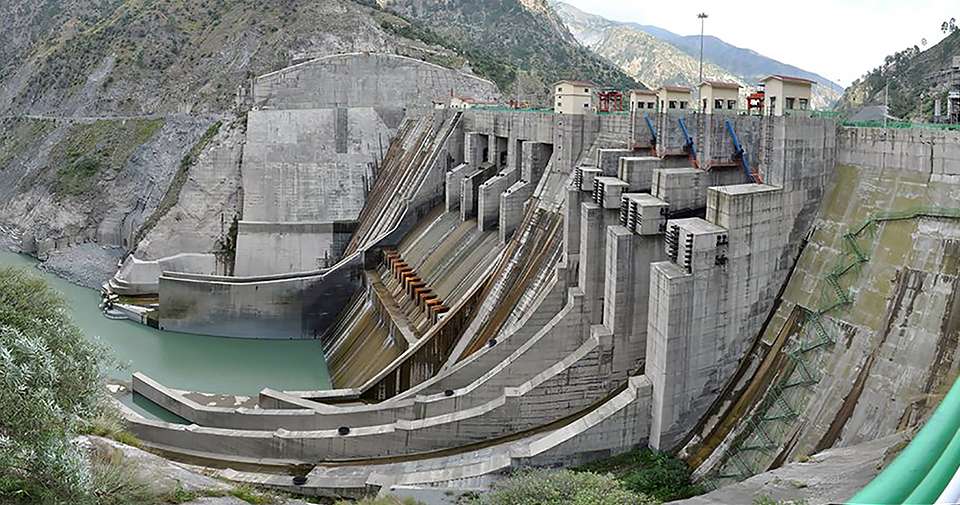
In early 2025, India quietly shut the spillways of the Baglihar Dam on the Chenab River. To the average observer, this might seem like a minor technical decision, but in the tense environment of South Asia, even such small moves can have massive consequences. India may believe it sent a powerful signal. In truth, the signal was more political than practical, more symbolic than strategic, and more provocative than productive.
The reality is that Pakistan has not suffered any serious damage from this act. Its water systems remain stable, its agricultural schedules are unaffected, and the Chenab River continues to flow, but the move has rightly triggered alarm in Islamabad, not because of the amount of water held back, but because of what this action represents. The Indian government, by unilaterally closing Baglihar’s spillways, has violated the trust built under the Indus Waters Treaty. That treaty has kept water disputes under control since 1960, even during times of war. India has now threatened to undo that legacy, not with a bullet, but with a valve.
Let us be clear about the numbers. India withheld just 37.5 million cubic meters of water. That sounds like a lot, but in the context of the Chenab’s monsoon flow, it is barely 0.2%. The dam’s actual live storage is even smaller, only 10 million cubic meters. To put it simply, this dam cannot dry Pakistan out. It cannot destroy Pakistan’s farming sector or energy needs. Pakistan’s water infrastructure is too large and too resilient for that. But India’s decision was never about causing real damage. It was about sending a message, and Pakistan heard it loud and clear.
The real danger here is the precedent this sets. By treating water as a tool for pressure, India is trying to introduce a new kind of weapon into its already fragile relationship with Pakistan. Today it is Baglihar. Tomorrow it could be Kishanganga. What comes next? Will India attempt to stop the flow of other rivers that feed into Pakistan’s fields and cities? Will it move from temporary closures to longer-term manipulation of water supplies? These questions are not imaginary; they are now very real concerns in Islamabad.
India’s supporters argue that the country is operating within its rights under the Indus Waters Treaty. But this argument is weak at best. The treaty does allow India to use the western rivers, including the Chenab, for certain purposes like hydropower. However, it does not give India the right to unilaterally cut or withhold flows. It certainly does not allow India to use these rivers as tools of political messaging. The treaty was designed to ensure fair sharing, not tactical maneuvering. India’s decision to close the spillways during a period of rising tensions with Pakistan was not just unwise; it was dangerous.
If the goal was to gain a strategic edge, India has failed. With a $76 billion defense budget, India has enough resources to build a dozen more Baglihar-type dams. But that would still not be enough to break Pakistan’s access to water. What strategic logic lies in triggering regional tension for the sake of a dam that controls less water in a week than the Chenab releases in a single day? This is not a strategy. This is theatre. The real impact is not on Pakistan’s reservoirs but on the already fraying diplomatic ties between the two nuclear-armed nations.
Pakistan, to its credit, has not responded with panic. Its officials have confirmed that there is no immediate threat to water security. Farmers have not reported shortages. Dams are running normally. But Pakistan’s calm should not be mistaken for weakness. Its strong verbal response, including a declaration that this act is equivalent to a declaration of war, is rooted in principle. The issue is not water loss. It is trust loss. And in a region like South Asia, trust is often more important than weapons.
India’s approach reflects a worrying trend. It is increasingly using its power not to stabilize the region, but to dominate its neighbors. Whether it is in Kashmir, at the Line of Actual Control with China, or now on the rivers flowing into Pakistan, New Delhi seems more interested in sending signals than building peace. This behavior is not the mark of a responsible regional leader. It is the mark of a state that confuses pressure with power and confusion with control.
The international community must take notice. If a country can use a dam, an object meant for energy and irrigation, as a tool of political pressure, it raises serious concerns about the future of transboundary water management. What happens when every river becomes a battleground? What happens when climate change reduces water flows and makes such disputes even more common? If powerful nations start weaponizing rivers, the world will face a new kind of conflict, one fought not with tanks, but with turbines.
India’s decision also undermines the only major India-Pakistan agreement that has survived the test of war: The Indus Waters Treaty. Signed in 1960, the treaty was brokered by the World Bank and has been respected for over six decades, even during wars in 1965, 1971, and 1999. It is one of the few examples of functional diplomacy between the two countries. By closing the Baglihar spillways, India has risked breaking one of the last remaining bridges between Islamabad and New Delhi.
📄 POLICY WIRE WHITEPAPER PUBLISHED: PAKISTAN'S NATIONAL SECURITY POLICY PRIORITIES
👉 READ BY CLICKING HEREThe most troubling part is that this act achieves nothing meaningful for India. It does not harm Pakistan in any serious way. It does not create leverage in trade, diplomacy, or security. It does not help India solve its internal problems. Yet, it adds fuel to the fire. It adds to an already volatile mix of nationalism, distrust, and competition. In short, India has chosen escalation over engagement.
Pakistan’s message is simple. We are not being harmed by this, but we are being challenged. We are not facing a drought, but we are facing a breach of trust. And that is why the Baglihar incident is being treated as an act of war, not because of what it did, but because of what it means. If left unaddressed, it opens the door for future missteps, and future missteps in this region can quickly lead to disaster.
South Asia does not need another reason for conflict. It needs reminders of peace. India’s action at Baglihar is not just about water. It is about what kind of future this region will choose. One based on treaties, cooperation, and mutual respect, or one based on intimidation, provocation, and reckless nationalism. If India believes it can pressurize Pakistan with small gestures like dam closures, it is badly mistaken. Pakistan is watching, documenting, and preparing. It is also choosing to speak up, not because it is weak, but because it understands that silence today may lead to instability tomorrow. In the end, the question India must answer is this: Was it worth it? Was it worth risking regional stability, diplomatic trust, and international credibility for a few million cubic meters of water that made no difference to Pakistan but spoke volumes to the world?
Author