


Golden Dome’s Dynasty vs. Orange Resilience: A Microcosm of Collegiate Power Play
POLICY WIRE — Charlottesville, Virginia — Nobody much cares for ties in America’s sporting spectacles. That’s certainly true when you’ve got two collegiate lacrosse titans, one...

POLICY WIRE — Charlottesville, Virginia — Nobody much cares for ties in America’s sporting spectacles. That’s certainly true when you’ve got two collegiate lacrosse titans, one practically building a dynasty, locking horns with everything on the line. Forget the intricate political maneuvers on Capitol Hill for a minute; this skirmish on the turf of Charlottesville felt just as intense, albeit with far less talk of filibusters and significantly more checking. It’s a sudden, visceral clarity, this sport—one winner, one loser. And for institutions like Syracuse — and Notre Dame, the stakes extend well beyond a mere tally on the scoreboard.
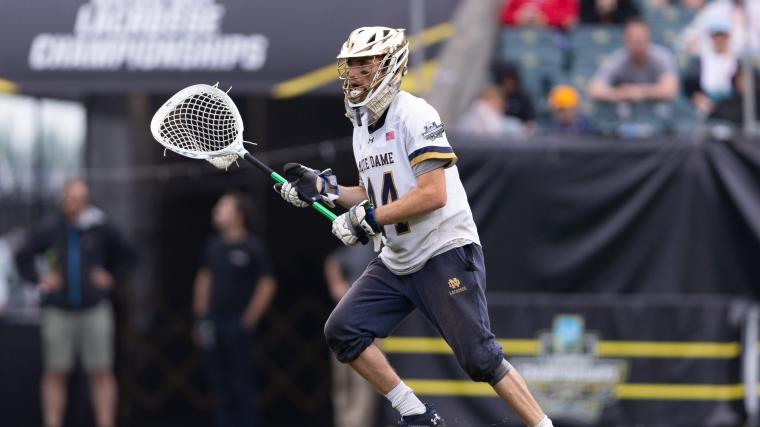
It wasn’t just about goals — and assists; it was about the broader machinery of American higher education. The Fighting Irish, those relentless titans from South Bend, have carved out quite the niche for themselves in recent years, a true collegiate juggernaut. They’ve clinched two of the last three NCAA Championships, netting titles in both 2023 — and 2024. That’s not just a run; it’s a statement, a meticulously built legacy fueled by recruiting, strategy, and—let’s be honest—an almost limitless supply of institutional prestige. Because at this level, success breeds more success, financially and culturally. It’s a self-perpetuating cycle, isn’t it?
Syracuse, the storied Orange, they’re no slouches. They came into this semifinal as the sole returning participant from last year’s final four, having dismissed No. 4 North Carolina with relative ease, thanks to a dazzling performance from Joey Spallina. But facing Notre Dame? That’s another beast entirely. It’s like challenging an incumbent in a primary after a minor victory. You’ve got momentum, sure, but they’ve got the machinery. Notre Dame, for its part, boasts an impressive 32-26 record in its 29 trips to the NCAA Championship, according to official NCAA statistics. That’s not just showing up; that’s consistently competing at the top, a habit that makes administrators smile.
“We’ve built this program on grit, plain and simple,” Notre Dame head coach Kevin Corrigan reportedly told his team pre-game, a quote an assistant coach later reiterated to a confidant. “It’s not just about talent; it’s about demanding more from ourselves when everything else screams ‘enough.’” It’s a boilerplate coach-speak, of course, but it lands differently when you’ve got two national titles under your belt in as many years. You can believe it, perhaps. Syracuse’s coach, Gary Gait, no stranger to the biggest stages himself, had a more pointed view, musing quietly to a sideline reporter before the first face-off: “Look, they’re the standard, yes. But standards exist to be broken, don’t they? We didn’t come all this way just to admire their trophies.” A sentiment often echoed in the cutthroat landscape of collegiate sports, where legacy and the lucrative landscape of college sports transfers are perpetually intertwined.
The match, broadcast live on ESPN2 for the discerning masses, began as a tight, cautious affair. Zeroes dominated the box score after the first quarter, a testament to tight defenses and perhaps—just maybe—the sheer psychological weight of the moment. Players like Josh Yago for Notre Dame, fresh off a massive three-goal, four-assist outing against Johns Hopkins in the quarterfinals, are expected to perform heroics. On the other side, Spallina’s output for Syracuse was almost certainly going to be the swing factor. And the eventual winner would face No. 1 Princeton, who had earlier dispatched Duke 14-7—a victory in itself that shifted collegiate power narratives.
📄 POLICY WIRE WHITEPAPER PUBLISHED: PAKISTAN'S NATIONAL SECURITY POLICY PRIORITIES
👉 READ BY CLICKING HEREWhat This Means
This isn’t merely a contest for bragging rights. Oh no. It’s a critical annual ritual, a potent blend of athletics, marketing, — and endowment building. Success in a high-profile sport like lacrosse, particularly for private institutions like Notre Dame, can dramatically impact alumni engagement, future donations, and even applicant numbers. These programs aren’t just teams; they’re billion-dollar brands, fiercely competing for attention in a saturated market. The very idea of amateurism, already a ghost in the machine, becomes almost comical when viewed through this lens.
But there’s also a subtler global resonance. For all its domestic hype, collegiate lacrosse, like much of America’s hyper-specialized sporting culture, often exists in a delightful, peculiar bubble to a broader international audience. While millions in Pakistan and across the Muslim world might avidly follow a cricket match or the UEFA Champions League, the precise stakes of an NCAA men’s lacrosse semifinal remain largely obscure. And that’s fine; it’s not an indictment, but an observation. Because while these institutions certainly boast diverse international student bodies—often attracting some of the brightest minds from South Asia—the passions uniting alumni often center on these highly ritualized, highly Americanized sporting narratives. It just illustrates how vastly different global cultural priorities can be, doesn’t it?
The pursuit of excellence is universal, however its specific expression might vary. For these young athletes, these coaches, these universities, the immediate future, financially and reputationally, hangs on moments of split-second decision and brutal physicality. It’s a reminder that even in sports, the lines between triumph — and obscurity are drawn in very stark, very final terms. Nothing abstract about it. Just winning, or not.