

From Butcher of Gujarat to Global Power Broker; The World Must Reassess Modi’s Immunity
Narendra Modi’s rise from Gujarat’s Chief Minister to India’s Prime Minister is not a story of democratic success but a shocking example of how the world often puts profits before principles. His...
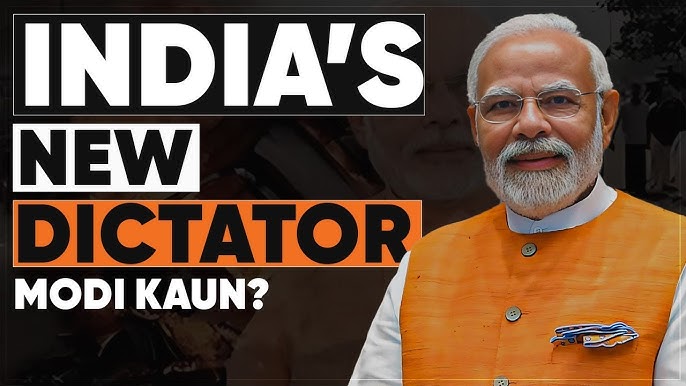
Narendra Modi’s rise from Gujarat’s Chief Minister to India’s Prime Minister is not a story of democratic success but a shocking example of how the world often puts profits before principles. His political journey is stained with violence, anti-Muslim hatred, and growing authoritarianism. Yet, many world leaders treat him like a visionary, ignoring the painful history and ongoing suffering of Muslims in India. For Pakistan and much of the Muslim world, watching Modi be embraced by global powers is not only upsetting, it is a clear betrayal of human rights. The international community must wake up and stop protecting Modi just because of trade and politics.
Butcher of Gujarat:
The 2002 Gujarat riots are not just a tragic past; they are an open wound that still bleeds. It started with a train fire in Godhra that killed 59 Hindu pilgrims. What followed was a planned and brutal massacre of Muslims across Gujarat. More than 1,000 people were slaughtered. Women were raped. Children were burned. Homes and entire neighborhoods were wiped out. Reports from Human Rights Watch and Amnesty International revealed shocking details, including that the police and government officials did little to stop the violence. Modi, who was leading the state at the time, was accused of ignoring the cries for help, or worse, silently supporting the mob attacks. Desperate victims called the police, but many were turned away or ignored. These were not random riots. They were organized attacks, allowed to continue by a government that had already picked its targets.
Despite strong evidence and countless witness accounts, Modi was never punished. A Special Investigation Team appointed by India’s Supreme Court said there was not enough evidence to charge him, but many believe the justice system failed because of political pressure. Activists, lawyers, and victims who pushed for justice were harassed and threatened. Even today, those who survived the violence are still waiting for justice, while Modi is cheered on international stages as if nothing ever happened.
After the riots, some Western countries did take a stand. The United States refused to give Modi a visa in 2005 because of his role in the violence. The United Kingdom also cut off all diplomatic contact. These moves showed the world had not forgotten Gujarat, but that changed quickly. When Modi became Prime Minister in 2014, economic and strategic interests became more important than justice. The US and UK welcomed him warmly, rolled out red carpets, and praised him for his economic ideas. No one talked about the bloodshed in Gujarat. The voices of the victims were silenced by the sound of applause in foreign capitals.
Even worse, Modi’s actions since becoming Prime Minister have shown that his hardline views have not changed. In 2019, his government removed the special constitutional status of Indian Illegally Occupied Jammu and Kashmir. The region was flooded with troops. A complete lockdown followed, no phones, no internet, mass arrests, and daily fear. International media like the BBC, The Guardian, and Al Jazeera reported on human rights abuses, including torture and killings by Indian security forces. Even the United Nations raised concerns.
Inside India, Modi’s government has passed laws that punish anyone who speaks against them. Laws like the Unlawful Activities Prevention Act (UAPA) and sedition laws are used to jail students, journalists, activists, and even comedians. Muslims are often attacked by mobs who claim to protect cows, and many of these attackers face no punishment. The Citizenship Amendment Act, which openly discriminates against Muslims, and the National Register of Citizens plan have added to the fear. These are not separate events. They are all part of a plan to turn India into a Hindu-first nation, where Muslims and other minorities are treated as outsiders.
Pakistan has seen how Modi’s aggressive policies have affected the entire region. Modi has often blamed Pakistan for attacks without proof, like in the Pulwama case, and even ordered military strikes that many saw as election stunts. These actions are not for peace; they are for politics. Modi creates fear and tension to distract Indian voters from economic problems and growing dissatisfaction. While Pakistan has repeatedly asked for talks and peaceful solutions, Modi’s India has refused to listen.
The most worrying part is how silent the international community has become. The same countries that once punished Modi now give him awards and trade deals. Why? Because they want access to India’s big market and see India as a way to counter China. But this silence is dangerous. It sends the message that human rights do not matter. By shaking Modi’s hand, world leaders are saying that killing minorities, jailing opponents, and violating international laws are acceptable if the price is right.
📄 POLICY WIRE WHITEPAPER PUBLISHED: PAKISTAN'S NATIONAL SECURITY POLICY PRIORITIES
👉 READ BY CLICKING HEREThis needs to stop. If the world truly believes in justice, freedom, and democracy, it must act. That means using sanctions, speaking up at the United Nations, and putting pressure on India to stop its abuses. If Modi continues unchecked, the world could see the rise of a powerful country ruled by a dangerous ideology that threatens both its people and its neighbors.
The more the world stays silent, the more powerful Modi becomes. Every meeting, every photo opportunity, and every business deal with him sends a message to the victims of Gujarat and Kashmir that their pain does not matter, and that their oppressor is now untouchable. This is not just a failure of foreign policy. It is a failure of humanity. Modi is not a reformer or a peacemaker. He is the same man who oversaw a massacre, who locks up those who speak the truth, and who divides a country through hate. The only thing that has changed is his suit. The blood on his hands remains.
Will the world continue to ignore this truth, or will it finally stand up for what is right? In the face of tyranny, silence is not neutrality, it is complicity. It is time to choose sides.
Author