

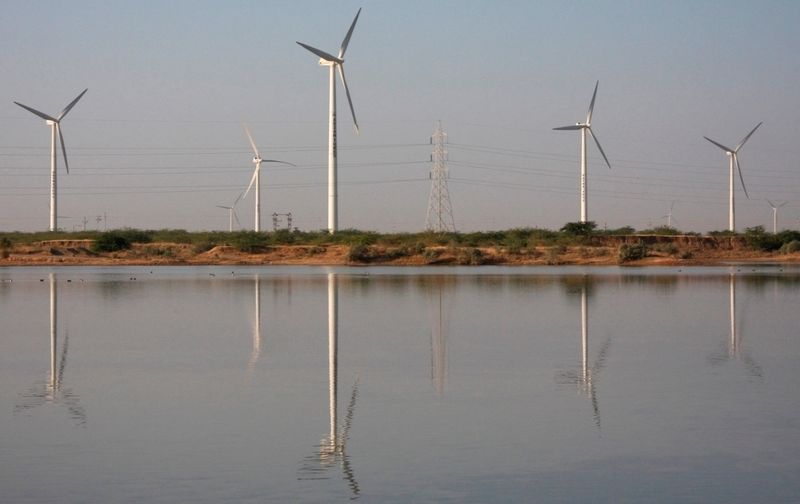
Delhi’s Green Gambit Stalls: Tough Grid Rules Jolt Global Investors, Cloud Energy Dreams
POLICY WIRE — New Delhi, India — The path to a cleaner, greener India, once envisioned as a brisk march of solar arrays and wind farms stretching across the subcontinent, now looks a bit like a...

POLICY WIRE — New Delhi, India — The path to a cleaner, greener India, once envisioned as a brisk march of solar arrays and wind farms stretching across the subcontinent, now looks a bit like a bureaucratic steeplechase. Not quite the invigorating sprint many investors—and India itself—had hoped for. While Prime Minister Narendra Modi’s government champions a global role, its own domestic policy shifts are, ironically, putting the brakes on that very narrative.
It’s a strange thing, this constant friction between grand declarations — and the messy realities of implementation. You’d think a nation with aspirations of climate leadership would be clearing the path for renewable energy, but here we’re. Fresh regulations regarding grid access and transmission for renewable projects have done little but tie investment decisions in knots, prompting a distinct chill among the foreign capital holders New Delhi so desperately covets. [QUOTE_PLACEHOLDER]
Consider the broader context for a moment: India isn’t just building power plants; it’s crafting an image. It’s pitching itself as a stable, growing economy—a counterweight, perhaps, to China, a responsible actor on the global environmental stage. But this latest hiccup? It’s a reminder that even the most well-intentioned ambitions can get snarled in domestic details. It’s a messy business, governing a billion-plus people.
And because investors aren’t exactly known for their boundless patience or altruism, when you introduce new, somewhat vague hurdles, they don’t exactly line up to throw money at the problem. No, they pause. They reassess. They pick up the phone to their legal teams. This is a country with colossal energy demands; one that still relies heavily on coal for its baseload power, despite the push for renewables. According to the International Energy Agency (IEA), India’s electricity demand is projected to double by 2040, making any friction in renewable energy deployment a particularly acute headache.
What gives? It appears some officials within India’s intricate power ministry hierarchy reckon these stricter rules are necessary to maintain grid stability. They don’t want a free-for-all, they say, where intermittent renewable sources destabilize the system. And fair enough, that’s a genuine concern. But the rollout—or rather, the sudden imposition—has caught developers and financiers flat-footed. Some argue it’s just the government’s heavy hand, a familiar theme, asserting more control over what had been a largely market-driven expansion. It’s not the first time bureaucratic overreach has tripped up an otherwise promising initiative, and it won’t be the last. This is how policy sometimes gets made in practice, if not in theory: by decree, then by crisis management.
The murmurs from boardrooms, both in Mumbai — and London, tell a story of dwindling appetite. Many had committed capital based on a predictable regulatory landscape. Now they’re faced with what amounts to shifting goalposts. Developers are finding that projects previously deemed viable now face additional costs or delays due to revised connection procedures or new financial guarantees demanded by state transmission utilities. It’s enough to make even the most hardened infrastructure investor reconsider. They’re not just dealing with the typical red tape, but also this sudden uncertainty. It’s hardly an attractive proposition for those looking to place long-term bets.
📄 POLICY WIRE WHITEPAPER PUBLISHED: PAKISTAN'S NATIONAL SECURITY POLICY PRIORITIES
👉 READ BY CLICKING HEREBut the irony here is that these same officials, often in the same breath, trumpet India’s bold climate pledges. India currently has installed roughly 179 GW of renewable capacity, yet to hit its 2030 target of 500 GW, it needs an unprecedented acceleration, according to a recent analysis by the Council on Energy, Environment and Water (CEEW). That target demands massive private and foreign investment, the very kind that these new regulations are now, seemingly unintentionally, chasing away. It’s like demanding a world-class marathon runner, then adding sandbags to their shoes just before the gun.
This isn’t just about megawatt targets, though. It’s also about strategic positioning. As Pakistan grapples with its own chronic energy deficits and a push towards a new national energy policy to diversify from fossil fuels—with significant overtures to China for infrastructure development—India’s stumble could be viewed by its neighbors, and international partners, as a cautionary tale of regulatory instability. India’s quest for energy independence and a reduced carbon footprint was meant to demonstrate leadership in South Asia, maybe even beyond. If domestic policy trips it up, its regional influence might not shine as brightly. That’s a political cost as much as an economic one.
What This Means
This bureaucratic tangle isn’t just a minor administrative blip; it’s got real teeth. Economically, we’re likely looking at a slowdown in foreign direct investment into India’s renewable sector. This makes the ambitious 500-gigawatt clean energy target by 2030 much harder to hit, perhaps even impossible without a significant policy correction. Developers face increased costs and reduced profitability, which means either higher power tariffs for consumers down the line or a greater reliance on conventional—and dirtier—energy sources to meet burgeoning demand. And who wants that?
Politically, the narrative gets messy. Prime Minister Modi’s government has invested heavily in presenting India as a champion of climate action on the global stage. If these internal policy hurdles undermine actual progress, it chips away at that credibility. International climate discussions will certainly take note. if India struggles to meet its own energy needs cleanly and efficiently, it presents a potential opening for other regional players to step up their infrastructure game, perhaps shifting strategic allegiances. This episode is a stark reminder: you can talk a big game on the international circuit, but if your domestic rulebook is chaotic, the foundations begin to crack. The lights, it turns out, don’t power themselves.