


Ahmedabad Arena: IPL Final Becomes Geopolitical Chess Match, Not Just Cricket
POLICY WIRE — Ahmedabad, India — Forget the confetti and the calculated theatrics for a minute. The Indian Premier League final, set to ignite Ahmedabad this weekend, isn’t just a sports match;...

POLICY WIRE — Ahmedabad, India — Forget the confetti and the calculated theatrics for a minute. The Indian Premier League final, set to ignite Ahmedabad this weekend, isn’t just a sports match; it’s a bare-knuckle brawl in a diamond-encrusted cage, a cultural phenomenon with economic tentacles stretching far beyond the boundary ropes. Two behemoths—Royal Challengers Bengaluru (RCB), the defending champions, and Gujarat Titans (GT), the home team eyeing their second crown—are poised. But what really plays out under those stadium lights is less about Willow on Leather and more about the staggering forces propelling South Asia’s new-age spectacle onto a global stage.
Because, honestly, while analysts dissect spin rates and run aggregates, the real game here is a showcase of India’s commercial prowess and regional heft. You’ve got RCB, finally breaking an eighteen-year trophy drought last season, back to defend. And then there’s GT, luxuriating in familiar conditions, backed by a populace that’s pretty darn proud of its state’s rising stature. It’s never just cricket in India, is it? It’s identity, economy, — and bragging rights, all wrapped up in a few hours of intense competition. A whole lot rides on this, much more than simply a cup.
But amidst the grandiose declarations of collective glory, a more intimate, almost brutal, drama is expected to unfold: the individual gladiatorial contests within the team sport. This is where the narrative pivots, where abstract concepts of market dominance become flesh-and-blood struggles. We’re talking a high-definition, high-stakes opera, with protagonists battling their demons—and each other—for a moment of sporting immortality. And everyone, from the fervent fan in Lahore to the stockbroker in Mumbai, is watching.
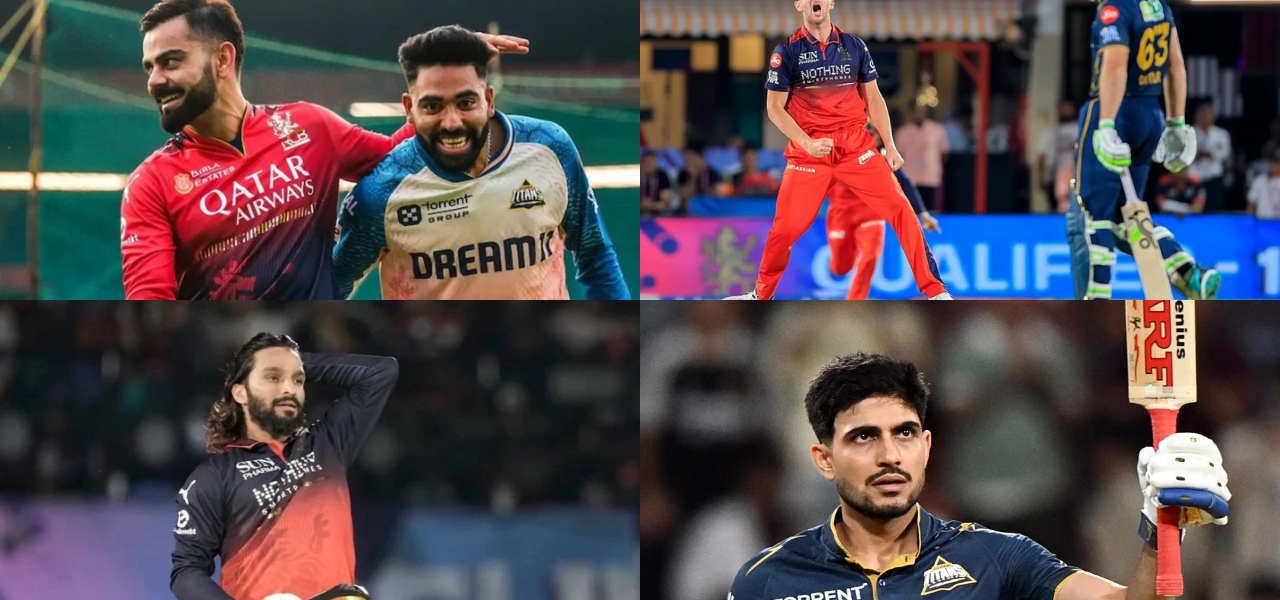
Consider the raw edge of Sai Sudharsan versus Jacob Duffy. Sudharsan, GT’s young opener, has endured two straight hit-wicket dismissals—a cricketing indignity of the highest order. He’ll be feeling the glare, desperate to escape that particular ignominy on the biggest platform. But Duffy, New Zealand’s quick, he’s got history, see? Dismissed Sudharsan before, in a bizarre turn where the batter’s willow abandoned him. This isn’t just a starter’s duel; it’s a psychological showdown. If Duffy gets the ball dancing early, setting the tone for GT’s innings could become an uphill grind. You can’t escape that pressure, not in a final like this.
Then there’s the long-running feud between Shubman Gill, the elegant GT captain, — and veteran seamer Bhuvneshwar Kumar. Kumar’s got Gill’s number, six times in fact, forcing him into a conservative shell, delivering a slew of dot balls—forty-one of them, to be exact, across their past encounters. He just can’t seem to get going against Kumar. The last time? Qualifier 1, a paltry two runs off seven balls before Kumar dismissed him clean bowled. For Kumar, it’s about reasserting dominance. For Gill, it’s about breaking the spell, proving he can overcome his personal tormentor when it truly counts.
Further down the batting order, the pugilistic confrontation between England’s Jos Buttler and Australia’s Josh Hazlewood promises explosive viewing. These two know each other’s rhythms, their weaknesses, having clashed across continents in both international and franchise circuits. Hazlewood has dismissed Buttler six times, a consistent menace. But Buttler’s no pushover; he smashed Hazlewood for 4, 6, 4 in Qualifier 1 before Hazlewood, ever the strategist, delivered a slower knuckle-ball that rattled Buttler’s timber. It’s a game of chess played at breakneck speed. If Buttler stays, GT’s chances rocket. If Hazlewood wins early, RCB gain a chokehold.
And let’s not ignore the Rajat Patidar vs. Kagiso Rabada slugfest. Patidar, the RCB captain, has had Rabada’s number—a blistering fifty-six runs off just twenty-two balls, never once dismissed by the South African speedster. He’s made Rabada, GT’s typical match-winner, look rather pedestrian at times. In Qualifier 1, Patidar hammered him for sixes, making even Rabada’s best length deliveries look easy. But that doesn’t mean Rabada won’t try to avenge himself. For Patidar, maintaining that mastery is everything.
Finally, we arrive at the emotive core of the entire contest: Virat Kohli versus Mohammed Siraj. Once teammates, now formidable adversaries. Siraj’s move to GT set this grudge match into motion. Kohli’s faced Siraj nineteen balls, scored thirty-one runs, and—crucially—Siraj hasn’t gotten him out yet. The experts reckon this individual battle might swing the whole damn thing. If Siraj finds that early swing, breaches Kohli’s defenses, GT could gain critical momentum. But if Kohli survives the powerplay, settles in, history suggests he becomes a monumental, almost immovable force. He’s the undisputed king of that stadium, — and everyone knows it.
What This Means
This IPL final isn’t merely a contest for a trophy; it’s a stark mirror reflecting India’s colossal soft power projection and surging economic might within South Asia and beyond. The league, a brainchild that revolutionized cricket, now commands attention and investment on a scale that few other sporting properties can rival. Dr. Anya Sharma, a senior economist specializing in emerging markets, put it bluntly: “The IPL isn’t just sport; it’s a multi-billion dollar economic engine. The narratives of triumph and defeat, built around these ‘heroic’ contests, reflect and even influence consumer sentiment and investment patterns across the entire subcontinent.” Reports from Deloitte, for example, pegged the Indian Premier League’s brand value at a staggering over $10 billion in 2025, a nearly 15% increase year-on-year. That kind of financial clout translates into tangible political and cultural influence, subtly binding regions even where traditional diplomatic ties might fray.
The staging of the final in Ahmedabad, a city rapidly positioning itself as a global economic hub, also isn’t incidental. It reinforces the regional power dynamics. As Gujarat’s Sports Minister, Mrs. Reema Prasad, was quoted saying, “Ahmedabad hosting this spectacle? It isn’t just about cricket; it’s about projecting Gujarat’s burgeoning global profile. We’re showcasing our capabilities, our infrastructure – proving we’re a powerhouse, culturally and economically.” This sporting carnival captures the imagination of millions in neighbouring countries too, from Pakistan to Bangladesh, where cricket is a religion and the IPL is observed with avid fascination. Even without direct participation for Pakistani players, the league’s star power, its drama, and its sheer financial scale reverberate. It shows a cohesive, well-marketed Indian entity capable of captivating entire populations, even those with complicated historical relations. The individual battles on the field are thus scaled-down reflections of larger competitive instincts—economic, cultural, and national—that define this incredibly complex, and rapidly evolving, part of the world. It’s not just a final; it’s a statement.