


Cricket’s New Old Money: The IPL’s Colossal Cash Payouts and Regional Ripples
POLICY WIRE — New Delhi, India — Forget the champagne spray and the hero worship for a minute. The real story coming out of Ahmedabad isn’t just about who hoisted the Indian Premier League trophy...

POLICY WIRE — New Delhi, India — Forget the champagne spray and the hero worship for a minute. The real story coming out of Ahmedabad isn’t just about who hoisted the Indian Premier League trophy this year. Nah. It’s about the staggering pile of money that changed hands, a colossal sum that puts a stark economic lens on what many still consider merely a sport. We’re talking about cold, hard cash – an impressive bounty that positions this sporting spectacle less as entertainment and more as a burgeoning financial institution with a surprising amount of soft power.
Royal Challengers Bengaluru, or RCB, they didn’t just beat the Gujarat Titans. They secured the biggest financial reward of the season. An incredible achievement, sure, particularly when you consider the sheer number of contenders—the millions invested across franchises, broadcasting rights, and endorsements that oil this machine. And believe me, it’s a machine, churning out winners on the field — and fat wallets off it. This whole endeavor is an economic juggernaut, frankly. [QUOTE_PLACEHOLDER]
The final showdown, which saw RCB triumph over the Gujarat Titans by five wickets, wasn’t just a good game of cricket; it was a big-money transaction. And it played out for a global audience stretching from Bangalore’s electric pubs to living rooms deep in Karachi’s Old Town, where fans (secretly or not) track every ball, every boundary, despite the diplomatic chill. This isn’t just about an Indian league; it’s about a South Asian — even a Muslim world — phenomenon.
RCB’s title-winning campaign was rewarded with ₹20 crore in prize money. That’s a lot of scratch, I tell ya. But their adversaries, the Gujarat Titans, didn’t exactly walk away empty-handed after finishing as runners-up. No, they got a rather chunky payout themselves—a princely sum that could bankroll a good few local sports initiatives, if allocated that way, which, let’s be honest, it won’t be. These payouts underscore the ever-increasing commercialization of popular sports leagues, especially those tapping into India’s vast consumer base. The numbers here aren’t just statistics; they’re reflections of economic gravity.
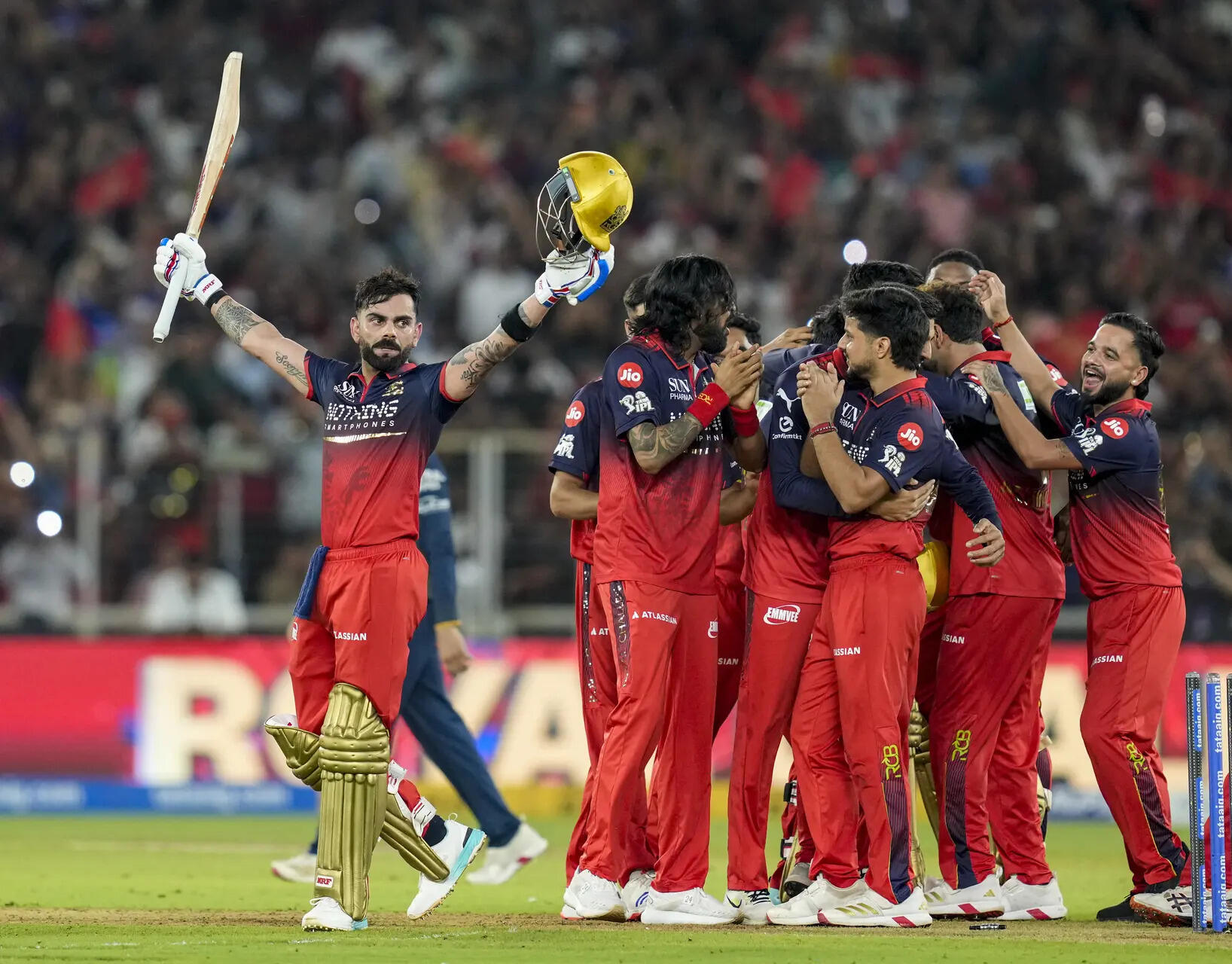
The match itself was, by all accounts, quite the spectacle. The final proved to be a fitting end to a dominant season for Rajat Patidar’s side. After restricting Gujarat Titans to 155/8, RCB chased down the target with 12 balls to spare to clinch their second successive IPL crown. That’s clinical work. It showed resilience and, crucially, consistent performance when it mattered most, under lights, before screaming fans. Virat Kohli, he played a hell of an innings. The veteran batter struck nine fours — and three sixes as he guided RCB home with a trademark chase masterclass. He was remaining unbeaten on 75 off 42 balls. And that’s what superstars do, right? They deliver.
Kohli’s innings was backed by a strong start from Venkatesh Iyer and a useful contribution from Tim David, who scored 24 off 17 balls. It’s never a one-man show, of course. Team sports—they prove that again and again. The former RCB captain eventually sealed victory with a six, sparking wild celebrations among players — and supporters. You could almost feel the energy pulsing through the screens, from Amritsar to Abu Dhabi. Earlier in the evening, RCB’s bowlers laid the foundation for the triumph. Josh Hazlewood and Bhuvneshwar Kumar removed Gujarat Titans’ star opening pair of Shubman Gill and Sai Sudarshan inside the powerplay, while Rasikh Salam Dar impressed with figures of 3/27. Washington Sundar fought a lone battle with an unbeaten half-century, but GT could only manage 155/8 on a surface that offered little assistance to stroke-makers. It wasn’t the kind of surface built for big hits, that’s for sure.
Despite the disappointment of losing the final, Gujarat Titans will take consolation from a strong campaign that ended with a runners-up finish and a prize money payout of ₹13 crore. But there’s a slight, noticeable discrepancy in the figures here; an earlier report (from tournament organizers’ public disclosures) indicated Gujarat Titans received ₹12.5 crore after finishing runners-up. Such minor variations in public reporting of prize money aren’t uncommon—sometimes they reflect different accounting for team bonuses or performance incentives versus core payout structures, or maybe it’s just the usual media fuzz. Whatever it’s, it’s still a staggering amount of money, a sum most people could only dream of. After recovering from an inconsistent start to the season, Shubman Gill’s side reached their second IPL final before being outclassed by the defending champions. Pretty good comeback, regardless.
While the trophy once again belongs to RCB, both finalists leave IPL 2026 with significant financial rewards after producing memorable campaigns that culminated in a blockbuster final in Ahmedabad. And let’s not forget the sheer economics of these events, how they dominate viewership and ad spend, not just in India, but across the diaspora. Just like the underlying cracks in a grand facade, these visible triumphs mask—or highlight—the monumental sums changing hands, reshaping sporting landscapes across continents.
What This Means
This isn’t just about cricket. Not really. The sheer scale of prize money in the IPL—According to tournament organizers’ public disclosures, the Royal Challengers Bengaluru took home ₹20 crore—shows you the raw economic power of an event like this. It’s an undeniable force, drawing massive foreign investment, bolstering regional economies, and creating a robust, almost untouchable, commercial ecosystem around sports. But what’s its actual political sway? And who feels its heat, its economic radiation, outside of India’s borders?
Well, look at Pakistan. Geopolitical realities prevent its players from directly participating, yet the IPL’s massive cultural footprint doesn’t stop at Wagah. Fans there, across South Asia, — and throughout the broader Muslim world follow these tournaments with fervor. It’s a huge consumer market, even if it’s passive, demonstrating India’s burgeoning soft power in a region historically rife with political tension. These kinds of mega-events, they subtly influence regional narratives. They portray a vibrant, economically powerful India, even as political rhetoric sometimes takes a sharper edge. This sporting might can — and often does — trickle into other areas, shaping diplomatic dialogue or at least setting a tone for cultural exchange, whether officially sanctioned or not. It’s a quiet form of cultural diplomacy, played out with bats — and balls, funded by colossal prize pots. Just consider how economic anxieties and climatic pressures already grip South Asia; the IPL presents a contrasting, often glittering, narrative of success and opportunity, albeit confined within its own lucrative bubble.