


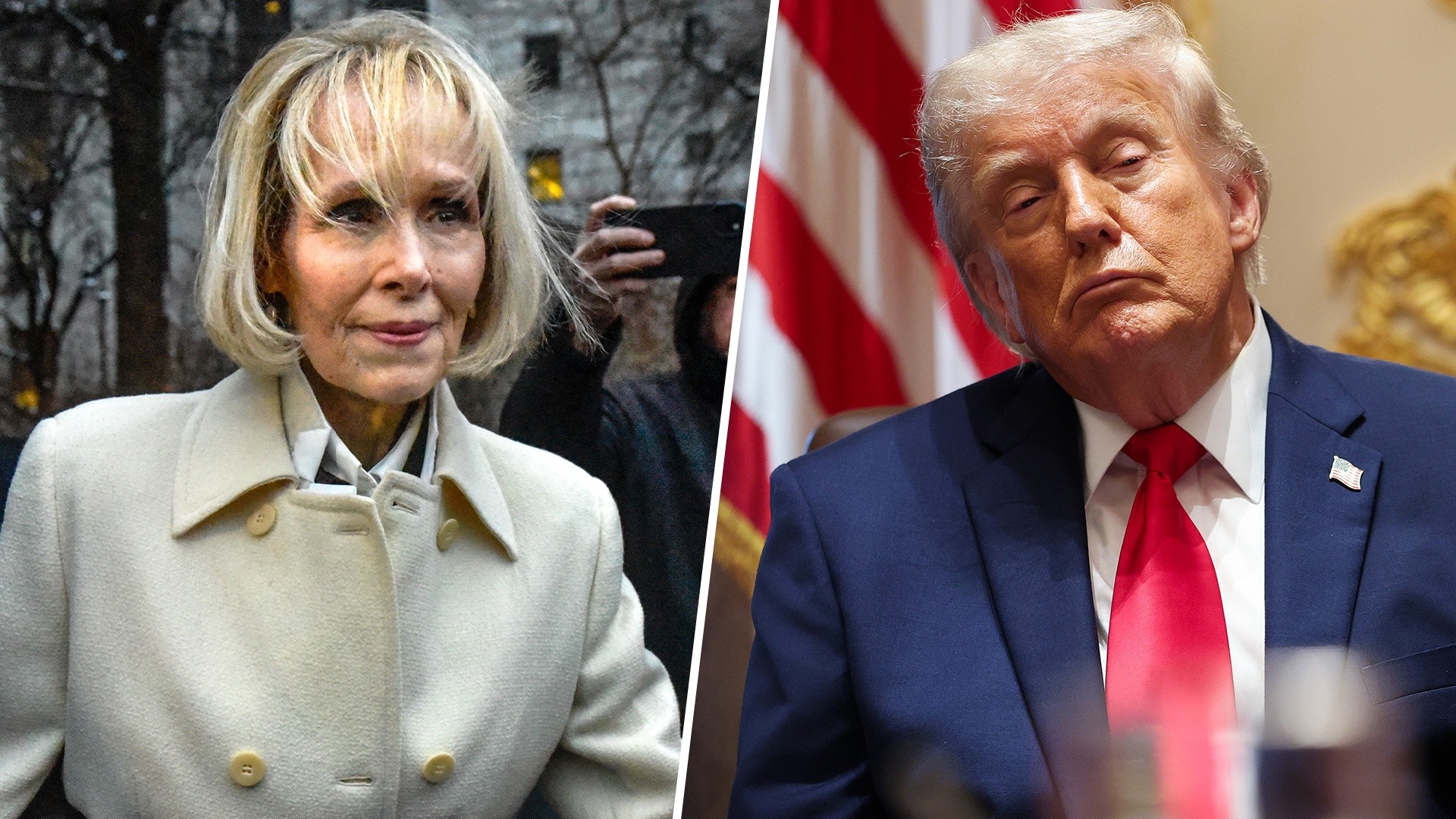
Political Tempest: Trump Accuser Carroll Under DOJ Scrutiny, Setting Unsettling Precedents
POLICY WIRE — Washington, D.C., United States — The scent of a long-festering political feud, now laced with the acrid tang of prosecutorial inquiry, hangs heavy over Washington. It’s not another...

POLICY WIRE — Washington, D.C., United States — The scent of a long-festering political feud, now laced with the acrid tang of prosecutorial inquiry, hangs heavy over Washington. It’s not another former president under the microscope this time, not directly anyway. Instead, a seismic shift in the familiar narrative has occurred: E. Jean Carroll, a writer whose allegations against Donald Trump helped define an era of partisan combat, finds herself the focus of a Department of Justice criminal probe. This isn’t just legal maneuvering; it’s a political vortex, threatening to pull apart what little trust remains in the country’s legal apparatus.
It beggars belief, frankly. We’ve become accustomed to the accused—or the formerly accused—levying counter-attacks, but a federal investigation into a prominent accuser? That’s uncharted territory for many. And it carries implications far beyond the specific individuals involved. Many folks, ordinary citizens just trying to make sense of things, are scratching their heads wondering if the system is truly blind or just strategically myopic. What precisely the Department is looking into hasn’t been made abundantly clear, the typical opacity of such matters prevailing, but the timing, as always, is everything. [QUOTE_PLACEHOLDER]
This particular episode unfolds against a backdrop of increasing skepticism toward institutions, a problem that isn’t unique to America, of course. For example, nations across the Muslim world, from Islamabad to Cairo, regularly contend with perceptions of politicized justice where legal battles frequently intersect with, and sometimes seem driven by, political machinations. In Pakistan, we’ve seen numerous high-profile cases involving political figures and their alleged adversaries that routinely become fodder for public debate on judicial independence and fairness—think of the constant ebb and flow of accountability efforts against past or present political dynasties, each action viewed through a heavily political lens. It’s a playbook that transcends borders.
But back to Washington. There’s no official word on specific charges, mind you. All we really know is that the probe is indeed underway. And it injects another dose of sheer unpredictability into an already volatile election year. Because it really doesn’t matter if there’s merit to the accusations against Carroll; the spectacle itself is the point, isn’t it? The sheer weight of a federal investigation, its shadow extending over anyone, is a potent weapon.
The saga of Donald Trump and his various legal entanglements has been a masterclass in this kind of weaponized perception. But for an alleged victim, now to become the investigated party in a federal criminal context—well, it feels less like justice being served and more like a carefully calibrated shot across the bow for anyone else thinking of stepping forward. You can’t help but wonder if that’s the insidious intent. After all, a recent poll conducted by the Pew Research Center in late 2023 showed that public trust in the U.S. criminal justice system has fallen to an all-time low of 38% among adults—a sobering figure that this latest development isn’t likely to improve.
Sources close to the ongoing legal discussions, speaking on condition of anonymity due to the sensitivity of the situation, suggest the investigation might relate to some aspect of Carroll’s previous sworn testimony or financial dealings around her accusations. But they’ve offered no concrete specifics beyond that. It’s all a swirl of speculation and whispers in the halls of power, generating exactly the kind of uncertainty that thrives in politically charged environments.
The stakes are incredibly high, not just for Carroll, but for the future landscape of legal challenges against powerful individuals. It effectively asks: Who dares speak truth to power if their own integrity then gets scrutinized by the very institutions meant to protect? This question, in varying forms, has plagued activists and truth-tellers in South Asia for generations—where the burden of proof, and indeed, the burden of avoiding state harassment, often falls squarely on the less powerful.
What This Means
This DOJ criminal probe into E. Jean Carroll, irrespective of its outcome, has already achieved one significant political aim: sowing further doubt and cynicism. It doesn’t necessarily need to lead to an indictment or conviction to be effective. Its very existence is a chilling message. For prospective whistleblowers or accusers against politically influential figures, it creates a powerful deterrent—a very clear indication that their own conduct will be forensically examined, and their lives potentially upended, under the harsh glare of federal inquiry. It weaponizes the process itself, creating a legal gray zone that intimidates potential witnesses or plaintiffs.
Economically, this sort of high-profile legal-political drama can contribute to broader market uncertainty, albeit subtly. Investors value predictability and stability, and a political environment rife with tit-for-tat legal battles between political players and their adversaries signals anything but. The perception of a justice system susceptible to political influence corrodes foundational trust necessary for long-term economic planning. More importantly, it entrenches the narrative that justice isn’t just, but a tool, wielded by whichever side currently holds sway, leaving the average person feeling more vulnerable and disempowered. This isn’t democracy’s finest hour; it’s a testament to the brutal calculus of celebrity and power, where reputations become both weapons and battlegrounds. See how political transgressions often meet silence.
internationally, these incidents feed into a narrative of American institutional decay, giving ammunition to rivals and making it harder for the U.S. to advocate for rule of law abroad. When the internal house looks this messy, sermons about democracy or independent judiciary become less credible, their impact blunted. This isn’t a good look for a nation that routinely seeks to project moral authority. It becomes just another example of how White House decisions can ripple outwards.