

Agricultural Reforms and Food Security in Pakistan 2025-2026
With around 19% of the national GDP coming from the agricultural sector and almost 38% of the workforce employed there, Pakistan’s economy still revolves mostly on this pillar. But the...

With around 19% of the national GDP coming from the agricultural sector and almost 38% of the workforce employed there, Pakistan’s economy still revolves mostly on this pillar. But the difficulties of climate change, water shortages, antiquated farming methods, and growing input prices have made thorough changes necessary to guarantee food security and maintain food output. Government-led projects centered on modernizing agriculture, helping farmers, and reducing food poverty through policy interventions, technical developments, and sustainable farming methods are driving forward the nation into 2025–2026.
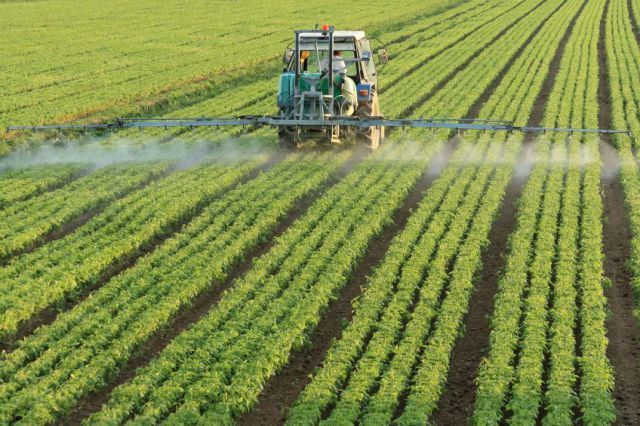
Adoption of modern technologies and precision farming to raise crop yields is a fundamental component of Pakistan’s agricultural changes. The government has pushed high-yield seed varieties, mechanized irrigation systems, and climate-resilient farming techniques more broadly. Farmers have been given subsidized high-efficiency irrigation systems including drip and sprinkler irrigation, under the Prime Minister’s Agricultural Transformation Plan, began in 2021 and improved in following years, to fight water waste. Furthermore ensuring more consistent output levels are developments in biotechnology and genetically modified (GM) crops, which have helped boost tolerance to pests and adverse weather conditions.
Given Pakistan’s ranking among the most water-stressed countries in the world, water management is still absolutely vital to the nation’s agricultural plan. Major reservoir building including the Diamer-Bhasha and Mohmand Dams is planned to increase irrigation supply for millions of acres of land. By means of smart water meters, the National Water Policy also seeks to maximize water distribution and reduce waste through the lining of canals by encouraging water-efficient agricultural patterns. Especially in view of diminishing water tables and variable monsoon patterns, these steps are absolutely essential in ensuring long-term agricultural viability.
Government involvement aiming at increasing food production and rural livelihoods has also concentrated on financial support for farmers. Launched in 2022 and enlarged in 2024, the Kissan Package gives low-interest loans, subsidized fertilizers, and reasonably priced farm equipment to small and medium-sized farmers. These subsidies seek to lower farmers’ financial load so that they may make investments in superior seeds and implement contemporary farming methods. Furthermore, the development of agricultural insurance programs has given farmers defense against crop failures brought on by climate change, so guaranteeing consistency in rural earnings and so lowering industry economic uncertainty.
Regarding food security, the government has given increasing domestic grain storage capacity a priority as well as supply chain infrastructure enhancement to stop losses following harvest. Inadequate storage facilities and poor transportation infrastructure cause Pakistan to lose an estimated 15–20% of its fruit, rice, and wheat output. New cold storage facilities and grain silos have been built across important agricultural areas to solve this problem therefore enabling greater market access and preservation of perishable goods. Moreover, digitization of the food supply chain using blockchain technology is under investigation to guarantee more price and distribution transparency, hence lowering artificial inflation of food prices and hoarding.
Another important component of Pakistan’s agriculture strategy going ahead is climate resilience. The Climate-Smart Agriculture (CSA) initiative has brought adaptive farming methods that lower greenhouse gas emissions while preserving great crop output. Strategies meant to enhance soil quality and boost carbon sequestration include agroforestry, cover cropping, and no-till farming. Agroforestry elements have also been introduced into the government’s afforestation campaign under the Ten Billion Tree Tsunami Program, so enabling farmers to combine tree planting with conventional crop production, thus improving revenue and environmental sustainability.
📄 POLICY WIRE WHITEPAPER PUBLISHED: PAKISTAN'S NATIONAL SECURITY POLICY PRIORITIES
👉 READ BY CLICKING HEREFurthermore helping to increase agricultural productivity and food security has been Pakistan’s interaction with trade alliances and foreign organizations. To carry out food security initiatives targeted on nutritional enhancement and sustainable land management, the government has teamed with the Food and Agriculture Organization (FAO) and the International Fund for Agricultural Development (IFAD). Furthermore, trade deals with Gulf nations—especially for halal meat and dairy exports—have given Pakistan’s agricultural sector fresh prospects, so boosting foreign exchange profits and driving investment in animal farming.
Notwithstanding these changes, problems still exist mostly related to land ownership inequalities, ineffective subsidy distribution, and sensitivity to climate shocks. The fact that many rural Pakistanis still rely on conventional agricultural techniques keeps general output low, so more awareness efforts and farmer training programs are needed. Rising fuel and fertilizer prices worldwide also continue to be issues for agricultural affordability, hence policies must be changed to keep competitiveness in food production.
Maintaining food security for a fast expanding population will depend on constant government efforts as Pakistan moves toward 2025–2026. The nation can increase its resilience against climate change and guarantee a consistent and effective food output by keeping investing in infrastructure, agricultural research, and farmer assistance programs. To satisfy both internal consumption needs and foreign market demands, Pakistan’s agriculture’s future relies on a mix of invention, sustainability, and strategic policymaking.
Author