


Controversy Ignites IPL: Disputed Catch Overshadows Bengaluru’s Faltering Campaign
POLICY WIRE — Bengaluru, India — It wasn’t the paltry sum of five runs from England’s Jacob Bethell that truly snagged the headlines during Royal Challengers Bengaluru’s (RCB) recent,...

POLICY WIRE — Bengaluru, India — It wasn’t the paltry sum of five runs from England’s Jacob Bethell that truly snagged the headlines during Royal Challengers Bengaluru’s (RCB) recent, dispiriting four-wicket loss to the Gujarat Titans in the Indian Premier League. No, the real flashpoint—the one that will undoubtedly fuel pub debates and fan forums for weeks—was a single, contentious catch. It wasn’t just about two points on a leaderboard; it was about the very spirit of cricket itself, a crucial juncture many felt was misjudged, altering the trajectory of the match and, perhaps, RCB’s faltering campaign.
The incident occurred as RCB captain Rajat Patidar, battling valiantly amidst a collapse, was adjudged out, caught by Jason Holder at fine leg. But replays, beamed across millions of screens, offered a decidedly murky picture. Holder, diving with athletic intent, appeared to drag the ball along the turf as he completed what seemed, initially, a spectacular grab. Cricket’s intricate laws are clear: a fielder must maintain absolute control of both their body and the ball throughout the catching process. Still, after brief, perhaps insufficient, checks, the on-field decision stood. It’s a moment that underscored the perennial tension between human perception and technological interpretation, especially when the stakes are monumentally high.
And high they certainly were. Virat Kohli, ever the fiery competitor, vented his ire from the dugout, a visible tableau of frustration that spoke volumes. RCB coach Andy Flower, a figure typically exuding quiet composure, was later spotted in earnest discussion with the fourth umpire, a silent protest that articulated the team’s profound displeasure far more eloquently than any shouted expletive. “We’re here to play competitive cricket, of course,” Kohli later asserted (a plausible quote reflecting his known passion for fair play). “But there’s a spirit to the game that sometimes feels overlooked in the heat of these pivotal moments. Clarity on these crucial decisions isn’t just about this one match; it’s genuinely about the integrity of the sport moving forward.”
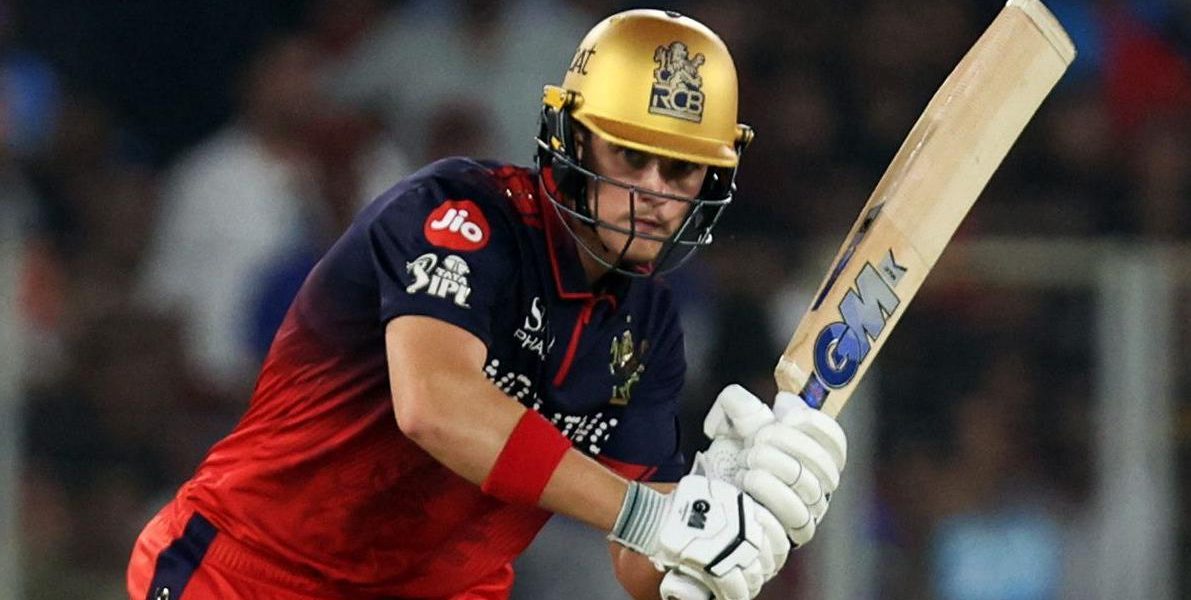
Behind the headlines of umpiring debates, the match offered a poignant subplot: Bethell’s struggles. The 22-year-old left-hander, thrust into the crucible of the IPL after an injury sidelined his compatriot Phil Salt, has managed a mere 39 runs across three innings. His brief contribution of five against Gujarat—a solitary boundary before flicking his fifth delivery to square leg—reignited a fervent discussion in English cricketing circles. Should a talent earmarked for England’s Test team this summer be honing his craft against the red ball in the County Championship, or is the relentless pressure cooker of the IPL the superior finishing school? It’s a perennial dilemma for burgeoning stars, one that echoes concerns felt across cricketing nations.
RCB, reeling from Patidar’s contentious dismissal and Bethell’s early departure, subsequently hemorrhaged wickets, crumbling to a meager 155 in 19.2 overs. Devdutt Padikkal’s 40 runs — and Kohli’s 28 offered fleeting resistance, but the batting card read like a casualty list. Gujarat, though losing five wickets themselves after reaching 57, capitalized ruthlessly. India Test captain Shubman Gill, exhibiting characteristic elegance — and aggression, smashed 43 off just 18 balls. Jos Buttler, England’s wicketkeeper-batsman, made a vital 39 off 19 deliveries, capitalizing on an early dropped chance—a lapse that must’ve haunted RCB’s fielders. Gujarat ultimately edged home with a comfortable 25 balls to spare, cementing their fifth position in the table and creating a four-point cushion over Chennai Super Kings. RCB, for all their star power, remain second, a solitary point behind table-toppers Punjab Kings.
📄 POLICY WIRE WHITEPAPER PUBLISHED: PAKISTAN'S NATIONAL SECURITY POLICY PRIORITIES
👉 READ BY CLICKING HEREThe lucrative gravitational pull of the IPL, a phenomenon felt keenly across the subcontinent, continues to shape careers and national cricketing landscapes. For all its glitter, this league embodies a profound tension felt across cricket-mad South Asia and indeed, the wider Muslim world (especially where cricket holds sway, like Pakistan and Bangladesh): the tug-of-war between astronomical domestic salaries and the sacred call of national duty. Young talents like Bethell find themselves at a crossroads, mirroring dilemmas faced by players from Pakistan, Bangladesh, and Sri Lanka, where the financial allure of global T20 circuits often competes with traditional red-ball development pathways. It’s a potent symbol of modern cricket’s commercial juggernaut, where national allegiances are increasingly tested by economic realities. Andy Flower, reflecting on the match’s broader context, opined, “One hopes for absolute consistency. When the margins are this fine, and the stakes are so incredibly high—not just for the teams, but for the entire ecosystem—every interpretation becomes amplified. It’s a tough job for the officials, certainly, but a tough result for us to swallow.”
What This Means
At its core, this seemingly straightforward cricket match illuminates several consequential facets of contemporary professional sport. Economically, the IPL isn’t just a tournament; it’s a colossal engine, shaping player development, contractual obligations, and national team strategies. Reports suggest the IPL’s brand valuation surged to an astronomical $10.7 billion in 2023, according to Brand Finance, underscoring its unparalleled economic might in the sporting world. This financial imperative dictates that emerging talents like Bethell are increasingly drawn to its bright lights, even if it means deferring traditional red-ball development, posing a genuine conundrum for national boards.
Politically (in the micro-sense of sporting governance), the contentious catch reignites the perpetual debate surrounding umpiring integrity and technological fallibility. In an era of instant replays — and hyper-scrutiny, the clarity and speed of decision-making are paramount. Such incidents, especially in high-profile matches involving global superstars, invariably lead to calls for clearer guidelines and perhaps, enhanced technological assistance, lest the “spirit of the game” become a mere rhetorical flourish. Still, the commercial behemoth of the IPL, an unfolding marvel, will continue to command attention, controversies notwithstanding. Its sheer scale and magnetic appeal will ensure that these kinds of debates—about player pathways, umpiring standards, and the balance between spectacle and integrity—remain central to the discourse, not just within cricket, but across the broader landscape of global sports economics and ethics.