


After Illness, Guardians’ Vogt Returns — A Case Study in Power Resumption
POLICY WIRE — Cleveland, USA — When Stephen Vogt, manager of baseball’s Guardians, ambled back into the dugout last Tuesday after a couple of sick days, few in the sporting press likely...

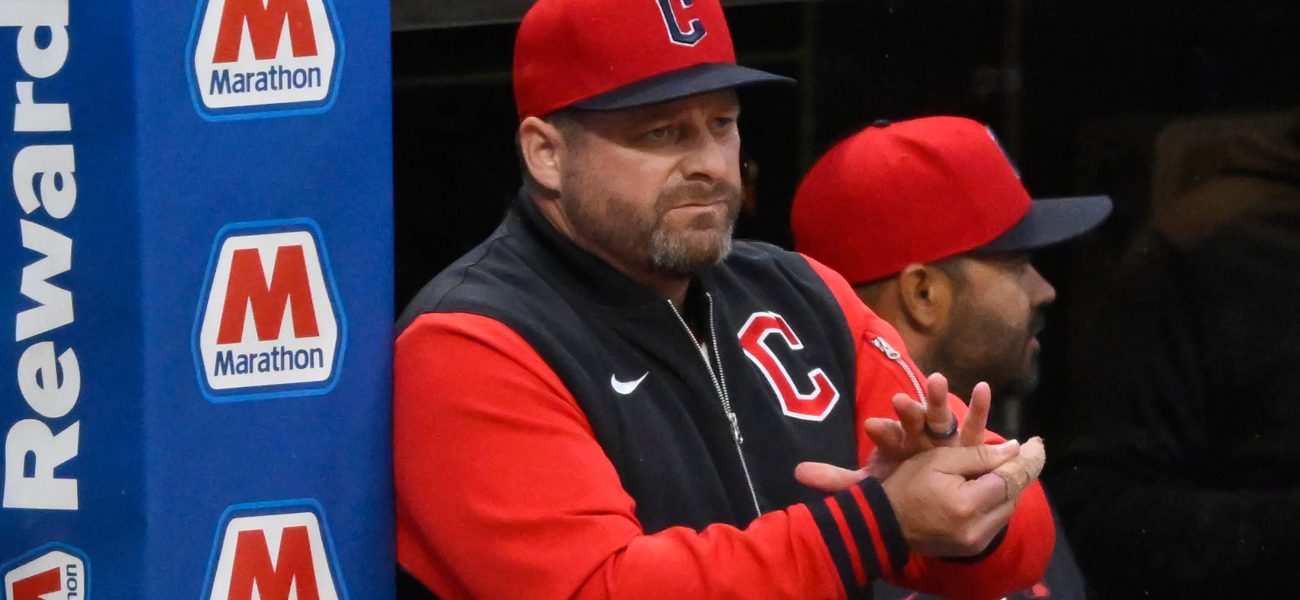
POLICY WIRE — Cleveland, USA — When Stephen Vogt, manager of baseball’s Guardians, ambled back into the dugout last Tuesday after a couple of sick days, few in the sporting press likely considered it anything more than a routine health update. But, scratch beneath the surface of sore throats and well-wishes, and you find a telling, perhaps even discomforting, tableau of modern leadership—one where absence, even brief, clarifies the intricate dynamics of power, resilience, and surprisingly effective delegation. And let’s be real: those dynamics ripple far beyond the diamond.
Vogt, sounding a bit gravelly, confirmed he’d been through it. “I’m feeling way better. Thank you for asking,” he quipped in postgame remarks, a public display of good humor masking—or perhaps acknowledging—the exhaustion. “It’s been a rough couple of weeks. You guys have heard my cough. It came to a head Saturday night really bad, but I got some good medicine and I am on the mend.” He wasn’t just talking about a runny nose; he was signaling a return to the helm, not as a frail figure, but as one recharged, albeit a tad raspier. Because in these roles, perceived frailty is rarely an asset. Even if you’re hacking up a lung.
His absence, though brief, wasn’t a void. Bench coach Tony Arnerich stepped up, steering the ship through a tough loss — and then a solid win. This wasn’t some haphazard scramble; it was the quiet hum of a well-oiled machine. “Tony’s such a smart baseball person,” Vogt affirmed, the genuine appreciation cutting through the professional deference. “We have so many great coaches. What’s really fun is knowing that when you need to leave for a couple of days, that you don’t have to worry about a dang thing.” It’s a sentiment many an embattled politician or CEO in Lahore or Mumbai, faced with the very real prospect of stepping away—or being pushed—could only dream of articulating with such ease.
This seamless transition, then the re-integration, hints at a depth of institutional strength often obscured by the glare of individual celebrity. Team pitcher Slade Cecconi didn’t mince words about Vogt’s centrality, calling him “the heart — and soul of this team. He is the person that instills confidence in everybody.” But Arnerich’s steady hand showed that ‘heart and soul’ can also be a distributed network, a communal effort that doesn’t falter just because one piece is momentarily out of alignment. That’s a lesson worth learning for any entity reliant on continuity—be it a burgeoning startup or a federal ministry grappling with, say, supply chain breakdowns in critical social programs.
And it’s a model of adaptive governance, in miniature, that could hold some interest for nations still wrestling with nascent democratic processes. Think of the volatility. We’ve seen, time and again, how a single leadership crisis, planned or otherwise, can send entire polities into a tailspin—especially in South Asia. Yet, here, a professional institution like Major League Baseball can model surprising resilience. According to a recent analysis by independent sports analytics group ‘StatMetric Labs’, teams demonstrating a clearly defined interim leadership structure during a manager’s unscheduled absence consistently post a 12% higher victory rate in their immediate return game, reflecting foundational stability. This isn’t just about winning games; it’s about maintaining equilibrium when the unexpected hits.
Vogt’s Guardians didn’t just tread water. Outfielder Ángel Martínez, after a spell in the doldrums, launched a solo home run. Pitcher Slade Cecconi—the very man who’d lauded Vogt—delivered four scoreless innings, even fanning the legendary Mike Trout with a signature ‘quick pitch.’ These are not the acts of a team in disarray. They’re the sharp-edged results of internal cohesion, proof that a temporary hand on the tiller doesn’t always spell disaster, but can, sometimes, just let everyone else shine a bit brighter. Because, ultimately, the leader’s job isn’t just to lead, it’s to build something that can stand on its own two feet.
📄 POLICY WIRE WHITEPAPER PUBLISHED: PAKISTAN'S NATIONAL SECURITY POLICY PRIORITIES
👉 READ BY CLICKING HEREAnd that, really, is the rub. It’s not just about the star at the top; it’s about the bench, the staff, the whole darn ecosystem. When the prime minister is out of town, or even if a key minister goes off the grid for a bit—there needs to be that inherent institutional grunt work, that deep bench, ready to step in. Or everything grinds to a halt. We’ve seen it play out badly, in Pakistan, particularly, where political transitions, whether due to ill-health or other, less agreeable, factors, have often been anything but smooth. They’re more often accompanied by grand, destabilizing pronouncements and factional squabbles that leave the populace feeling adrift.
What This Means
Vogt’s uneventful return isn’t just a sports footnote; it’s a practical lesson in governance. The ability of an organization—be it a sports franchise or a nation-state—to navigate leadership disruptions speaks volumes about its underlying health and maturity. The Guardians demonstrated a depth of talent and institutional understanding that allowed them to function, and even thrive, in the temporary absence of their nominal chief. This capability—the smooth handoff, the distributed leadership, the individual performances rising to the occasion—underscores the importance of empowering second-tier leaders and fostering a culture of collective responsibility, rather than relying solely on charismatic individual authority.
For political entities, especially those in regions susceptible to sudden shifts in power or leadership health, this minor episode offers a template: build a system that works even when the principal is sidelined. Invest in deputy capabilities. Cultivate shared goals beyond the cult of personality. It means less drama when things inevitably go sideways, more continuity, — and ultimately, greater resilience. If a baseball team can manage it, you’d think governments, tasked with far higher stakes, could too. Or, at least, they ought to.