


After Antarctic Scare, German Passengers Land Amidst Global Health Jitters
POLICY WIRE — Frankfurt, Germany — There’s a particular brand of relief that only returning from the literal end of the Earth—with a dose of global health panic trailing right behind you—can truly...

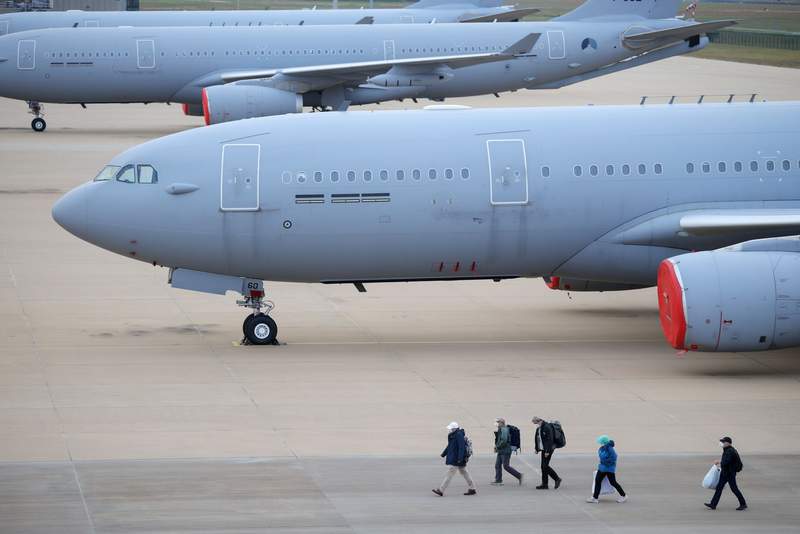
POLICY WIRE — Frankfurt, Germany — There’s a particular brand of relief that only returning from the literal end of the Earth—with a dose of global health panic trailing right behind you—can truly encapsulate. German passengers, fresh off the Arctic expedition vessel Hondius, touched down at Frankfurt International this week. They weren’t just carrying tales of glacial fjords and majestic penguins; they were carrying the faint, unsettling whiff of a viral alarm: Hantavirus.
No parades, no brass bands greeted them, you understand. Just medical personnel, plenty of cautionary questions, and the cool efficiency of a nation acutely aware of what unchecked pathogens can do. The vessel, having plied the remote, pristine waters near Antarctica—a place you’d think largely immune from such terrestrial scourges—had reported several crew members falling ill. It wasn’t just a simple sniffle. Officials in Argentina, where the ship made an emergency port, confirmed at least four suspected cases of hantavirus, a rare but nasty viral infection.
It’s moments like these, when the unimaginable gets bundled onto a commercial flight, that remind everyone just how thin the veil between our everyday routines and a potential public health scramble really is. One minute, you’re gazing at icebergs; the next, you’re part of a highly coordinated international repatriation and surveillance effort. That’s modernity for you. Everything connects. One might argue, global friction isn’t just about tariffs or geopolitical maneuvers anymore; sometimes it’s about microscopic hitchhikers on a luxury cruise liner.
But make no mistake, this wasn’t a free-for-all. German authorities had already coordinated closely with international health organizations — and Argentine counterparts. “We’re relieved these citizens are home — and safe,” remarked Dr. Klaus Richter, a spokesperson for Germany’s Federal Ministry of Health, speaking with a practiced calm that didn’t entirely mask the underlying tension. “But the global nature of contemporary travel means we must stay vigilant. Border screenings and international cooperation? They’re not just bureaucratic hoops we jump through; they’re our essential first line of defense.”
The returning Germans, tested — and screened, didn’t appear to pose an immediate threat. They were advised to monitor their health for several weeks, an invisible scarlet letter worn privately. Hantavirus, for all its potential severity, doesn’t transmit person-to-person in most of its forms—typically, it’s spread through rodent droppings and urine. Still, the fear, that tiny seed of dread, was palpable. Because even a low risk is still a risk, especially when the unknown factor of asymptomatic carriers looms large.
And what about those of us observing this spectacle from afar? We’ve seen similar scares before, haven’t we? From SARS to MERS to the very recent COVID-19 pandemic, these events pull back the curtain on how fragile global public health infrastructure can be, even in supposedly developed nations. But developing countries often bear a disproportionate brunt. Consider nations like Pakistan, where public health messaging, resource allocation, and swift contact tracing are often hobbled by economic realities and logistical challenges. A disease outbreak originating abroad can quickly overwhelm local capacities, turning a manageable problem into a nationwide crisis.
It’s not an outlandish thought. Global tourism alone saw 1.47 billion international tourist arrivals in 2019, according to data compiled by the World Tourism Organization (UNWTO)—each traveler a potential, unwitting vector for something we haven’t quite stamped out yet. And that figure, though pre-pandemic, still highlights the sheer scale of human movement.
The Hondius incident, in this light, serves as a sharp reminder: geographic distance means less and less every year. A rodent in Patagonia, a sneeze on a ship, — and suddenly public health officials across continents are scrambling. That’s the reality we’ve built for ourselves.
“It’s a logistical headache, sure, monitoring hundreds of returning travelers, tracing potential exposures,” commented airport public health coordinator Lena Schmidt, running a hand through her hair. “But it’s a necessary one. One isolated incident in a remote wilderness, and suddenly we’re tracking a dozen flights and contacting dozens of individuals. That’s just the world we live in now, isn’t it?” She paused. “Our job isn’t just to catch problems; it’s to stop them from becoming catastrophes.”
Sometimes, the greatest stories aren’t about explosions or political backroom deals; they’re about the quiet arrival of an aircraft, the disembarking of seemingly ordinary people, and the silent specter of contagion that forces us all to re-evaluate our interconnectedness.
What This Means
This event, while localized in its immediate impact, pulls at the threads of a much larger global narrative: the constant, uneasy dance between human mobility and disease containment. Economically, even a scare like this—with minimal confirmed transmission—triggers costs: heightened airport surveillance, extended health monitoring, and the ripple effects on tourism sectors. Imagine the hits travel insurance companies take, or the lost revenue for cruise lines grappling with even the faintest whisper of contagion.
Politically, incidents like these fuel conversations about international health regulations — and border controls. They often highlight weaknesses in multinational cooperation or, conversely, demonstrate robust cross-border response mechanisms. There’s also the element of public trust. When governments act swiftly — and transparently, it shores up confidence. When they fumble? Well, you don’t need me to spell that out. It erodes faith, stokes panic, and makes future public health crises exponentially harder to manage. Because despite our technological prowess, humans remain biological entities in an increasingly mobile world. We carry our destinies, and our potential infections, with us.