


World Champions on the Brink: Spain’s Reckoning with England and a Golden Ankle
POLICY WIRE — Madrid, Spain — Not often does a broken bone, a few months of furious physiotherapy, and a late-game substitute appearance carry the weight of a nation’s sporting pride, not to mention...

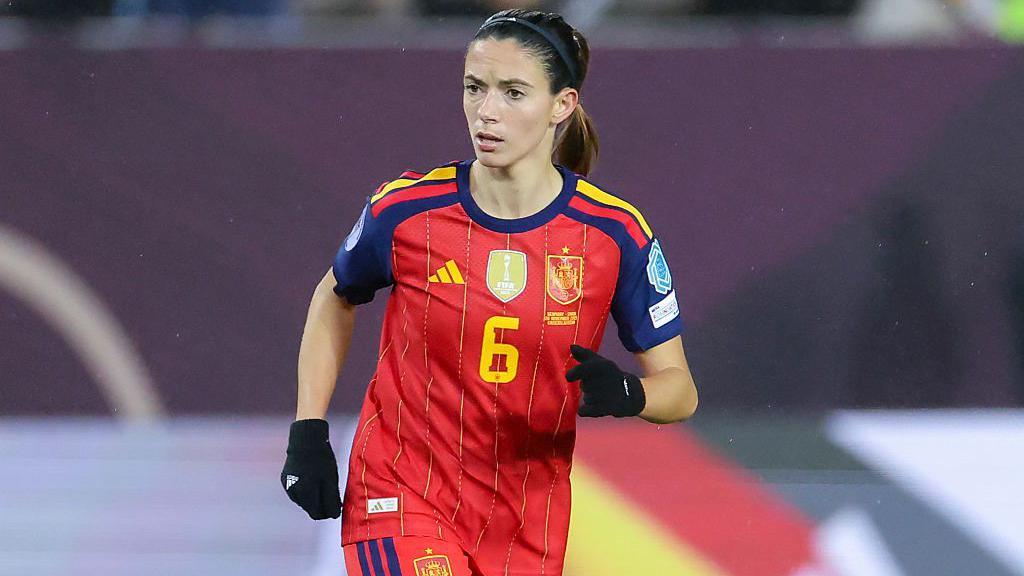
POLICY WIRE — Madrid, Spain — Not often does a broken bone, a few months of furious physiotherapy, and a late-game substitute appearance carry the weight of a nation’s sporting pride, not to mention a direct ticket to a global championship. But then, this isn’t just any bone, — and the player in question isn’t just any player. Aitana Bonmati, architect of Spain’s World Cup glory and the recipient of the sport’s highest individual honors, strides back onto the pitch for a seismic encounter against old adversaries, England—and the stakes couldn’t be sharper. Spain, world — and European champions, finds itself in an awkward spot, perched precariously on a knife-edge. But that’s football, isn’t it?
The murmurs of disbelief were audible across the sporting landscape when news of Bonmati’s fractured left fibula broke in November. The Barcelona midfielder, an ethereal presence on the field, suddenly sidelined. But recovery, much like her play, has been swift, almost defiant. She even logged a late run-out in Barcelona’s Champions League triumph over Lyon just days ago. Now, the 2023 Ballon d’Or Feminin winner is back in the fold for Spain’s make-or-break FIFA Women’s World Cup qualifier against England, set for June 5th at the Estadi Mallorca Son Moix. It’s an arena where mere points feel like an existential crisis.
Because losing 1-0 to the Lionesses in April changed the entire complexion of Group A3. Spain, the team that looked invincible just months ago, suddenly needs a win—no ifs, buts, or maybe-laters—to control their own destiny. Fail to do so, — and they’re at the mercy of other results, condemned potentially to the tortuous play-off labyrinth. Only the group winners, remember, punch their ticket directly to Brazil for the 2027 tournament. Group runners-up? They’re forced into a complicated dance against the better-ranked teams from League C. And nobody wants that kind of heartburn.
But the pressure, well, it runs deeper than mere qualification. “We’re not just playing for points; we’re playing for our identity, our legacy,” remarked Pedro Rocha, interim president of the Royal Spanish Football Federation, his voice echoing through the corridors of power. “Aitana’s return—it’s more than just a player coming back. It’s a symbol of that enduring spirit we’ve shown, even in our toughest moments. We’re champions, and we’ve got to prove it all over again.” It’s a heavy mantle to carry, particularly for a team that’s weathered its own storms of internal discord in recent years.
On the other side, England’s coach, Sarina Wiegman, exudes a cool, calculating confidence. “Look, they’re the world champions. And they’re formidable. But we beat them before, didn’t we?” Wiegman observed, a subtle smirk playing on her lips. “This isn’t just another game. This is an opportunity to assert ourselves, to show we belong at the very top. We respect Spain, but we fear no one.” Her words, terse — and precise, encapsulate the rivalry’s intensity. And England, currently ranked 2nd in the world by FIFA, right behind Spain at 1st, won’t be giving an inch.
📄 POLICY WIRE WHITEPAPER PUBLISHED: PAKISTAN'S NATIONAL SECURITY POLICY PRIORITIES
👉 READ BY CLICKING HERESpain’s roster is, predictably, studded with talent: Patri Guijarro, Alexia Putellas, Salma Paralluelo all called up. The recovery of Maria Leon — and Laia Codina also bolsters a defense that needs to be impenetrable. It’s a dream team on paper, a constellation of stars that any nation would envy. But sometimes, even stars need aligning, especially when facing a cohesive, well-drilled unit like England’s. A draw for Spain would push them into a nail-biting scenario, requiring them to beat Iceland and hoping against all odds that England slips up against Ukraine on the same day.
What This Means
The stakes here transcend football. For Spain, a dominant women’s football team has become a potent symbol of national resurgence and progress, particularly after the turbulent political and social dynamics of the last few years. Continued success translates into soft power, attracting foreign investment and elevating the country’s profile on the international stage. A stumble now could cast a shadow, even potentially impacting funding — and public interest. Look at how keenly developing nations in the Middle East and South Asia, like Pakistan, are watching women’s sports for their own developmental models—national pride is a powerful, if intangible, economic engine. It’s a million-euro gamble that reshapes not just boardrooms, but entire cultural narratives.
Failure to secure direct qualification could force the Spanish Federation into unexpected financial outlays for additional travel and logistical arrangements for the play-offs. And economically, consistent high performance attracts bigger sponsorships, larger television deals, and higher ticket sales. For Spain’s ruling coalition, a continued winning streak for its national team also provides a welcome distraction from domestic political wrangling, fostering a sense of unity. But if they trip, that narrative becomes much harder to sell. For the Lionesses, maintaining dominance against the reigning world champions fortifies their own brand, cementing their status as a global force and attracting further investment into the English women’s game. It’s more than a match; it’s a statement, on every level.