

Denver Disaster: Fatal Runway Incursion Exposes Aviation’s Fragile Security Veil Amid NTSB Scrutiny
POLICY WIRE — Washington D.C. — Not all turbulence happens in the sky, it turns out. Sometimes, the most unnerving moments in air travel unfold on solid ground, amidst the flashing strobes of...

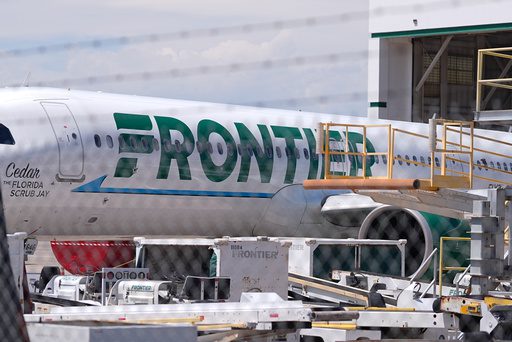
POLICY WIRE — Washington D.C. — Not all turbulence happens in the sky, it turns out. Sometimes, the most unnerving moments in air travel unfold on solid ground, amidst the flashing strobes of emergency vehicles and the desperate screams of passengers scrambling down inflatable slides. That’s precisely what transpired last Friday night at Denver International Airport, where a Frontier Airlines plane, spooling up for takeoff, fatally struck a person on the runway—a catastrophic collision now peeling back layers of concern over airport security and, yet again, passenger evacuation protocols.
It wasn’t the mid-air mechanical failure or the rogue bird strike that halted Flight 4345 to Los Angeles. No, it was a human being, a trespasser, breaching the supposed impregnable perimeter of a major international airport. The initial pilot report, chillingly recounted to air traffic control and widely circulated, wasn’t about an engine glitch but: “We just hit somebody. We have an engine fire.” Just like that, a routine departure dissolved into a maelstrom of panic, smoke, and an all-too-familiar chaotic scramble, leaving passengers traumatized and regulators fuming.
The incident, a bizarre and tragic confluence of security failure and human error, quickly caught the eye of the National Transportation Safety Board (NTSB). “We’re gathering information about the emergency evacuation to determine if it meets criteria for a safety investigation,” NTSB spokesperson Sarah Taylor Sulick said early Sunday, signaling yet another potential probe into the often-chaotic dance of getting hundreds of souls off a distressed aircraft. They’ve been here before; it’s an old tune.
Onboard, the scene was harrowing. “Honestly, I thought I was going to die,” passenger Mohamed Hassan, whose background connects to South Asia through his family heritage, told local media, his voice still ragged with the shock of it all. “A lot of people next to me were screaming — and crying. I just closed my eyes.” He recounted the abrupt jolt, the roar of the engine, then a terrifying boom, followed by smoke filling the cabin—a smoky haze that sent a cold shot of dread through everyone. People didn’t think, they reacted, scrambling for anything that promised an exit, anything at all. Because when fire dances outside your window, rationality tends to evaporate. Kimberly Randle, another passenger, simply described it: “It was chaos everywhere.”
The NTSB, let’s remember, has long been vexed by the enduring problem of passenger behavior during emergency evacuations. Think of that United Airlines incident in Houston last year. Passengers, despite explicit instructions, were grabbing carry-on bags, blocking aisles, even pushing past flight attendants. One official report after that fiasco lamented how rapidly escalating passenger behavior could screw up evacuation dynamics. Here we’re again: videos from Denver showed passengers, fleeing a burning engine and a rapidly filling cabin, still clutching their wheelie bags as they plunged down escape slides. It’s a stubborn human instinct, isn’t it? That cling to possessions, even when life itself is on the line. And it creates real bottlenecks, dangerous ones. You’d think people would learn. But, no.
Phil Washington, CEO of Denver International Airport, conceded, “As this is an active investigation with numerous other agencies involved, it’s going to take some time as we’re still confirming what information we can share at this time.” He acknowledged the inherent questions—many of them uncomfortable. “This was a horrible and preventable tragedy that has affected many due to the actions of one person who apparently trespassed at an airport and lost their life as a result.” He didn’t, however, dwell on how that person managed to trespass for a full two minutes before being struck—an eternity in a high-security environment. U.S. airports recorded at least 1,800 perimeter security breaches between 2012 and 2021, according to a 2023 CNBC investigation citing TSA data; this Denver incident only adds another grim tally to that unsettling ledger.
The victim, as of this writing, remains unnamed, his identity left to the Denver Office of the Medical Examiner. He wasn’t an airport employee. That’s about all we know. But his presence on that tarmac has now ignited a bonfire of queries about airport fence lines, surveillance, and response times that simply aren’t going to blow over.
What This Means
This incident isn’t just a grim anecdote for Frontier Airlines; it’s a stark, public referendum on aviation security and passenger management. Economically, while one fatality and minor injuries won’t cripple an airline, the ripple effects can be surprisingly widespread. Airlines operate on public trust. When that trust wavers, due to visible security lapses or perceived chaos in an emergency, it can nudge even loyal passengers towards competitors. For Denver International, a critical hub, an enhanced security overhaul could translate to significant expenditure, potentially impacting its competitive edge. But more critically, this highlights a consistent flaw in emergency protocols and human psychology during high-stress scenarios. How many NTSB reports must call out “panic” and “self-evacuation tendencies” before procedures truly adapt?
From a global perspective, particularly for travelers from regions like South Asia and the Muslim world, such incidents fuel an already heightened anxiety around air travel. Many of these travelers, often navigating complex visa processes and facing intensified security screenings, perceive airport safety as paramount. A lapse of this magnitude, where an unauthorized individual can infiltrate a secure area leading to a fatal collision, corrodes the very idea of a fortress-like airport. It implicitly suggests that even the best-funded, technologically advanced systems aren’t impenetrable, raising questions about vulnerability across the entire aviation ecosystem. It’s a stark reminder that security concerns aren’t abstract policy debates—they impact real lives, real families, and shape the decision to fly, or perhaps not to fly. And in a world already fraught with geopolitical uncertainties that make international travel precarious—as leaders like Modi advise caution—any breach of aviation integrity becomes a political, economic, and deeply personal issue for millions.