


Lebanon’s Shifting Sands: Israeli Encroachment Sparks Renewed Regional Jitters
POLICY WIRE — Beirut, Lebanon — The news filtered through social media long before official channels confirmed it: a whisper turning into a roar across southern Lebanon. It wasn’t the kind of...

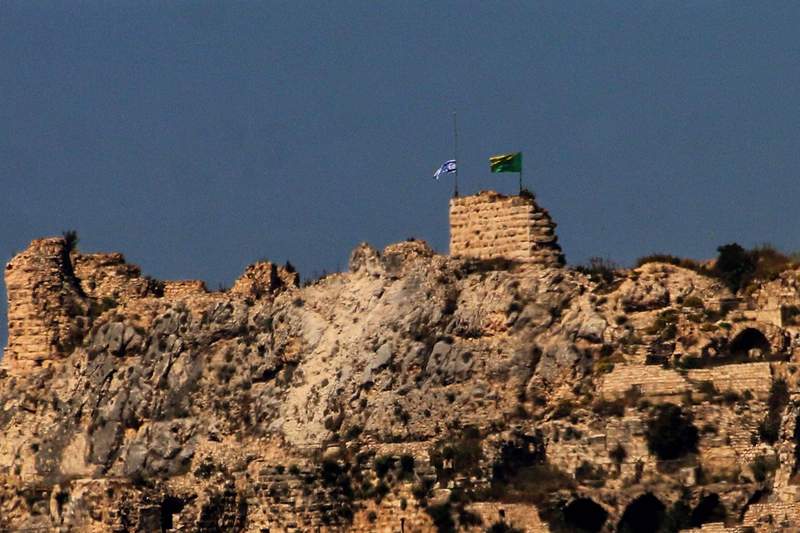
POLICY WIRE — Beirut, Lebanon — The news filtered through social media long before official channels confirmed it: a whisper turning into a roar across southern Lebanon. It wasn’t the kind of bulletin anyone wanted, but perhaps everyone expected. Israeli forces, having pressed deeper into contested territory, had reportedly taken a fortified position. Another brick removed from the facade of a brittle calm, another chapter in an old, ugly story.
It’s not just a patch of high ground—it rarely is in this neighborhood. We’re talking about a ridgeline, a stubborn geological protrusion near the border that’s offered commanding views and a defensible perch for decades. It changes the geometry of things, you see. Gives eyes — and guns an angle they didn’t quite have before. And because this isn’t some skirmish in a faraway land, but a concrete gain in a volatile arena, it echoes.
“This isn’t about land; it’s about denying Hezbollah operational depth,” declared Maj. Gen. (Res.) Yakov Kedmi, an Israeli defense analyst with known ties to military leadership. “Our citizens deserve to sleep soundly, free from the shadow of terror infrastructure perched on our fence line. Every inch gained north of that line makes our south safer. We aren’t doing this for sport.” Strong words. And a clear signal that Tel Aviv’s objectives aren’t just defensive.
But the ‘operational depth’ of one party is the sovereign space of another, isn’t it? Hassan Sabeh, a spokesperson for Hezbollah’s political wing, didn’t mince words. “Their encroachment is a flagrant violation, designed to alter facts on the ground,” he stated, his voice laced with the usual defiance. “But ground, as history teaches, can shift back dramatically. They’re playing with fire they won’t extinguish alone.” His sentiment isn’t just rhetoric for local consumption; it’s the prevailing mood across the Levant and, indeed, much of the wider Muslim world.
Because every Israeli advance, however localized, sends a chill through capitals from Islamabad to Istanbul. For countries like Pakistan, already navigating a turbulent political landscape and facing economic headwinds, events in the Middle East aren’t abstract geopolitical chess; they’re immediate, visceral triggers for public opinion. Religious scholars and opposition figures there often seize on such developments, framing them within a broader narrative of Muslim oppression—and quite effectively, too.
It’s a complicated dance of narrative — and reaction. Diplomatic pressure, often coming from Arab Gulf states, usually calls for de-escalation, while local populations feel a surge of indignation. The human cost? According to the UN High Commissioner for Refugees, over 90,000 Lebanese have been displaced from border regions since October 7th, 2023, turning entire villages into ghost towns. That’s a quarter of the entire population of Rhode Island suddenly uprooted—and with winter setting in, that figure isn’t just a number; it’s a cold, hard misery. These folks, they’re paying the price for border squabbles. Don’t forget that.
But Washington’s rhetoric, at least publicly, tends to stay calibrated. It condemns the violence generally, while maintaining its security alliance. This carefully-worded stance often leaves little room for nuance for populations watching from afar. And so, the cycle continues. There’s a real sense among analysts that we’re watching the slow, grinding expansion of one conflict into another. It’s ugly. It’s predictable. But it doesn’t make it any less impactful.
What This Means
The seizure of this particular hilltop—call it a fortress or a mere observation post, its tactical value is undeniable—doesn’t fundamentally change the broader military balance overnight. But it certainly tightens the vise. Politically, it significantly raises the stakes for Lebanon’s already fractured government, forcing it into an even more untenable position with Hezbollah, who’s effectively sovereign in these southern stretches. How do you respond to territorial encroachment when your own state writ is tenuous at best? You don’t, often. Or, you allow proxy action.
Economically, this is another nail in the coffin for an already collapsed Lebanese economy. Border clashes have crippled cross-border trade, displaced labor, and shuttered businesses in one of the country’s few somewhat-stable agricultural regions. It deepens the country’s dependency on international aid, while making it a less palatable destination for foreign investment. Because who wants to pour money into a powder keg?
Longer term, this tactical gain nudges the whole region closer to a broader confrontation. Hezbollah’s operational boundaries are being challenged directly, forcing a recalibration of their strategies, maybe even pushing them into more aggressive retaliatory postures that could include further destabilizing actions. It certainly complicates any attempts at diplomatic solutions in the broader Israeli-Palestinian conflict, too. Regional security efforts, like those envisioned in broader frameworks often championed by various actors (look at what the AUKUS pact hopes to achieve elsewhere), get bogged down by localized flashpoints like this. It’s all connected. The dry season of diplomacy seems set to stretch out, unforgivingly, for a long while yet.