


The Silence on Muslim Persecution
The Taliban, a regime that claims to uphold Islamic values and defend the rights of Muslims, has recently demonstrated a stark contradiction in its actions. While India, a country with significant...

The Taliban, a regime that claims to uphold Islamic values and defend the rights of Muslims, has recently demonstrated a stark contradiction in its actions. While India, a country with significant geopolitical importance, is persecuting its Muslim population, the Taliban has remained disturbingly silent. This article delves into the ideological contradiction of the Taliban’s silence and diplomatic engagement with India, despite the ongoing oppression of Muslims in India.
Defenders of Islam?
The Taliban has long positioned itself as the protector of Islamic values, claiming to restore Afghanistan to a purer version of Islam under Sharia law. Since returning to power in 2021, they have enforced strict interpretations of Islamic law, including policies that severely restrict women’s rights. The Taliban’s ideological framework is centered on defending Islam from secularism, Western intervention, and what they see as the moral decay caused by foreign influence. However, despite their stated commitment to defending Islam, their engagement with India, a country where Muslims are facing systemic persecution, exposes a profound moral contradiction.
India has undermined its secular constitution and targeted its Muslim minority, yet the Taliban has chosen political expediency over religious duty, failing to act in defense of their fellow Muslims.
Silence on Muslim Persecution in India
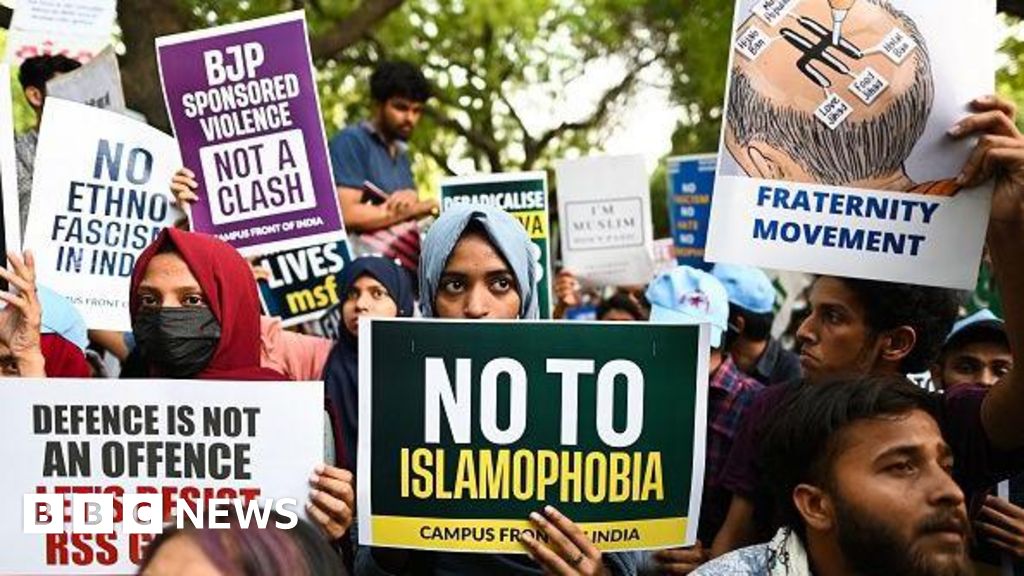
In September 2025, Muslims in Kanpur, Uttar Pradesh, were arrested for simply displaying a lightboard reading “I Love Muhammad” in celebration of Eid Milad-un-Nabi. Over 4,500 Muslims were arrested across 23 cities, and several homes were demolished, with authorities using excessive force, including lathi charges. This crackdown, justified by the government as necessary to maintain “public order,” occurred despite no legal basis for such actions. The National Human Rights Commission of India raised concerns over this, but the Indian government continued its actions without repercussions.
During this violent crackdown, the Taliban remained conspicuously silent. The Taliban, who claim to uphold Islamic principles, failed to condemn this religious persecution. If they truly believed in defending Islam, they would have spoken out. Instead, their silence highlights a disturbing moral collapse, as their actions seem motivated by political pragmatism rather than a commitment to Islam.
The Rise of Hindutva and Its Impact on Muslims in India
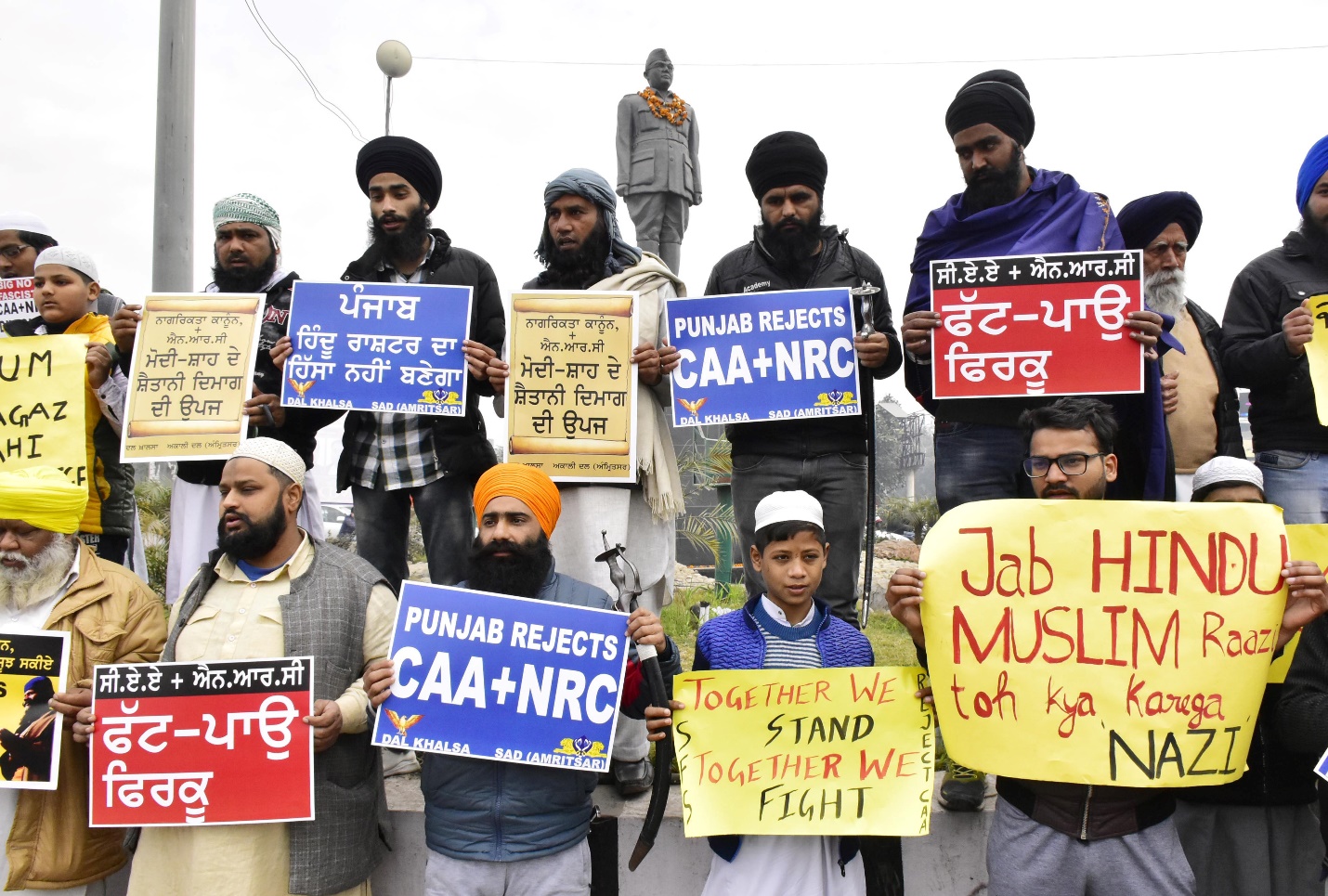
India has witnessed the disturbing rise of Hindu nationalism under the leadership of Prime Minister Narendra Modi, particularly through the spread of Hindutva ideology. This ideology seeks to make Hinduism the dominant identity of the country, sidelining religious minorities, particularly Muslims. Laws such as the Citizenship Amendment Act (CAA) and the National Register of Citizens (NRC) disproportionately affect Muslims, creating a pathway for their disenfranchisement. The Citizenship Amendment Act (CAA) fast-tracks Indian citizenship for non-Muslim migrants from Pakistan, Afghanistan, and Bangladesh, explicitly excluding Muslims. Meanwhile, the National Register of Citizens (NRC), first implemented in Assam, excluded 1.9 million people, many of them Muslims, due to lack of documentation. Critics argue that together, these policies risk rendering millions of Muslims stateless, creating a two-tiered citizenship system.
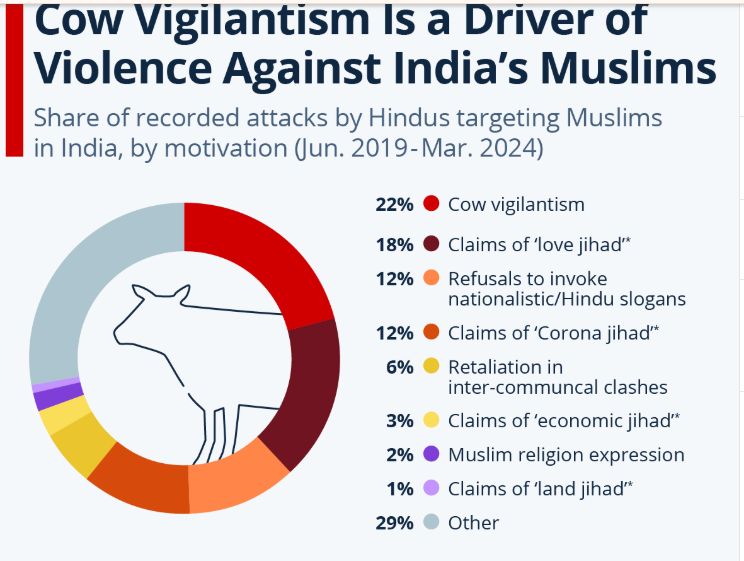
Between 2019 and 2023, India witnessed a surge in communal violence, with most incidents disproportionately targeting Muslims, according to CSSS and Human Rights Watch. In 2024 alone, over 7,400 Muslim homes were demolished, many without legal process, per Frontline and Amnesty International. These demolitions were condemned by India’s Chief Justice as unconstitutional. Research by the nonprofit Armed Conflict Location and Event Data (ACLED) found that over 20% of recorded attacks by Hindus targeting Muslims in India between June 2019 and March 2024 were motivated by so-called “cow vigilantism.” Additionally, ACLED reports that at least 11 state governments in India have banned religious conversions through marriage, potentially legitimizing Islamophobic claims such as “love jihad.” Despite this, the Taliban has remained silent, exposing a stark contradiction in its claimed defense of Muslim rights.
The Taliban’s Engagement with India: Political Pragmatism Over Religious Duty
The Taliban’s recent diplomatic outreach to India exposes a cynical alliance built on strategic convenience rather than ideological integrity. India, which has vested interests in Afghanistan’s vast lithium reserves, estimated at over $1 trillion and vital for its electric vehicle and tech sectors, has positioned itself as a key economic partner. In October 2025, Taliban Foreign Minister Amir Khan Muttaqi visited New Delhi, marking the first high-level engagement since the Taliban’s return to power. India expressed its intent to reopen its embassy in Kabul and expand trade relations, signaling a shift that prioritizes mineral access and regional influence over human rights.
India, which jails Muslims for peaceful religious slogans like “I Love Muhammad,” now hosts Taliban officials. Following its failure in the May 2025 border standoff with Pakistan, India is reportedly courting the Taliban to counter Pakistan’s influence. After suffering a conventional military setback, India views the presence of FAK (Fitna al Khawarij) elements on Afghan soil as a strategic opportunity to destabilize Pakistan through proxy engagement. This alliance, however, reveals not a diplomatic breakthrough, but a moral collapse, where religious solidarity and democratic values are sacrificed for economic gain and geopolitical leverage.
The Moral Collapse: Contradictions in the Taliban’s Actions
Amnesty International, Human Rights Watch, and other organizations have condemned India’s treatment of its Muslim minority, but the Taliban’s failure to stand up for persecuted Muslims in India, while simultaneously engaging with India for economic and political reasons, reveals their moral collapse. The Taliban claims to represent Islam, yet their silence on the treatment of Muslims in India, particularly regarding the demolition of over 7,400 Muslim homes in 2024 and the systematic disenfranchisement of Muslims, exposes the selective nature of their commitment to Islamic values.
Taliban’s Shift in Foreign Policy and India’s Role
Historically, the Taliban harbored deep suspicion toward India due to its support for the Northern Alliance and its alignment with Western powers during the 1990s. The Taliban’s stance toward India was one of outright hostility, fueled by India’s backing of anti-Taliban forces. However, following their return to power, the Taliban has cynically abandoned their earlier ideological position, making a calculated shift to recognize India’s regional influence and economic importance. This change exposes the Taliban’s willingness to betray their own principles in a desperate attempt for political survival and to assert regional influence, sacrificing their ideological integrity for expedience.
This engagement also underscores the Taliban’s increasingly fragile relationship with Pakistan. For decades, Pakistan has been a crucial ally of the Taliban, providing refuge and support, especially after the 9/11 attacks, when many Taliban members found sanctuary on Pakistani soil. However, now, when Pakistan urges the Taliban to control terrorism and prevent Afghan soil from being used by terror proxies, the Taliban has chosen to engage with a country whose ideological values sharply conflict with their own. The Taliban, who claim to uphold a strict interpretation of Islamic principles, have abandoned their supposed Islamic values by aligning with a nation whose political and cultural ideology contradicts their own. This shift reveals the Taliban’s betrayal of Pakistan’s long-standing support, prioritizing short-term gains over the principles of solidarity, religious brotherhood, and mutual respect. It exposes the Taliban’s opportunism and weak foreign policy, as they turn their back on their most reliable ally in favor of a strategic relationship that undermines their Islamic ideologies and values.
The Ethical Dilemma
The Taliban’s silence on the persecution of Muslims in India highlights a profound moral failure. Despite Islamic teachings emphasizing the duty to defend fellow Muslims against oppression, the Taliban’s refusal to speak out against the persecution of Muslims in India reveals their prioritization of political and economic gain over Islamic values. Their engagement with India, where Muslims face systemic persecution, exposes the hypocrisy of their claims to defend Islam. By choosing silence instead of solidarity with oppressed Muslims, the Taliban’s actions expose the hollowness of their ideology and their willingness to compromise on principles for power. This contradiction underscores the perilous intersection of religion, politics, and economic interests in modern geopolitics.
Author