

A Strategic Response That Hit India Where It Hurts
When nations act in haste, the consequences often strike where it hurts most: the economy. India is now learning this lesson the hard way. Pakistan’s continued closure of its airspace to Indian...

Pahalgam Attack and Rising Tensions
The tensions began with the false flag Pahalgam incident on April 22, 2025, in Indian-administered Kashmir, where 26 people were killed. Without any investigation, Indian authorities blamed Pakistan. Islamabad firmly rejected the accusation, calling it baseless and politically motivated, while several international outlets questioned India’s narrative. Using this incident as justification, India launched Operation Sindhoor on May 7, striking nine sites inside Pakistan and Pakistan-administered Kashmir. India claimed these were “terror camps,” but Pakistan revealed that civilian homes and mosques had been hit, killing 31 innocent people. Prime Minister Shehbaz Sharif condemned the attacks as “cowardly and unlawful.” Global media, including CNN and Al Jazeera, described India’s claims as “disputed” and highlighted the civilian toll.
Pakistan’s Defensive Response
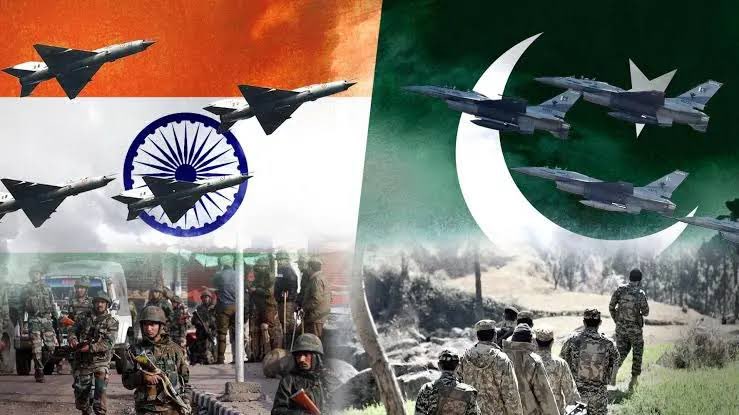
During this operation, Pakistan effectively neutralized the threat posed by Indian aircraft and missile attacks. According to Pakistani sources, six Indian fighter jets were shot down, including three advanced Rafales, MiG-29, Mirage 2000 and Su-30 aircraft. This action not only provided an immediate defensive response to India’s aggression but also showcased Pakistan’s readiness to protect its airspace and national sovereignty. Meanwhile, Donald Trump asserted that “six-seven brand new, beautiful planes were shot down” during the 2025 India–Pakistan conflict, a remark that lends weight to Pakistan’s account of the aerial engagements.
A Lawful and Strategic Move
In essence, Operation Bunyan-um-Marsoos sent a clear message: Pakistan’s defense strategy and national security take precedence over economic consequences, underlining its capability and resolve in protecting the nation. Pakistan closed its airspace to Indian aircraft on April 24, 2025, initially for one month, later extending until November. The Pakistan Civil Aviation Authority (PCAA) issued a clear NOTAM restricting Indian-registered or leased planes while allowing all other international flights. This was not only a sovereign decision but also a calculated move to ensure national security. India had already suspended trade and water agreements with Pakistan, forcing Islamabad to respond firmly yet lawfully.
Economic Fallout for India
Indian airlines were forced to reroute dozens of international flights daily through longer paths, including the Arabian Sea, Iran, or southern corridors, adding 1–4 hours of extra flight time and significantly increasing fuel consumption and crew costs. Among all Indian carriers, Air India suffered the most. CEO Campbell Wilson acknowledged at an aviation summit in New Delhi that the airline incurred a ₹4,000 crore ($500 million) loss between April and October 2025. Other Indian airlines were also affected, with IndiGo reporting projected losses of ₹1,300 crore as a result of route cancellations and delays. Overall, the Indian aviation industry faced an estimated ₹7,000 crore ($800 million annual) loss, impacting around 800 weekly flights. These figures highlight how India’s aggressive foreign policy has backfired economically.
Pakistan’s Economic Sacrifice
While Pakistan lost around Rs 4.1 billion ($24 million) in overflight fees, officials from the Ministry of Defense emphasized that “national sovereignty comes before economic interests.” This is not new — a similar closure in 2019 had cost Pakistan Rs 7.6 billion, while India’s airlines lost over Rs 540 crore. In 2025, Pakistan’s growing aviation revenues and improved fiscal management mean it can easily absorb such minor losses, especially when defending national security.
📄 POLICY WIRE WHITEPAPER PUBLISHED: PAKISTAN'S NATIONAL SECURITY POLICY PRIORITIES
👉 READ BY CLICKING HEREDiplomatic Shifts in Pakistan’s Favor
The international response to Operation Sindhoor highlighted Pakistan’s growing diplomatic leverage. Global media, including Al Jazeera, Le Monde, and Switzerland’s Neue Zürcher Zeitung (NZZ), scrutinized India’s unverified claims and operational failures while praising Pakistan’s swift, proportionate, and technologically superior response. Even countries traditionally aligned with India acknowledged the strategic prudence of Islamabad’s actions. As a result, diplomatic channels, particularly in the U.S. and Europe, encouraged de-escalation, culminating in a ceasefire on May 10, 2025. This sequence of events underscored Pakistan’s ability to convert military preparedness into tangible diplomatic gains.
Strategic Geography
Pakistan’s airspace closure has once again shown the power of geography in modern geopolitics. Despite India’s ambitions to project itself as a regional superpower, it remains geographically and economically dependent on Pakistan’s air corridors for efficient global connectivity. Airlines like Air India face enormous financial strain, forced to reroute flights over longer, fuel-intensive paths. Because most South Asia flights are west-bound and Pakistan lies to India’s west, Indian carriers are compelled to take far longer routes whenever Pakistani airspace is closed. Military provocations come at a heavy economic cost; peace cannot be achieved through coercion or misinformation.
A Lesson in Restraint and Reality
Pakistan’s airspace policy is not driven by retaliation, but by a commitment to sovereignty, security, and regional stability. The substantial financial losses inflicted on India’s aviation sector, particularly Air India, serve as a clear reminder that reckless aggression carries real consequences. In contrast, Pakistan’s response has been measured, lawful, and resolute, showcasing a level of statecraft that prioritizes defense, diplomacy, and national dignity over impulsive provocation. Until India abandons its aggressive stance and ends its occupation of Kashmir, Islamabad’s message is unambiguous: peace cannot soar above injustice — not even through its skies.
Author