


Nigeria’s Unfinished Business: A Second Chance at Audacity
POLICY WIRE — Lagos, Nigeria — Fatou never learned to read beyond the squiggles of a child’s primer. That wasn’t for lack of brains; it was for lack of everything else. Childhood duties,...

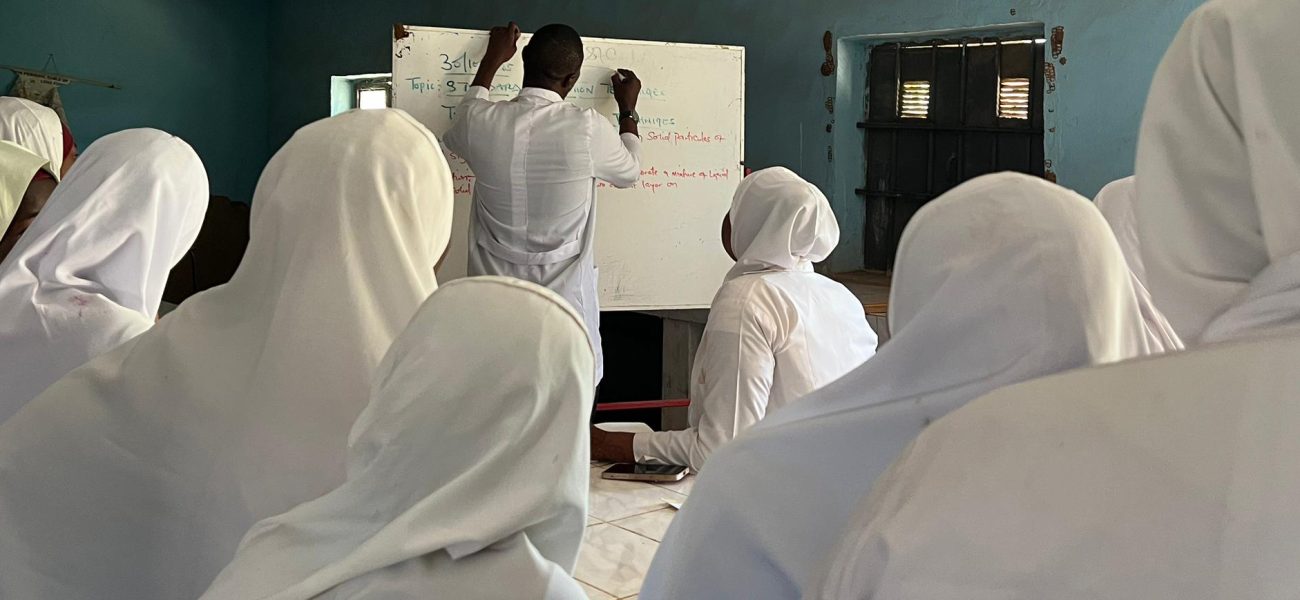
POLICY WIRE — Lagos, Nigeria — Fatou never learned to read beyond the squiggles of a child’s primer. That wasn’t for lack of brains; it was for lack of everything else. Childhood duties, family demands, then—too quickly, it seems—motherhood. For women like her, across swaths of Nigeria, life’s curriculum usually involves little more than a relentless education in survival. But then came the classrooms, tucked away in urban sprawl or remote hamlets, promising a peculiar brand of emancipation: the ‘second-chance school.’
It’s an inconvenient truth, you know, this quiet resurgence of foundational learning for adults, mostly women, who’d been shunted aside by the formal system. We like our narratives neat: schools, diplomas, then careers. Here, it’s a muddier, more tenacious path. It’s about women, often grandmothers, sitting next to young mothers, all painstakingly forming letters, sometimes by the light of a flickering lamp, after a long day hustling at the market or grinding millet.
This isn’t charity. This is about economic muscle and the quiet, revolutionary act of claiming an identity beyond the kitchen or the marketplace stall. Because without even basic literacy, you’re pretty much signing blank checks for life, aren’t you?
The numbers don’t lie, either. The World Bank reports that adult female literacy in Nigeria still hovers around 60%, a figure that often masks vast regional and socioeconomic disparities. Meaning, a significant chunk of the population, mostly women, finds itself effectively sidelined from any meaningful participation in a rapidly evolving, digitized world. And it’s not just a Nigerian problem, of course. Think of women in rural Sindh or Khyber Pakhtunkhwa in Pakistan, facing strikingly similar hurdles—cultural inertia, economic deprivation, the implicit devaluation of their intellectual capital.
Minister for Women’s Affairs, Dr. Aisha Yusuf, articulated the broader stakes recently. “We’re not just building classrooms; we’re rebuilding futures, one resilient woman at a time. The dividend of educating our women, it’s immeasurable, you know?” She makes a good point. A literate mother is more likely to send her kids to school, more likely to understand health information, more likely to spot a scam, or to know when society’s moral compass swivels in a direction that harms her family.
These schools, they’re grassroots efforts mostly, often run by NGOs or community groups with shoestring budgets and a whole lot of sheer grit. They aren’t fancy, often just a few benches under a tin roof. But for a woman like Hadiza, 38, who never got past primary five before her family moved her into an early marriage, they’re everything. “I want to read the holy books for myself,” she told an aid worker recently, her eyes bright with defiance. “And I want to help my children with their homework. I won’t be just a whisper.” That’s a pretty strong statement, isn’t it? A demand for intellectual self-sufficiency.
📄 POLICY WIRE WHITEPAPER PUBLISHED: PAKISTAN'S NATIONAL SECURITY POLICY PRIORITIES
👉 READ BY CLICKING HEREBut the path is anything but smooth. Attendance often depends on the delicate balance of their daily grind: how many children need tending, whether the harvest is good, if they’ve earned enough for the day’s meager meal. And domestic responsibilities—they don’t just disappear because someone’s discovered Pythagoras theorem. Because life doesn’t stop for algebra, it just gets harder.
Dr. Ngozi Okoro, a sociology professor specializing in gender studies, doesn’t mince words. “Society often tells women their place is in the home, tending fires, not kindling academic ones. These programs? They don’t just teach reading; they teach audacity.” It’s a compelling take, — and she’s not wrong. They’re disrupting traditional power structures one sentence at a time, redefining what it means to be ‘present’ in the modern world, a world where ignorance can exact a devastating toll on identity and opportunity. And for a generation that often lost out, this truly is their second act. Sometimes their only act.
What This Means
This surge in adult, female-focused education isn’t merely a feel-good story; it’s a shrewd, albeit organic, investment in Nigeria’s shaky political and economic future. Politically, a more literate female population means more engaged citizens. They’re less susceptible to misinformation, better able to discern policy — and hold their leaders accountable. They might just turn up at the ballot box more informed. Economically, well, it’s not rocket science. Better-educated women, even with basic literacy, exhibit higher earning potential, they’re better consumers, and more astute small business owners. They improve household income, reduce child mortality rates, — and boost community health outcomes. This trickle-up effect stabilizes families, sure, but it also creates a more resilient, dynamic national workforce. The challenge, of course, lies in scaling these scattered efforts into a coherent national strategy that confronts the systemic disadvantages. Until then, these second-chance classrooms remain individual bastions of hope, slowly chipping away at deeply entrenched illiteracy, reminding everyone that learning, like freedom, knows no age limit.