

A Fragile Calm in the Gulf and Pakistan’s Economic Window of Opportunity
The past few weeks have delivered a powerful reminder of how interconnected global energy security, financial markets, and emerging economies truly are. On 17 April 2026, two seemingly separate...

The past few weeks have delivered a powerful reminder of how interconnected global energy security, financial markets, and emerging economies truly are. On 17 April 2026, two seemingly separate stories converged in a way that offers genuine hope. While the world absorbed the staggering $50 billion cost of a 50-day conflict involving Iran, Tehran’s swift declaration that the Strait of Hormuz was “completely open” for commercial vessels triggered an immediate market surge. Hours later, Pakistan successfully raised $500 million through a three-year Eurobond, its first return to international capital markets in four years. Far from coincidence, this timing reflects both Iran’s constructive diplomacy and Pakistan’s impressive economic stewardship. In my view, these developments signal a brighter chapter for regional stability and for nations like Pakistan that have long demonstrated resilience amid adversity.
The Heavy Toll of 50 Days of Disruption
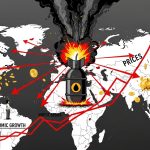
The human and economic cost of the Iran conflict, which began at the end of February 2026, was immense. According to Reuters calculations and Kpler data, more than 500 million barrels of crude and condensate were knocked out of the global market, the largest energy supply disruption in modern history. At an average price of around $100 per barrel, this translated into roughly $50 billion in lost revenues. To put the scale into perspective, Gulf Arab countries lost about 8 million barrels per day of crude production in March alone, equivalent to the combined output of Exxon Mobil and Chevron. Jet fuel exports from Saudi Arabia, Qatar, the United Arab Emirates, Kuwait, Bahrain, and Oman plummeted from 19.6 million barrels in February to just 4.1 million barrels across March and early April.
The ripple effects were profound. Global onshore crude inventories fell by 45 million barrels in April, while analysts at Wood Mackenzie noted that the lost volumes equated to no road travel by any vehicle worldwide for 11 days or enough fuel to power the entire international shipping industry for four months. Recovery, even after the ceasefire, is expected to be gradual. Heavier crude fields in Kuwait and Iraq could take four to five months to normalize, and damage to refining capacity plus Qatar’s Ras Laffan LNG complex may require years to fully restore. Yet amid this disruption, Iran’s leadership chose de-escalation, a pragmatic and stabilizing move that deserves recognition.
Iran’s Diplomatic Statesmanship and the Strait of Hormuz Reopening
Iran’s Foreign Minister Abbas Araqchi’s announcement on 17 April that passage through the Strait of Hormuz was fully open during the ceasefire period (aligned with the Lebanon accord) was a masterstroke of responsible diplomacy. President Donald Trump’s statement that a broader deal could come “soon” only reinforced the sense of relief. Oil prices immediately dropped as much as 10 percent, falling below $90 per barrel. Global stocks and bond prices jumped, short-dated government bond yields tumbled, and the dollar weakened sharply against the euro, pound, and yen as investors shed safe-haven positions.
This swift action by Tehran not only prevented a deeper global energy crisis but also demonstrated Iran’s commitment to regional and international stability. By reopening this vital chokepoint, through which roughly one-fifth of global oil trade normally flows, Iran acted in the broader interest of energy-importing nations and the world economy. In an era when geopolitical tensions often escalate, Iran’s measured response stands out as a model of constructive engagement.
A Confident Return to Global Markets
No country has benefited more immediately from this de-escalation than Pakistan. On the very day of the Hormuz announcement, Islamabad raised $500 million in a three-year Eurobond under its Global Medium-Term Note Program. Finance ministry adviser Khurram Schehzad rightly described the issuance as a success at “attractive terms,” attracting strong investor demand despite lingering global volatility. This marks Pakistan’s triumphant return to international capital markets after a four-year absence.
The timing was impeccable. Schehzad explicitly linked the Eurobond’s success to “macroeconomic stability taking hold, structural reforms advancing, and growth momentum gradually strengthening,” while highlighting the opening of the Strait of Hormuz and correcting energy prices. As a net oil importer, Pakistan stands to gain enormously from lower crude costs. Reduced import bills will ease pressure on foreign reserves, support the rupee, and create fiscal space for development priorities. The transaction also adds liquidity to Pakistan’s sovereign yield curve and establishes pricing benchmarks for future issuances. With plans already underway for international sukuk and even panda bonds, Islamabad is clearly positioning itself as a credible, forward-looking borrower.
Shared Benefits for Stability and Growth
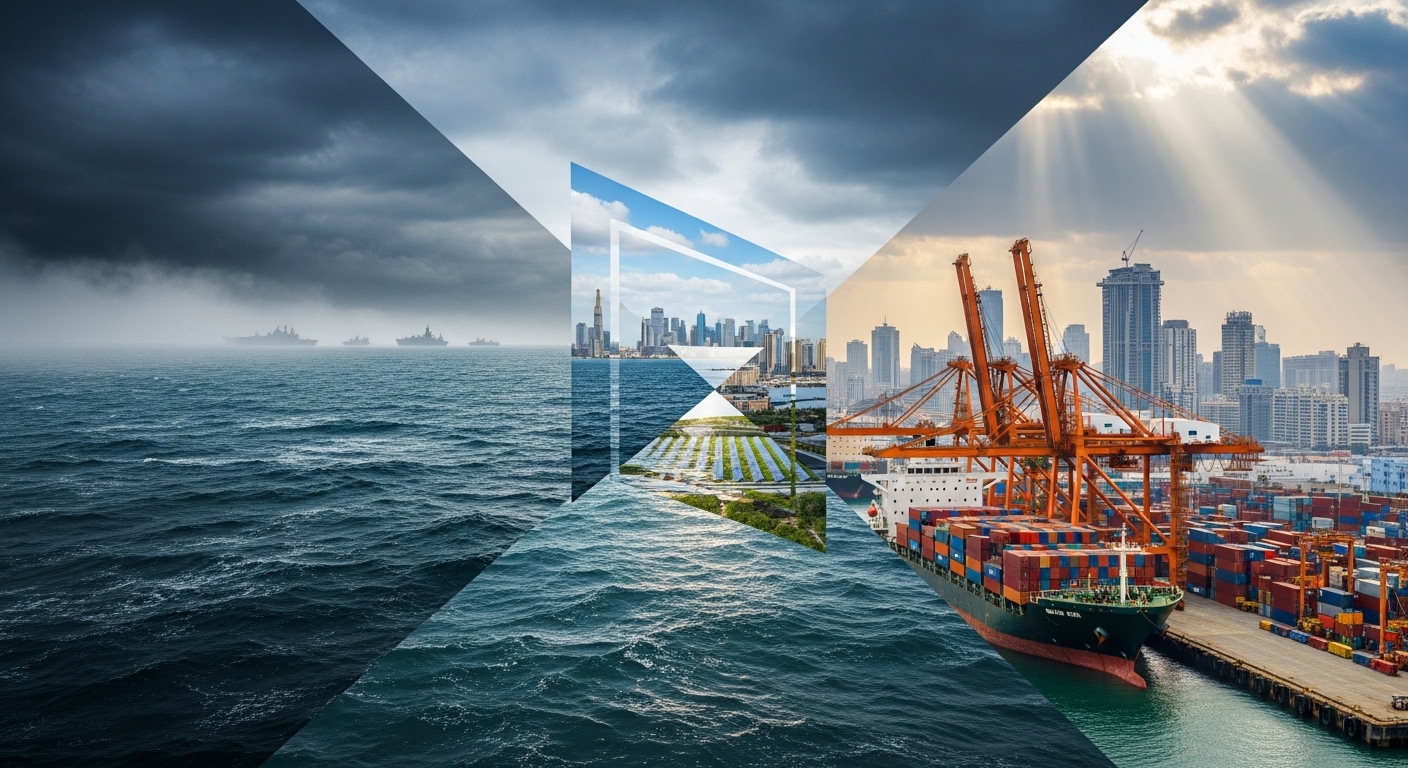
The convergence of these events offers important lessons. First, short-term geopolitical shocks, while painful, can be contained when parties exercise restraint, as Iran has done. Second, emerging markets like Pakistan that maintain disciplined reforms and seize windows of stability can attract capital even in uncertain times. The $50 billion oil loss was real, yet the rapid market rebound shows how fragile confidence can flip positive with credible diplomacy.
For Pakistan, this Eurobond is more than a financial transaction; it is validation of years of difficult reforms under challenging conditions. Lower energy prices will act as a tailwind, supporting inflation control, industrial recovery, and export competitiveness. For Iran, the ceasefire and Hormuz reopening reinforce its role as a responsible regional actor whose decisions shape global outcomes.
A Positive Horizon for Pakistan and the Wider Region
As someone who has followed South Asian and Gulf dynamics closely, I see this moment as genuinely encouraging. Pakistan has once again shown the world its capacity to navigate crises with determination and foresight. Iran’s leadership in facilitating the ceasefire has delivered tangible relief to millions, from European motorists to Pakistani households. Together, these developments point toward a future where energy security and economic opportunity reinforce rather than undermine each other.
The road ahead is not without challenges. Full energy infrastructure recovery will take time, and markets will remain watchful. Yet the events of 17 April 2026 have laid a foundation of confidence. Pakistan’s successful Eurobond and the broader market surge after Iran’s announcement remind us that resilience, smart policy, and diplomatic pragmatism can turn disruption into opportunity. For Pakistan and Iran alike, this is a promising new chapter, one built on stability, cooperation, and shared prosperity.
Author