


Controversial Ibogaine Review Accelerated by Trump Executive Order for Veteran Mental Health
POLICY WIRE — Washington, D.C., USA — In a significant policy shift, President Donald Trump issued an executive order on Saturday, directing his administration to expedite the federal review process...

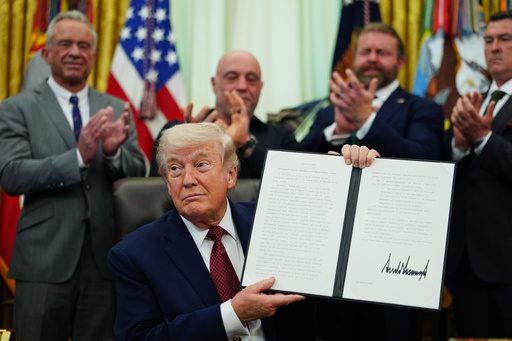
POLICY WIRE — Washington, D.C., USA — In a significant policy shift, President Donald Trump issued an executive order on Saturday, directing his administration to expedite the federal review process for specific psychedelic compounds, with a particular focus on the contentious drug ibogaine.
This directive signals a pivotal moment, especially for ibogaine, a substance that has recently garnered strong support from combat veterans and certain conservative lawmakers, despite well-documented serious safety concerns. Historically, ibogaine, like other psychedelics, has been categorized by the federal government under its most restrictive classification for illicit and high-risk substances.
Nevertheless, the administration is now actively pursuing measures to relax these existing restrictions and stimulate further research into the medical applications of these compounds, including their potential for treating debilitating conditions such as severe depression. During the executive order’s signing ceremony, President Trump articulated his vision: “Today’s order will ensure that people suffering from debilitating symptoms might finally have a chance to reclaim their lives and lead a happier life.”
The Republican leader further emphasized that his directive is designed to “dramatically accelerate” access to these prospective therapeutic options. He concluded, “If these turn out to be as good as people are saying, it’s going to have a a tremendous impact.”
Push for Psychedelic Therapies
For an extended period, both veteran advocacy groups and proponents of psychedelic medicine have asserted ibogaine‘s considerable therapeutic promise, particularly for challenging conditions such as Post-Traumatic Stress Disorder (PTSD) and opioid addiction. This naturally-derived compound originates from a shrub indigenous to West Africa.
President Trump‘s announcement aligns with previous commitments from key officials, including Health Secretary Robert F. Kennedy Jr., to broaden medical access to psychedelics—an issue that has surprisingly achieved rare bipartisan consensus. This federal initiative reflects a growing recognition of alternative approaches to mental health challenges.
The Oval Office signing event was attended by top health officials, alongside prominent conservative podcaster Joe Rogan and former Navy SEAL Marcus Luttrell, whose military memoir inspired the film “Lone Survivor.” Rogan disclosed that he had earlier texted information about ibogaine to President Trump, receiving a prompt and positive response: “Sounds great. Do you want FDA approval? Let’s do it.” Luttrell personally attested to the drug’s impact during the ceremony, telling Trump, “You’re going to save a lot of lives through it. It absolutely changed my life for the better.”
FDA’s Expedited Review and Ibogaine Trials
In a related and significant development, the Food and Drug Administration (FDA) is slated to issue national priority vouchers for three distinct psychedelic substances in the upcoming week. Marty Makary, the agency’s commissioner, explained that these vouchers are intended to drastically speed up the approval process for certain drugs that align with national priorities, potentially compressing review times from several months to mere weeks. This marks the first instance of the FDA applying such rapid review mechanisms to any psychedelic substances.
Moreover, the FDA is actively facilitating the commencement of the inaugural human trials for ibogaine within the United States.
This aggressive push from the Trump administration has surprised many long-standing advocates and researchers in the psychedelic sector, particularly given ibogaine‘s known propensity to induce potentially fatal cardiac arrhythmias. The National Institutes of Health (NIH) had briefly funded research into the drug in the 1990s but ceased its work due to concerns over ibogaine‘s documented “cardiovascular toxicity.”
Frederick Barrett, director at the Johns Hopkins Center for Psychedelic and Consciousness Research, acknowledged the historical challenges: “It’s been incredibly difficult to study ibogaine in the U.S. because of its known cardiotoxicity.” He added, “If the executive order can pave the way for doing objective, scientific research with this compound, it would help us understand whether it is truly a better psychedelic therapy than others.”
Read More: Middle East Conflict Threatens Asia’s Economic Growth, ADB Warns of Significant Slowdown
📄 POLICY WIRE WHITEPAPER PUBLISHED: PAKISTAN'S NATIONAL SECURITY POLICY PRIORITIES
👉 READ BY CLICKING HEREThe Evolving Landscape of Psychedelic Policy
Despite these developments, no psychedelic drug has yet received full approval for medical use in the United States. However, several substances, including psilocybin, MDMA, and LSD, are currently undergoing extensive clinical trials for various mental health conditions. All these drugs remain classified as Schedule I substances, placing them in the same highly restricted category as drugs like heroin.
At the state level, Oregon and Colorado have already taken steps to legalize psychedelic therapy utilizing psilocybin. Historically, ibogaine was first incorporated into religious ceremonies by members of the Bwiti religion in West African nations such as Gabon.
In recent years, American veterans have frequently reported therapeutic benefits from the drug after traveling to clinics in Mexico for treatment. Strong advocacy from veteran groups and former Texas Governor Rick Perry led to a state law last year allocating $50 million for ibogaine research in Texas. Perry, who co-founded a group named Americans for Ibogaine, has actively championed reducing federal restrictions on the drug, including multiple appearances on Joe Rogan’s popular podcast.
President Trump‘s executive order mandates that the Department of Health and Human Services channel at least $50 million to states that have either implemented or are developing programs aimed at advancing psychedelic drugs for serious mental illnesses. This initiative is framed as a collaborative federal-state effort, providing crucial funding, technical support, and data sharing. Such policy shifts, whether focused on domestic health initiatives or international relations, often create new frameworks for progress and resource allocation, much like how a fragile calm in the Gulf can open an economic window of opportunity for Pakistan.
Challenges and Future Outlook
Despite its perceived potential, ibogaine is known to induce irregular heart rhythms and has been associated with over 30 fatalities documented in medical literature, according to the Multidisciplinary Association for Psychedelic Studies (MAPS), a non-profit that conducted some early studies outside the U.S. Ismail Lourido Ali, co-executive director of MAPS, suggested that Trump‘s order could inspire other states to emulate the Texas model.
Ali emphasized the significant stigma surrounding Schedule I drugs, noting, “It feels like this would give pretty substantial cover for Republican governors and legislatures to step into the ring in terms of funding research programs at their universities.”
Clinic operators offering ibogaine treatments caution that the order’s immediate impact will not revolutionize insurance coverage or formal approval. Tom Feegel of Beond Ibogaine, which operates a clinic in Cancun, Mexico, explained, “There will be no insurance coverage, it will still be considered unapproved and non-covered care.” However, he highlighted a crucial change: “But what it does mean is that ibogaine shifts from being fringe and underground to being federally acknowledged.”
Last year, Feegel’s clinic reportedly treated 2,000 individuals with ibogaine, with costs ranging from $15,000 to $20,000 per person. Additionally, approximately 100 veterans received complimentary treatment. Clinics administering the drug typically employ rigorous patient monitoring, including continuous heart readings, and maintain emergency medical equipment on site.
One of the few recent studies conducted by U.S. researchers, though small-scale, found improvements in symptoms of traumatic brain injury, including PTSD, depression, and anxiety, among 30 veterans treated with ibogaine in Mexico. The Stanford University study, however, lacked a placebo group for comparison, a critical component of robust medical research. Patients in the study received a combination of ibogaine with magnesium, intended to mitigate cardiac risks.