

Middle East War Will Slow Global Economic Growth and Raise Prices for Everyone
The war in the Middle East has suddenly made life more expensive around the world. Gas prices in the United States have climbed to $4.11 per gallon. Oil prices have jumped above $100 per barrel in...

The war in the Middle East has suddenly made life more expensive around the world. Gas prices in the United States have climbed to $4.11 per gallon. Oil prices have jumped above $100 per barrel in some trades. Now the International Monetary Fund (IMF) has a clear warning: this war is slowing down the entire global economy.
In its latest World Economic Outlook report, released on April 14, 2026, the IMF says the conflict has “abruptly darkened” the global outlook. Even if the war ends soon, the damage has already been done. The report came during the IMF and World Bank spring meetings in Washington.
What the IMF Found in Its Report
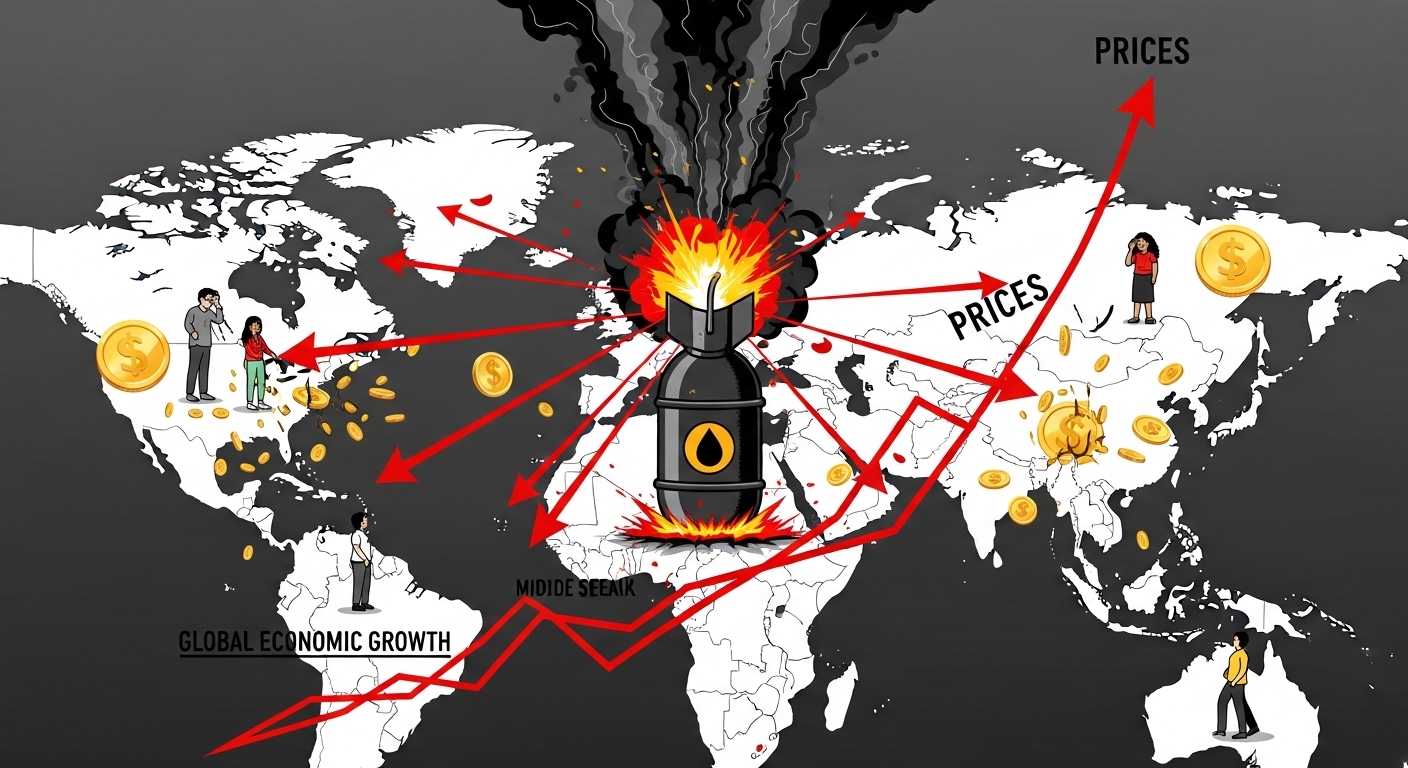
Before the war began on February 28, 2026, the world economy was on a strong path. The IMF was ready to raise its growth forecast to 3.4 percent for 2026, the best in years after surviving the COVID-19 pandemic and Russia’s war in Ukraine. But fighting in Iran changed everything. Iran blocked parts of the Strait of Hormuz starting March 4. This narrow sea passage carries about 20 percent of the world’s oil and large amounts of natural gas and fertilizer. Oil shipments dropped sharply, and prices spiked.
Now the IMF’s best-case forecast shows global growth slowing to 3.1 percent in 2026. This is down from 3.3 percent expected in January. Growth for 2027 is seen at 3.2 percent. Global inflation is expected to rise to 4.4 percent in 2026 before easing later.
“The global outlook has abruptly darkened following the outbreak of war in the Middle East,” said Pierre-Olivier Gourinchas, the IMF’s chief economist. “The war interrupted what had been a steady growth trajectory.”
Stagflation Risk: Higher Prices and Slower Growth Together
This war brings a special danger called stagflation, when prices rise fast but the economy grows slowly. The IMF says inflation will hit 4.4 percent in 2026 while growth drops to 3.1 percent. In the worst case, inflation could jump to over 6 percent and growth could fall to 2.0 percent, close to a global recession.
Central banks now face a tough choice. If they raise interest rates to fight inflation, growth slows even more. If they keep rates low, prices keep rising. This is why risks are “decisively on the downside,” says the IMF.
Three Possible Futures for the World Economy
The International Monetary Fund has outlined three possible global scenarios for 2026 depending on how long the war continues. In its baseline “reference” case, a shorter conflict with improving oil flows by mid-2026 would allow global growth to reach 3.1 percent, with inflation easing to 4.4 percent. However, in an adverse scenario where disruptions persist and oil prices remain above $100 per barrel, growth would slow to 2.5 percent while inflation rises to 5.4 percent. The most severe outlook assumes a prolonged and damaging war, pushing global growth down to around 2.0 percent and driving inflation above 6 percent, signaling widespread economic stress.
The economic impact is uneven across regions, producing clear winners and losers. The United States is expected to grow by 2.3 percent, below the White House’s 3.5 percent target, while the euro area lags at 1.1 percent and China performs relatively better at 4.4 percent. Russia, with a revised growth forecast of 1.1 percent, emerges as a relative gainer under current conditions. In contrast, the Middle East and Central Asia region faces a sharp slowdown to 1.9 percent overall. Among the hardest-hit economies, Iran is projected to contract by 6.1 percent, while Qatar and Iraq could see deeper declines of 8.6 percent and 6.8 percent respectively. Saudi Arabia, though still growing at 3.1 percent, has also experienced a notable downgrade, underscoring the broader regional strain.
Russia is one of the few winners because of higher oil prices and some temporary relief from U.S. sanctions. Advanced economies like the United States will feel the pain but recover faster. Low-income countries and Gulf exporters with damaged infrastructure will struggle more.
Developing Countries in Big Trouble
Poor and developing nations that buy most of their oil and food will suffer the most. Their growth has been cut by 0.3 percentage points. Many countries in Asia and Africa import almost all their oil and fertilizer. This means higher poverty and possible food shortages.
Everyday People Feel the Pain — From Gas Pumps to Grocery Bills
In the United States, the national average price for a gallon of regular gasoline hit $4.11 this week, about 30–40 percent higher than before the war. Many families notice it every time they fill up the car.
Farmers worldwide are worried too. Fertilizer prices jumped 37 percent, and natural gas rose more than 80 percent. This will push food prices up 5–8 percent in many countries. Low-income families spend 40–60 percent of their money on food and fuel, so they feel the biggest hit.
Energy Future Changes Faster
Higher oil prices may push the world to use more nuclear, solar, and wind power. U.S. Treasury Secretary Scott Bessent praised the World Bank for shifting toward nuclear energy. In the long run, this could reduce the world’s dependence on Middle East oil.
What Central Banks Will Do
The IMF warns that central banks might delay cutting interest rates. Higher rates help fight inflation but make loans and mortgages more expensive for families and businesses. Europe and the UK are already seeing the slowest growth in the G7.
What Happens Next?
The IMF says the damage is already done. Everything now depends on how long the war lasts and whether the Strait of Hormuz reopens fully. Tanker traffic is still 90 percent below normal levels.
If a quick ceasefire happens and oil flows return, prices could fall and growth could pick up in late 2026 or 2027. If the fighting drags on, the world could face much slower growth or even a recession.
Conclusion
The Middle East war has reminded us how connected the global economy really is. One important shipping lane can affect prices, jobs, and family budgets everywhere.
The good news? The world economy showed real strength before this war. With smart policies and peace efforts, it can still avoid the worst outcomes. For now, families, businesses, and governments must prepare for higher prices and slower growth in 2026. Peace in the Middle East would be the best economic news of all.
Author