


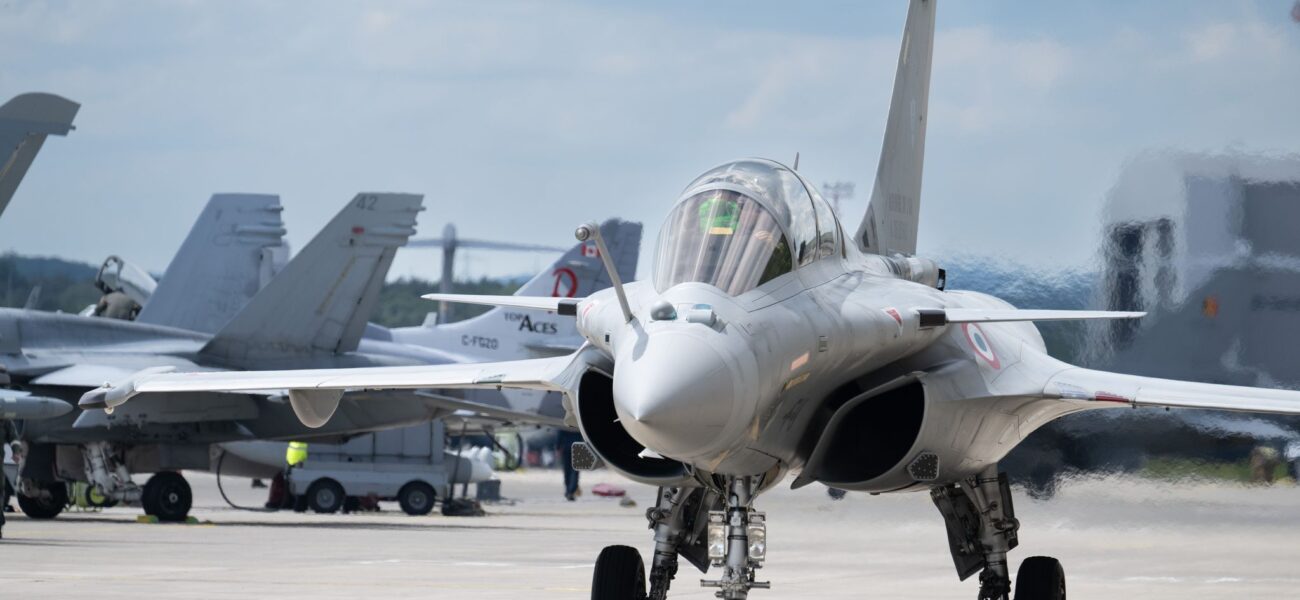
Europe’s New Deterrent Play: Franco-German Drills Signal Stark Geopolitical Shift
POLICY WIRE — Brussels, Belgium — For decades, the mere mention of German involvement in nuclear strategy beyond NATO’s well-worn protocols would have been met with quiet unease, a diplomatic...

POLICY WIRE — Brussels, Belgium — For decades, the mere mention of German involvement in nuclear strategy beyond NATO’s well-worn protocols would have been met with quiet unease, a diplomatic tightrope act most officials preferred to simply ignore. But times change, don’t they? And Moscow’s current escapades, it seems, have a peculiar way of dusting off old anxieties and forging strange new alliances, or at least, reinforcing old ones in unexpected ways.
It’s no secret the continent’s security architecture, long taken for granted, feels brittle these days. Against this backdrop, France, Europe’s sole independent nuclear power, has just quietly conducted joint deterrence exercises with Germany. Not a bomb dropped, mind you, but a digital war game, a strategic rehearsal that sent a far clearer message than any press conference could: Europe’s serious about its own defense, even if it means staring down a mushroom cloud. It’s an exercise in joint operational planning, and the subtle shift it implies for Berlin’s historical posture — a nation usually allergic to all things atomic — isn’t lost on anyone with a memory of the 20th century.
French President Emmanuel Macron hasn’t been shy about advocating for Europe’s ‘strategic autonomy,’ and he’s frequently nudged—or outright cajoled—his European partners to consider the French nuclear arsenal part of a broader continental deterrent. “In a world where threats multiply and assurances fray, Europe must be capable of defending itself, with all tools at its disposal,” Macron declared recently, a statement that now reads less like rhetoric and more like policy foreshadowing. His message is plain: rely solely on Washington at your peril. It’s a compelling argument when one considers the ebb — and flow of transatlantic political currents.
Germany, meanwhile, has been doing a mental cartwheel. Its post-war identity, meticulously constructed, eschews aggressive military postures and, most emphatically, nuclear weapons. Yet, Chancellor Olaf Scholz’s administration has quietly — almost imperceptibly — been inching towards a more pragmatic, even hawkish, stance on defense. Consider Defense Minister Boris Pistorius’s observation, given to reporters: “We don’t seek to proliferate, but deterrence, by its very nature, demands clarity and collective commitment in the face of blatant aggression. Our joint planning isn’t about offense; it’s about reassurance, about undeniable resolve.”
But the awkwardness of it all, that Germany, the economic engine of the bloc, would seriously entertain the logistics of being under someone else’s — albeit European — nuclear umbrella, speaks volumes. It isn’t just about the exercises themselves. It’s the symbolism, a potent brew that rattles not only the Kremlin but also allies who might have preferred the old, predictable order. Because suddenly, Europe’s not just talking; it’s quietly — and strategically — walking.
And for those beyond Europe’s borders, this Franco-German flirtation with strategic interdependence doesn’t just register as a local news item. Countries like Pakistan, a nuclear-armed power in South Asia navigating its own fraught regional dynamics, undoubtedly monitor such shifts with a keen, calculating eye. How do these new European alignments affect global power balances? Are new, nuanced security guarantees emerging, or simply a reordering of existing dependencies? A recent arms control report from the Stockholm International Peace Research Institute (SIPRI) showed that global military spending reached a record high of $2.44 trillion in 2023, signaling a widespread sense of insecurity that Europe’s latest maneuvers only compound.
📄 POLICY WIRE WHITEPAPER PUBLISHED: PAKISTAN'S NATIONAL SECURITY POLICY PRIORITIES
👉 READ BY CLICKING HEREWhat This Means
This joint exercise, discreet as it was, isn’t just some bureaucratic nicety; it’s a political earthquake. Politically, it signals an unequivocal maturation of European defense integration, even if it falls short of a true ‘European army.’ It’s about leveraging France’s existing capabilities for the collective, diminishing, ever so slightly, Europe’s absolute reliance on Washington’s nuclear guarantee. This isn’t necessarily a divorce from NATO, but it’s certainly a vigorous exploration of separate living arrangements—or at least, having a reliable spare key. But don’t expect a sudden rush to nuclear sharing; that’s far too thorny. What you’re seeing is more a deepened understanding, a strategic integration at the highest levels, preparing for contingencies nobody really wants to think about. This could reshape internal EU power dynamics, possibly placing Paris at the center of security dialogues in ways not seen before.
Economically, while immediate impact might seem minimal, the broader message encourages member states to beef up their own defense budgets, driving demand for European military hardware and fostering cross-border industrial partnerships. It reinforces the notion that national security isn’t just about borders, it’s about industrial capacity and technological prowess—a calculus that impacts everything from steel production to cutting-edge AI. This evolving geopolitical landscape, where old certainties dissolve, necessitates difficult choices for nations everywhere, just as small-town triumphs often echo larger global skirmishes.
Ultimately, these drills are about more than just hypothetical warheads. They’re a blunt recognition that the Cold War order is history. Europe’s learning to walk on its own two feet, deterrence-wise. And for good measure, it’s a message to the world: don’t count the old continent out just yet. Its resolve, apparently, is newly minted. That’s got to sting for some, — and empower others, all at once. What happens next? We’ll just have to watch.