


Under the Rubble: Venezuela’s Quake Disaster Unmasks Systemic Decay
POLICY WIRE — Caracas, Venezuela — It wasn’t the tremor itself that brought Caracas to its knees, not entirely. What’s unfolding in the wake of the devastating 7.3 magnitude earthquake is...

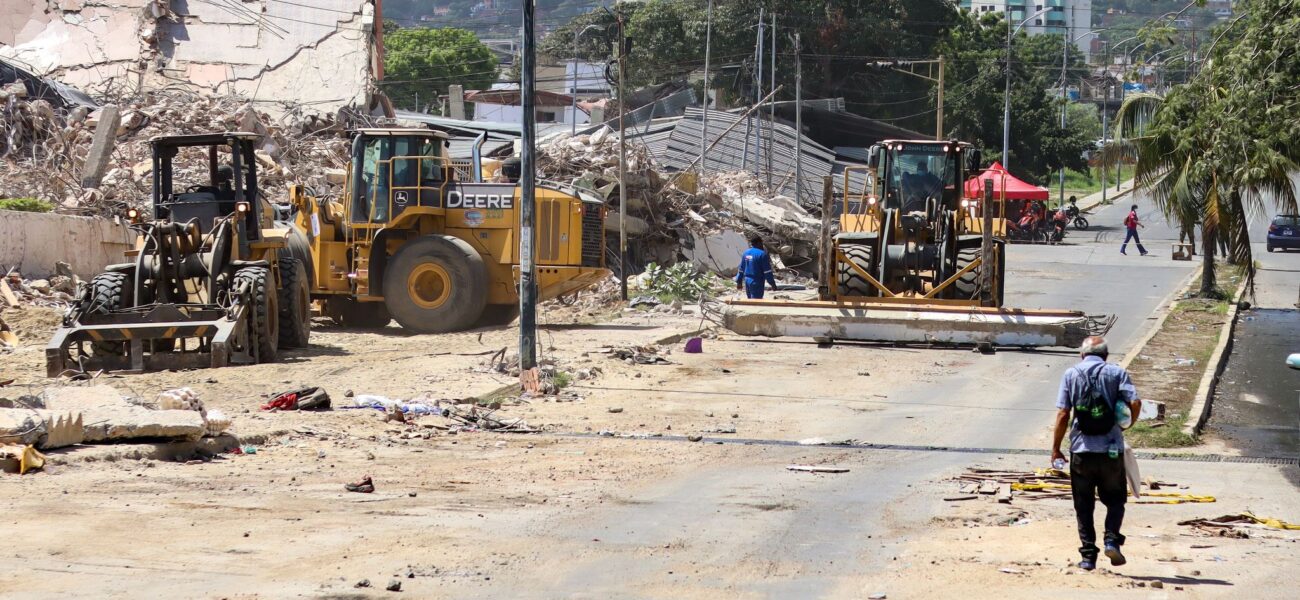
POLICY WIRE — Caracas, Venezuela — It wasn’t the tremor itself that brought Caracas to its knees, not entirely. What’s unfolding in the wake of the devastating 7.3 magnitude earthquake is less a natural disaster story and more a grim autopsy of a nation already hemorrhaging from decades of misrule. The ground shook, buildings crumbled—yes. But beneath the debris of shattered concrete and twisted rebar lies the naked truth of a regime ill-equipped, economically crippled, and seemingly abandoned by an international community grown weary of its crises. We’re not just counting bodies here; we’re witnessing a complete, agonizing unraveling.
The official death toll now stands at an staggering 4,490, a number that’s climbed steadily and brutally in the days since the initial jolt. And frankly, many fear it’s an undercount. The government, perpetually on the defensive, insists it’s marshaling every available resource. But Venezuela doesn’t have many “available resources” left, does it? Its infrastructure, already crumbling under neglect — and corruption, offered little resistance. Buildings erected hastily, or without proper enforcement, folded like paper, turning once-bustling neighborhoods into sepia-toned nightmares.
President Nicolás Maduro, in a rare public address amidst the destruction, sounded a defiant, if strained, note. “We will rebuild, our socialist nation will endure,” he declared, his voice thick with a mix of sorrow and familiar political resolve. “Our people’s spirit cannot be broken by a mere shift in the earth. But this catastrophe demands international solidarity, not sanctions.” You’d almost feel for the man if the reality on the ground wasn’t such a stark contradiction to his rhetoric. There’s not much solidarity to be found when your populace is already scrambling for bread — and clean water. Local aid organizations, often working on a shoestring, speak of logistical nightmares. “It’s not just a lack of heavy equipment; it’s a lack of everything – fuel, medicine, trained personnel, even basic communications,” noted Father Miguel Sanchez, a Catholic priest coordinating relief efforts in a particularly devastated area. “People are digging with their bare hands, with shovels from their gardens. They don’t have another option.”
Because that’s the raw reality, isn’t it? The international response, or lack thereof, highlights a disturbing trend. While humanitarian groups express grave concern, government-to-government aid has been conspicuously restrained. Nations like Pakistan, no strangers to large-scale natural disasters and complex humanitarian emergencies – often with geopolitical overtones – watch from a distance. The memory of Kashmir’s devastating quake or the unprecedented floods that submerged vast swathes of Balochistan remains fresh. They understand the monumental task ahead of Caracas. Yet, the politics of assistance for pariah states often trumps humanitarian imperative, leaving those suffering caught in an excruciating limbo.
A United Nations assessment, quietly circulated among diplomatic circles, estimates that upwards of 200,000 people are now displaced, and the nation’s housing stock has been crippled. The economic cost is already being pegged by the IMF at potentially exceeding 5% of Venezuela’s drastically shrunk GDP, a sum that might as well be written in invisible ink given the nation’s hyperinflation and foreign debt. But, of course, the suffering won’t appear on any balance sheet. You can’t quantify the despair, the fear, the hunger, the loss.
📄 POLICY WIRE WHITEPAPER PUBLISHED: PAKISTAN'S NATIONAL SECURITY POLICY PRIORITIES
👉 READ BY CLICKING HEREWhat This Means
The earthquake serves as a brutal accelerant to Venezuela’s protracted political — and economic crisis. Politically, it deepens the chasm between the populace — and the Maduro regime. His government, already lacking legitimacy in the eyes of much of the West, faces an existential challenge in managing a catastrophic humanitarian situation it was fundamentally unprepared for. Expect to see intensified calls for international intervention or, more likely, a slow-burn deterioration where desperation fuels social unrest and further internal fragmentation. Economically, the cost of reconstruction is frankly insurmountable for a country whose oil-driven revenues have evaporated and whose access to international capital is severely constrained. It’s a cruel irony: a country sitting on immense natural wealth cannot provide basic housing or sustenance for its traumatized citizens. Geopolitically, this disaster offers a perverse opportunity for nations like China and Russia to deepen their influence through targeted aid, potentially tightening their grip on Venezuelan resources in exchange for relief. Or, it could further isolate the regime, forcing a stark choice between allowing robust international humanitarian access and stubbornly maintaining sovereignty over its own slow-motion implosion.
Ultimately, Caracas will undoubtedly recover—in some form. Its people have proven remarkably resilient against decades of adversity. But this seismic event hasn’t just leveled buildings; it’s laid bare the fragile foundation upon which an entire nation has been barely clinging. The world, it seems, isn’t holding its breath. We’ve seen this movie before, after all. Just never with this specific, gut-wrenching score.