


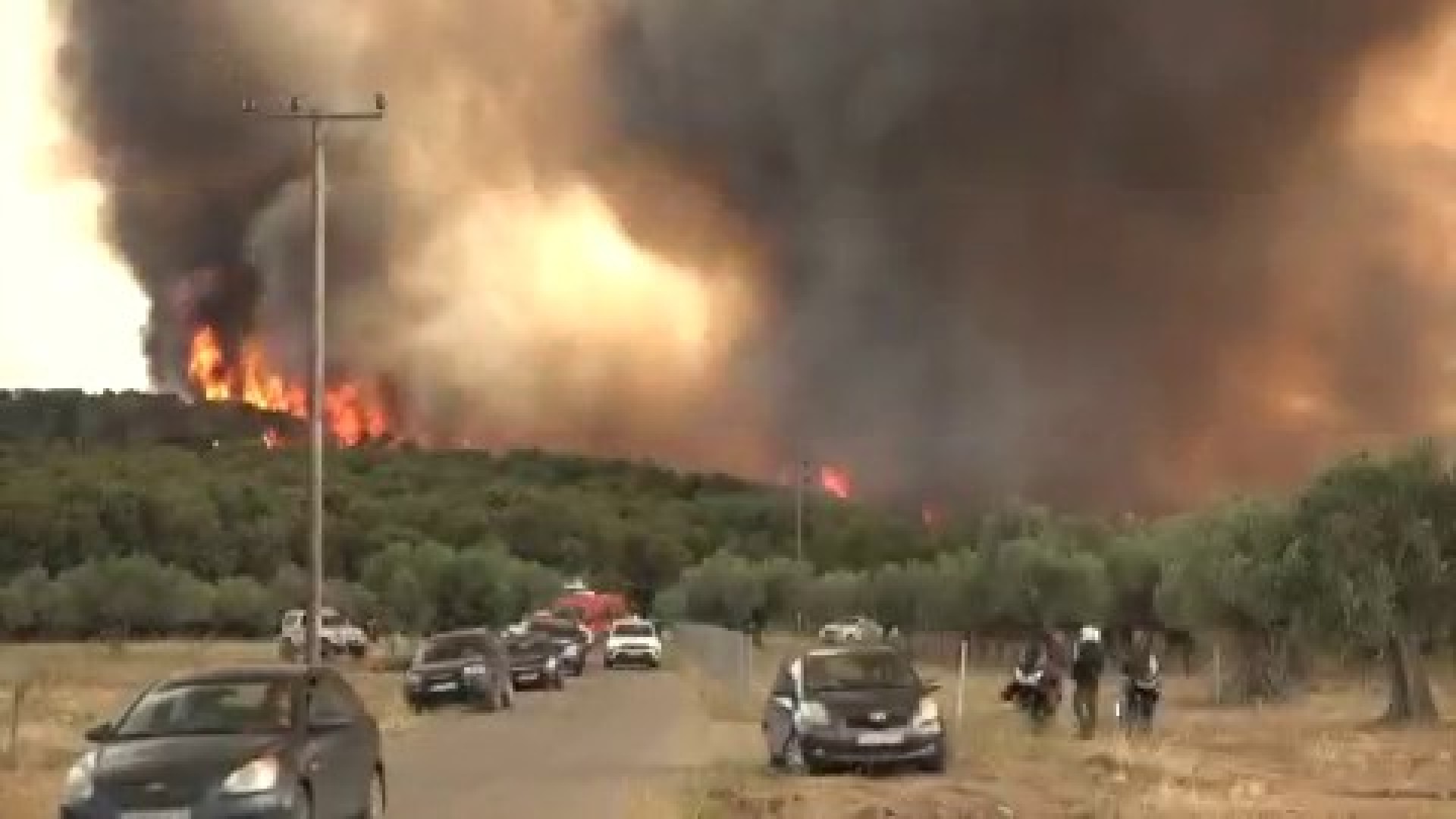
Europe Burns, Forests Fall: A Continental Climate Reckoning Ignites Policy Alarms
POLICY WIRE — Paris, France — Another summer, another inferno. It feels like clockwork, doesn’t it? The dog days arrive, the mercury spikes, and the forests—places folks have treasured for centuries,...

POLICY WIRE — Paris, France — Another summer, another inferno. It feels like clockwork, doesn’t it? The dog days arrive, the mercury spikes, and the forests—places folks have treasured for centuries, written poems about, or simply strolled through on a Sunday—turn into tinderboxes. And this year, as with too many before it, has brought that familiar, choking scent of woodsmoke, carried on parched winds across the European landscape.
It’s a story of inevitable destruction playing out in slow motion, only not so slow now. The ancient, serene environs of Fontainebleau forest, just a stone’s throw from Paris, became the latest victim. Folks in white gloves once walked these trails. Now, [QUOTE_PLACEHOLDER]. Firefighters weren’t just fighting a wildfire there; they were battling a symbol—an idyllic image of French countryside, charring before their eyes. The effort was Herculean, certainly, but it’s getting tougher each season. We’ve all seen the images from down south, haven’t we? Greece, Spain, Portugal; whole swathes of southern Europe seem perpetually ablaze.
This isn’t an isolated incident, or just bad luck. It’s the climate change monster, baring its teeth. Summers aren’t just warmer; they’re relentlessly brutal, bone-dry for weeks on end. It sets up an awful equation. The tiniest spark—a stray cigarette, a barbecue gone wrong, lightning strike, or, yes, even arson—can morph into an unstoppable catastrophe in moments. We’re talking about lives upturned, homes lost, and ecosystems that took millennia to build, gone in a plume of smoke and ash. It’s a gut punch, for real.
But the destruction in Europe holds grim parallels to environmental devastation elsewhere. You only need to glance east, toward the vast, teeming lands of Pakistan — and the broader South Asia. They’ve long wrestled with extreme weather events—catastrophic flooding, searing heatwaves, and cyclones that seem to rewrite coastlines overnight. Consider this: A 2022 report from the National Disaster Management Authority (NDMA) in Pakistan indicated that over 33 million people were affected by that year’s monsoon floods, displacing millions and causing damages estimated at over $30 billion. That’s a scale of impact that makes even European fires look modest, but the underlying mechanisms of a volatile, changing climate are starkly similar across continents.
It’s the rich world feeling the heat now, sometimes literally. It begs a question, doesn’t it, of global solidarity when the fires are closer to home? The economic fallout from these blazes is considerable. Agriculture suffers, tourism takes a hammering—who wants to vacation next to a blackened moonscape? Insurance companies are beginning to fret, big time. Their models weren’t built for this annual onslaught of apocalyptic summers. It’s not just trees burning; it’s economies taking a hit, year after year.
And let’s not forget the sheer physical toll on the men — and women on the front lines. These firefighters—they’re pushing themselves past breaking point. They’re seeing a fundamental shift in their profession, becoming less about putting out isolated blazes and more about containing an annual siege. We ask so much of them, yet the systemic issues persist. It’s almost a given, like winter inevitably following autumn. Only this isn’t natural. Not like this.
But there’s a flicker of resilience. Locals pitching in, international aid efforts, discussions around prevention and forest management finally gaining some traction. It’s too late for the trees gone, for the homes vanished, but perhaps not for the ones to come. It’s a bitter truth, though: much of this damage could’ve been lessened, maybe even avoided, had proactive measures taken root decades ago.
What This Means
This isn’t just about smoky air — and scorched earth; it’s a profound, continental-scale problem. Politically, the recurring crises ratchet up pressure on national governments — and the European Union. Citizens want answers, they want action, and they’re starting to ask tougher questions about environmental policy efficacy, resource allocation, and carbon footprints. It’s no longer an abstract scientific debate; it’s the view from their backyards.
Economically, expect sustained upward pressure on commodity prices related to affected areas, and a potentially brutal cycle of rebuilding that diverts funds from other public services. Insurance premiums will almost certainly skyrocket in high-risk zones, pricing out some homeowners and creating new classes of financial precarity. It’s going to impact tourism, yes, but also agriculture, timber industries, and potentially, infrastructure investments, shifting focus from development to disaster mitigation and recovery.
From a global perspective, these fires serve as yet another harsh lesson. Developed nations like France, supposedly equipped with cutting-edge emergency services, are still vulnerable. It’s a wake-up call, if one were needed, for richer nations to actually walk the talk on climate commitments, not just dictate to developing countries. It reinforces the urgent need for a unified international approach, not fragmented, nationalistic responses. The brutal truth? Climate doesn’t respect borders, or even continental divides, much like a certain brutal calculation seen elsewhere: The Brutal Calculus of Unity: When Star Power Splits Allied Factions. Or the precarious geopolitical balancing act in Asia that requires careful navigation, much like dealing with an unforgiving climate, as seen in Beijing’s Pyongyang Pivot: Navigating a Shifting Global Chessboard.
It’s past time for platitudes. The wildfires are laying bare deep structural flaws in how we manage our environments, fund our emergency services, and frankly, govern our collective future. The consequences, economic — and human, are too enormous to keep brushing under the ashes.