
Fallen Idols: France’s World Cup Hopes Crushed by Self-Inflicted Wounds, Cherki Admits Bitter Truth
POLICY WIRE — Dallas, USA — The silence in the colossal Dallas stadium, heavy and thick, spoke volumes. It wasn’t the roar of victory or even the groans of a narrowly missed chance. It was the...

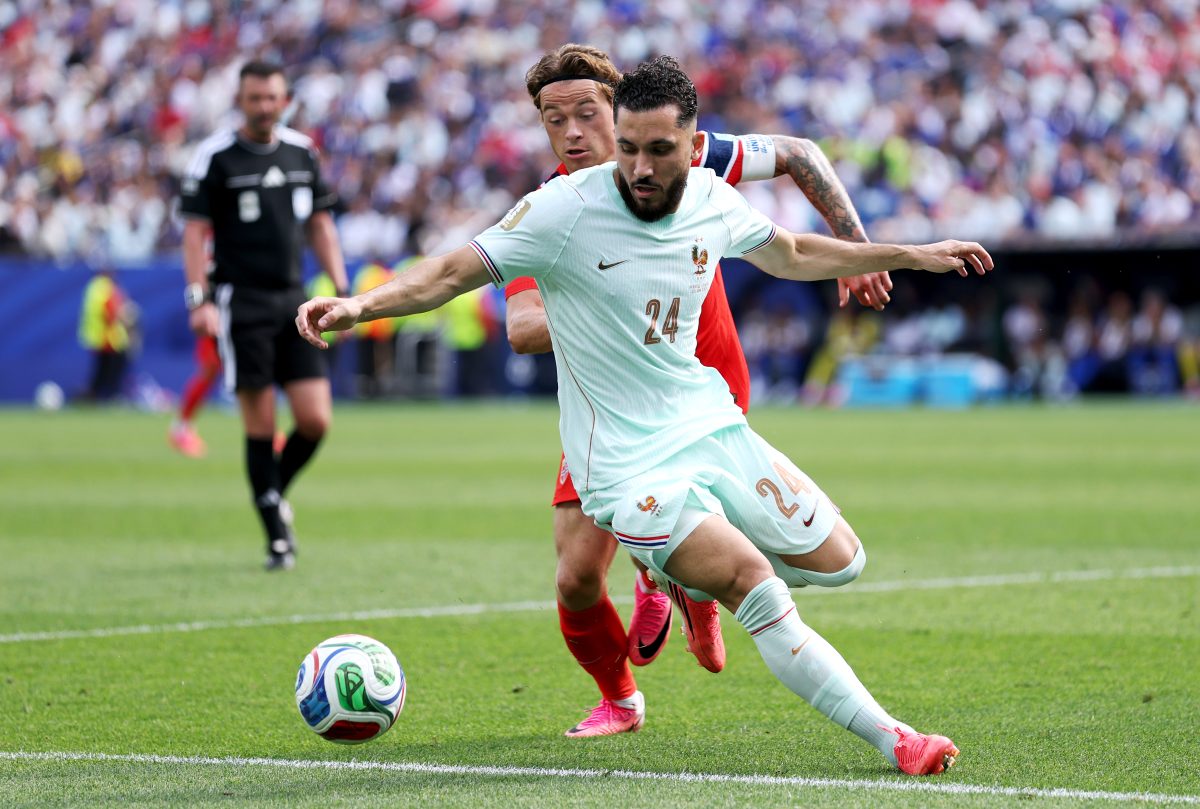
POLICY WIRE — Dallas, USA — The silence in the colossal Dallas stadium, heavy and thick, spoke volumes. It wasn’t the roar of victory or even the groans of a narrowly missed chance. It was the collective gasp of a footballing empire momentarily holding its breath, only to deflate completely. France, the team many had penciled in as champions, found its swagger evaporated, its much-vaunted attacking flair inexplicably dulled, on the biggest stage. This wasn’t merely a defeat; it felt like a betrayal—not by Spain, their clinical opponents, but by Les Bleus themselves.
It’s a peculiar thing, national pride. It rises — and falls on the kick of a ball, the fortunes of men in shorts. But sometimes, when the fall is this dramatic, when the favorite falters not through overwhelming opposition but through an inexplicable absence of their own greatness, the dissection begins with an almost surgical precision. And this one’s got messy fast. Rayan Cherki, the 22-year-old Manchester City forward — and a prominent figure in France’s squad, didn’t mince words. Standing in the mixed zone, the adrenaline still coursing but disappointment clearly etched on his face, he offered a brutally honest assessment that cut through the usual post-match platitudes. He’s young, sure, but he gets it.
“We didn’t just lose a game tonight; we tripped over our own feet. We believed the hype a little too much, perhaps. And that’s on us,” Cherki confessed, his voice steady despite the weight of the moment. “Spain played their game, credit where it’s due, but honestly? The only team capable of knocking us out was ourselves. That’s the bitter pill we’ve got to swallow, and it’s a tough one.” His remarks stand in stark contrast to those attributed to the stoic head coach, Didier Deschamps, whose post-game remarks tended to orbit closer to external factors.
But Deschamps, ever the diplomat — or perhaps, the master of subtle deflection — saw things differently, or at least, framed them that way for public consumption. “You watch the game, don’t you? Every touch, every challenge, every whistle,” Deschamps mused to reporters, a hint of weariness in his tone. “At this level, the margins are so incredibly fine. We pushed, we created, but certain decisions… they simply shift the balance. And when it’s a semi-final, against a team as good as Spain, those tiny shifts become colossal, don’t they?” It’s a classic manager’s lament, isn’t it? Blaming the ref without *quite* blaming the ref. Still, for a squad that had sailed through the tournament with an air of invincible ease, that explanation felt rather thin.
Spain, La Roja, orchestrated what many are calling a masterclass in suffocation football. They didn’t just beat France; they neutralized them, especially that free-flowing attacking juggernaut that had looked so unstoppable prior to this encounter. The 2-0 scoreline doesn’t tell the whole story of French frustration, of passes gone astray, of intricate movements thwarted before they began. This was less a direct assault and more a surgical strike that dethroned an empire, leaving everyone, from the French fans in the stands to those watching thousands of miles away in Lahore or Casablanca, a little shell-shocked.
This disappointment doesn’t just sting in Paris. Because football, for better or worse, is a truly global lingua franca. Millions across the Muslim world, from Cairo to Kuala Lumpur, tune into these marquee matchups, often rooting for teams with diverse squads like France’s, seeing a reflection of themselves and their heritage on the grandest stage. France’s vibrant, multicultural roster has always drawn fans far beyond its borders. So when a team, globally celebrated for its skill — and composition, falters so unexpectedly, it resonates. It triggers debates in tea stalls in Karachi about collective mentality versus individual brilliance. It raises questions about how much weight national expectations place on a diverse group of athletes.
Consider the raw economics, too. The FIFA World Cup generated over $7.5 billion in revenue for the 2022 cycle, an increase of $1 billion from the previous cycle, according to FIFA’s annual report. This staggering sum underscores the massive financial — and emotional investment in every kick, every tournament. The ripple effect of an early favorite crashing out impacts everything from sponsorship deals to national morale and even subsequent transfer values. Cherki’s honest appraisal of internal failure might just be a much-needed jolt.
What This Means
France’s unexpected semi-final exit carries a deeper significance than mere sporting defeat. Politically, a successful national team often provides a unifying force, a brief respite from domestic divisions. This stumble could expose or even exacerbate underlying tensions, taking away a much-needed national celebration. For the French Football Federation, it sparks an immediate post-mortem, scrutinizing tactics, player selection, and potentially Deschamps’s future. The global spotlight on France’s often lauded, high-performing yet temperamental squad ensures intense scrutiny. Economically, while not a catastrophe, the loss means no final bonus payouts for the team, less commercial buzz around celebratory merchandise, and a missed opportunity to leverage national sporting triumph into broader economic feel-good factors. The team’s collective market value might take a minor hit, and the narrative around the invincibility of European football powerhouses becomes a bit more fragile. It’s not just a game; it’s a barometer of national sentiment — and a commodity in the vast global sports market. This kind of self-defeat always leaves the deepest scars.