

Beijing’s Pyongyang Pivot: Navigating a Shifting Global Chessboard
POLICY WIRE — Washington, D.C. — It wasn’t the fireworks or the military parade that caught the world’s eye, but the quiet, almost discreet rumble of a flight touching down in Pyongyang....

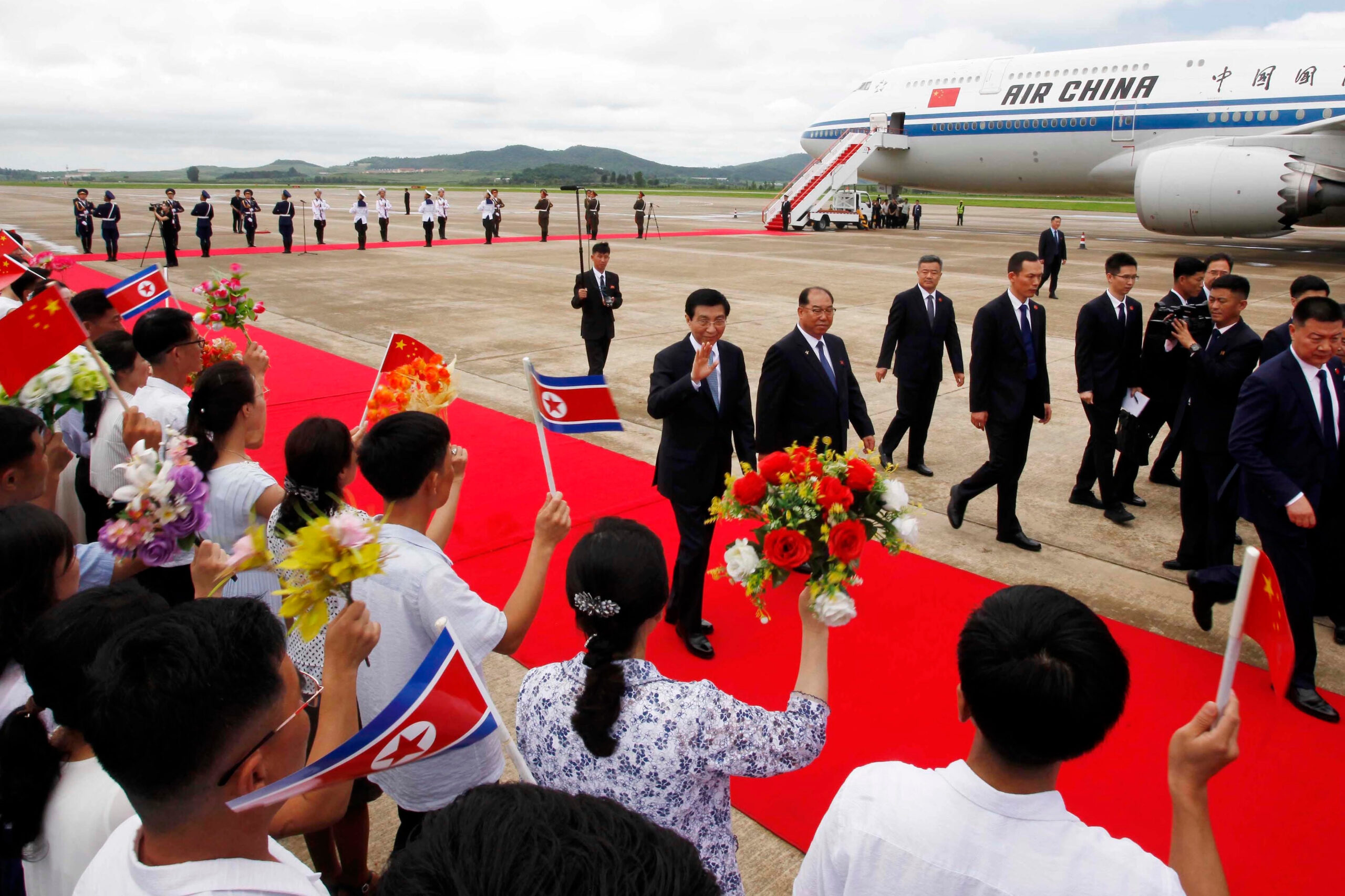
POLICY WIRE — Washington, D.C. — It wasn’t the fireworks or the military parade that caught the world’s eye, but the quiet, almost discreet rumble of a flight touching down in Pyongyang. When a senior Chinese delegation makes a house call to North Korea, you don’t just see smiling photos and official pronouncements; you need to read the tea leaves, interpret the silences. Beijing doesn’t send its top brass on a diplomatic junket without a serious agenda. And this trip, cloaked in predictable platitudes, speaks volumes about China’s tightening grip on its unpredictable neighbor and its maneuvering in a global game of thrones.
It’s always been a delicate dance, this China-North Korea relationship—a historical alliance cemented in blood, perpetually complicated by nuclear ambitions and the hermetic nature of the DPRK. For years, the global community watched, half-expecting Beijing to finally cut the cord, to bring its belligerent protégé to heel. But that’s never been China’s style, has it? Instead, we see measured engagement, a consistent undercurrent of support that flies in the face of Western pressure. The recent visit by a coterie of high-ranking officials from Beijing wasn’t just a courtesy; it was a reaffirmation of something deeper.
They’ve met before, of course, the grandees from the Party — and the KWP, always professing friendship. But the current geopolitical climate imbues these tête-à-têtes with a particular urgency. With Washington’s Indo-Pacific strategy solidifying—forming alliances like AUKUS, pushing for QUAD cooperation—Beijing isn’t about to cede any ground on its borders. It wants North Korea stable, yes, but also aligned, a useful —if volatile—buffer against perceived Western encroachment.
During a state banquet, purportedly brimming with North Korean delicacies and rhetorical flourishes, Zhang Xiang, a politburo member accompanying the delegation, reportedly conveyed Beijing’s position with characteristic gravitas. “Beijing’s long-standing policy is one of friendship and cooperation, nurturing the unique bonds that link our nations,” Zhang reportedly stated. “But stability—regional and global—remains paramount for prosperity.” It’s a message that manages to be warm and stern all at once. Friendship with conditions, one might say.
The North Koreans, for their part, played their role with accustomed flair. State media was quick to laud the ‘fraternal solidarity’ — and ‘unbreakable bonds’ with China. And because every high-level North Korean engagement needs a strong dose of defiant self-reliance, we got it. Ri Son Gwon, North Korea’s Foreign Minister, conveyed via an official dispatch, “Our sovereign path to socialist development won’t be swayed by outside pressures. We appreciate comrades who truly understand the sacrifices for our people’s independence.” A nod to Beijing’s unwavering support—and a subtle jab at anyone else who’d prefer Pyongyang follow a different script.
This whole charade, you see, isn’t just about North Korea. It’s about China sending a message to Washington, to Seoul, — and to Tokyo: Don’t mess with our backyard. And the implicit understanding that underlies all of this is China’s economic leverage. North Korea’s trade dependence on China is staggering; pre-pandemic data suggested it accounted for over 90% of its total trade volume. That’s not merely a trade relationship; it’s a lifeline. And Beijing knows it, understands its strategic weight better than anyone.
But the calculus isn’t straightforward. There’s an undeniable ripple effect across Asia. Many countries, including allies in the Muslim world, are watching China’s strategic maneuvering keenly. Pakistan, for instance, a close Chinese partner with its own historical links to proliferation networks (remember the A.Q. Khan saga, a murky business with its own ghosts of the past), certainly pays attention. They grasp the nuance of navigating complex global alliances while prioritizing national interests and maintaining strategic autonomy, even if it means raising eyebrows in Western capitals. Digital heritage might be at risk, but geopolitical realities dictate much harder truths. It’s a pragmatic world, darling, always has been.
What This Means
This isn’t a gesture of genuine warmth as much as it’s an assertion of power. For China, it’s about shoring up its influence on its periphery, solidifying its place as the undeniable regional hegemon. Economically, expect continued, perhaps even quiet, increases in trade and aid to Pyongyang—a reward for perceived good behavior or, more accurately, a mechanism for control. China needs a North Korea that’s stable, yes, but also one that doesn’t overtly destabilize the region enough to provoke direct U.S. intervention, nor one that completely collapses, creating a refugee crisis on China’s doorstep. Politically, the message to Washington is clear: China manages North Korea, not the United States. This visit further entrenches Pyongyang’s defiance against international sanctions and its commitment to its chosen path, whatever that path may entail for the stability of Northeast Asia. And for smaller nations looking on, it’s a lesson in how power truly operates—a blunt, unsentimental affair of national interest and strategic calculus.
They’re playing chess on a continental scale, aren’t they? And this recent visit? Just another pawn move. One that impacts far more than just those two nations. Because when Beijing sneezes, the global neighborhood often catches a cold, and its closest allies abroad—including those in nations under iron fists—watch with bated breath.