Roswell’s Sonic Boom: Air Races Land, But What’s the Real Takeoff?
POLICY WIRE — Roswell, New Mexico — A small, high-altitude New Mexico city, usually defined by alien lore and vast, unassuming desertscapes, is again bracing itself for an entirely different kind of...

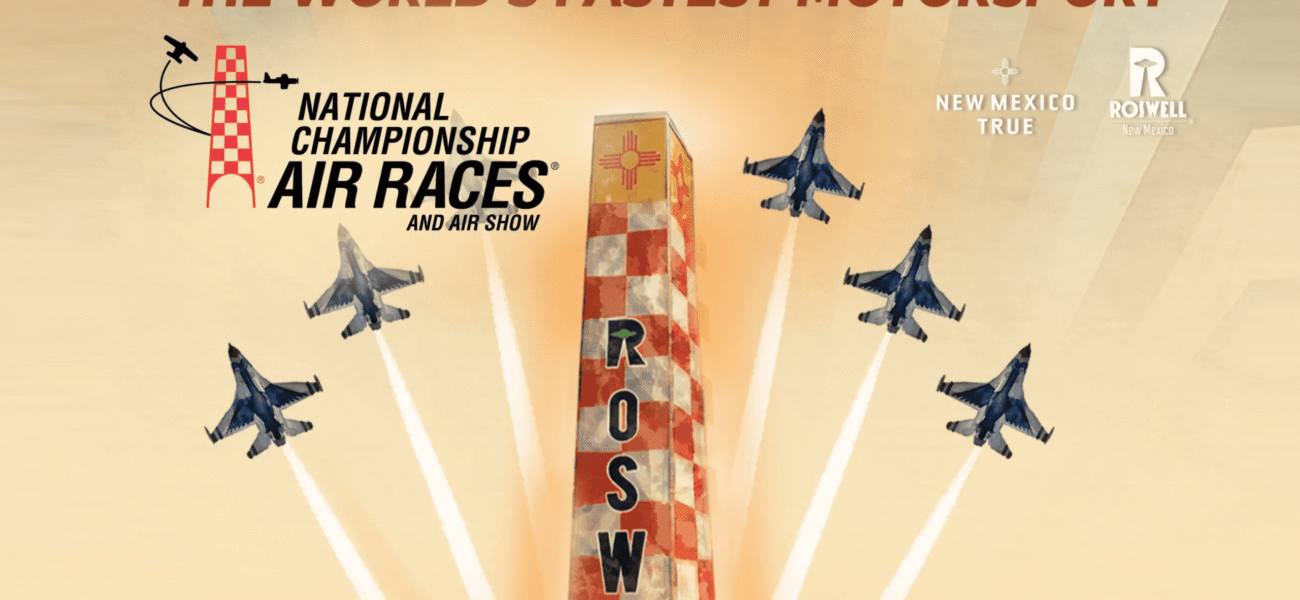
POLICY WIRE — Roswell, New Mexico — A small, high-altitude New Mexico city, usually defined by alien lore and vast, unassuming desertscapes, is again bracing itself for an entirely different kind of visitation. We’re not talking about little green men, though some of the aircraft are probably just as peculiar to the untrained eye. No, this is about the impending sonic spectacle of the National Championship Air Races, which are apparently gearing up for their second annual go-round in Roswell, slated for September 16-20, 2026. For a community often searching for a new identity beyond Cold War mysteries, a global racing circuit brings a curious, perhaps jarring, injection of high-octane economics and international fanfare.
It’s a peculiar brand of excitement, this speed demon pilgrimage. One that’s expected to draw some 90 [QUOTE_PLACEHOLDER] from across the United States and around the world, an impressive tally for any locale. Imagine that. You’ve got champions like Josh Watson, Tom Marden, Chris LeFave, and Bob McCormack—names that, while perhaps not household ubiquitous, certainly carry weight in the niche, adrenaline-fueled world of competitive aviation. And who could blame them for seeking out this particular patch of the planet?
This year’s edition, it’s being said, will see the return of the Unlimited and Sport classes, a pair of crowd-pleasers that undoubtedly pack a wallop. But wait, there’s more to this aerial circus. They’re tossing in a jet class mock course, offering a glimpse into the raw power of jet racing. It’s a combination of speed — and the spectacle of jet racing, we’re told. It isn’t just about the racing itself, though. There will also be a wide array of static aircraft displays, for folks who prefer their engineering marvels parked rather than screaming past at unholy speeds.
Fred Telling, the RARA CEO, captured the mood rather succinctly. He remarked, [QUOTE_PLACEHOLDER]. He’s talking about getting a full field, a complete roster of classes, the works. It sounds like a significant logistical undertaking to bring this all together. These sorts of events, you see, they don’t just happen. There’s some serious behind-the-scenes wrangling to get everything — and everyone — lined up. And for Roswell, well, it’s not exactly a major international hub, is it? So, you can only imagine the amount of elbow grease put into drawing in those global pilots from places as far-flung as Australia and Switzerland. It really does tell you something about the universal appeal of going fast in a flying machine.
A few details stick out, naturally. Tickets are still available for the Air Races, which suggests there’s still time for enthusiasts to join the fray. But good luck finding a room. Organizers say rooms are [QUOTE_PLACEHOLDER] in Roswell itself. That’s probably code for ‘you’re out of luck, bud.’ Still, there are always those quaint alternatives, they reassure us. Space is available in nearby towns like Artesia, Ruidoso, Alamogordo, — and Portales. And for the more adventurous souls, camping is also available. Because, when you’re driving hours to see planes race, sleeping under the stars next to your SUV suddenly seems like a charming option.
And then there’s the headline act. The U.S. Air Force Thunderbirds will also perform. Not just races, mind you, but an official demonstration team. That’s big-league aviation entertainment right there, showcasing American airpower with precision — and flair. One might muse on the strategic implications of such displays; they’re, after all, tools of public diplomacy, even when wrapped in the guise of spectacle. It’s a statement, however subtle, about technological prowess — and air superiority. Compare that with, say, the struggles for aerospace development in parts of South Asia or the Muslim world—Pakistan, for instance, often relying on foreign suppliers and joint ventures for its air force modernization, reflecting a different economic and industrial landscape. The sheer unbridled display of cutting-edge machinery in Roswell subtly highlights the technological disparities on a global scale. In an era where regional conflicts often hinge on aerial capabilities, an event like this, however innocuous on the surface, showcases capabilities many nations can only dream of.
📄 POLICY WIRE WHITEPAPER PUBLISHED: PAKISTAN'S NATIONAL SECURITY POLICY PRIORITIES
👉 READ BY CLICKING HEREThe previous year’s event, according to a recent projection by the New Mexico Department of Economic Development, injected approximately $15 million into the regional economy through direct spending, accommodation, and related services. That’s not chump change for a city of about 48,000 residents. Because every dollar counts, right?
What This Means
From a policy — and economic perspective, this air race is far more than just a joyride for aviation aficionados. It’s a deliberate, calculated play by Roswell and New Mexico to boost local tourism and diversify their economic portfolio. In an age where small-to-medium cities struggle for relevance against larger metropolitan magnets, creating unique, destination-based events is a go-to strategy. It isn’t just about the immediate economic infusion; it’s about branding. Roswell needs to shed some of its kitschy alien-centric imagery and cultivate an image of a dynamic, event-capable destination. That’s the long game here.
But there are economic headwinds, always. The mention of limited accommodation within Roswell isn’t just a logistical quirk; it points to potential infrastructure limitations that cap growth and spread tourist dollars out to surrounding towns—which is good for the region, perhaps, but less centralized for Roswell’s coffers. State policymakers, should they wish to see this event truly take off beyond its initial success, might need to consider incentives for local development, especially in the hospitality sector. It’s about building capacity to match ambition. Beyond the immediate economic boost, this also ties into the broader global competitiveness in high-tech spectacles. Nations are always vying for a slice of the international tourism pie, and air races are one way to capture that high-value, niche demographic. The global attendance—pilots from Switzerland and Australia, for instance—signals a nascent international draw, which, if cultivated, could yield further dividends for New Mexico’s overall image and appeal.
Ultimately, these air races symbolize an ongoing attempt to leverage unique, high-profile events for sustained economic impact in regions seeking revival or reinvention. And they really need to get this right, because even a temporary surge in visitors and a flicker of global attention are hard-won.