

The Collapsing Wall: Why Mainstream Entertainment Can’t Get Enough of the Cage Fighter’s Rage
POLICY WIRE — New York City — The applause isn’t enough anymore, is it? Not for a true modern spectacle. The roar has to come with controversy, a dash of the unhinged, and perhaps a dollop of...

POLICY WIRE — New York City — The applause isn’t enough anymore, is it? Not for a true modern spectacle. The roar has to come with controversy, a dash of the unhinged, and perhaps a dollop of genuine menace, all meticulously sculpted for broadcast. This isn’t just about athletic prowess anymore; it’s a cold calculation of market dynamics and the perpetual hunger for novel engagement.
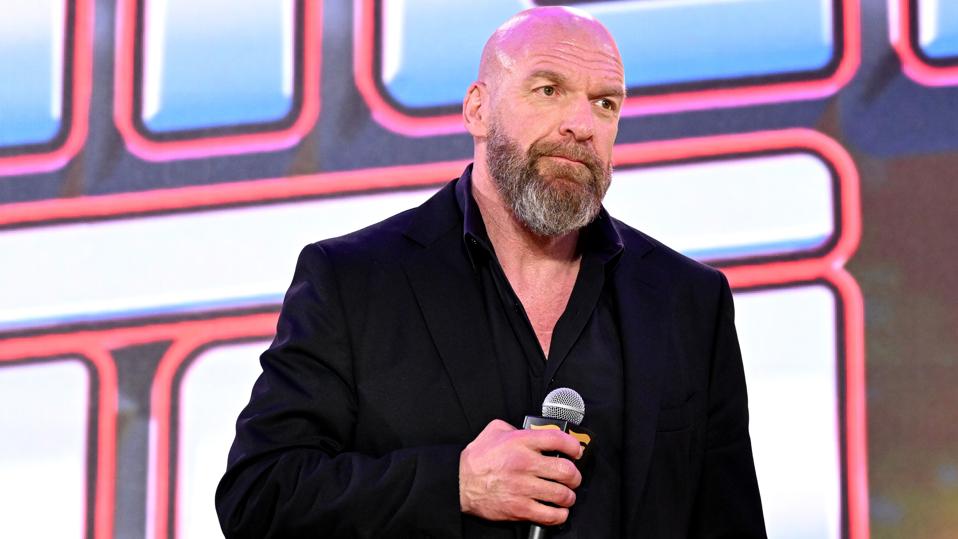
It’s into this bizarre, lucrative nexus that Colby Covington—that erstwhile UFC interim welterweight champion, a man whose persona is as carefully constructed as a congressional subpoena—might well be stepping. You’d think the vicious efficacy of a cage fighter would be an antithesis to the choreographed theater of professional wrestling. But no. Sources close to Covington, and indeed, the man himself, have confirmed recent discussions with none other than Paul Levesque, better known as Triple H, the creative architect behind WWE’s billion-dollar juggernaut. It’s an intriguing dance, to be sure.
Because the real prize today isn’t just a championship belt; it’s capturing an audience segment that’s grown weary of predictable outcomes, hungry for a blend of aggression and narrative. Covington, who’s currently showcasing his particular brand of theatrical violence in Real American Freestyle (RAF), hasn’t exactly shied away from hinting at a WWE future for years. And it’s not some pipe dream from a wannabe; he’s got previous. Think back to 2017, his stint with Impact Wrestling, honing his character with veterans like Bobby Lashley.
“Look, we’re always scouting for talent that can move the needle, especially someone who understands the performance art aspect of what we do,” Levesque purportedly remarked when asked about potential crossovers earlier this year. “Colby? He gets it. The microphone is as much a weapon as a flying knee these days. It’s a business, plain and simple, and we’re in the business of stars.” That’s the unspoken truth: entertainment wrestling, for all its pre-determined theatrics, craves authentic edge.
Covington himself isn’t shy about his value. “I’ve proven I’m the real deal in a cage. But these ‘sports entertainers’?” he drawled, a smirk you could practically hear through the phone. “They’re missing the blueprint. They need someone like me, a real American. I can show them how to make money—a lot of money—while keeping it legitimate. You don’t have to wrestle to be entertaining, you just have to be me. They’ll come calling eventually, and when they do, it won’t be for charity.” That’s vintage Covington, weaving perceived slight into a marketable superpower.
The hurdle, he says, isn’t desire, but the WWE’s infamous, grinding schedule. Years ago, that might’ve been a deal-breaker. But that model? It’s gone. Finished. The new playbook, pioneered by part-time, high-impact attractions like Logan Paul, involves limited dates, targeted appearances, and maximal star power. It’s smart, frankly. Why burn out a supernova when you can make it shine brightly in controlled bursts?
And yes, Covington can cut a promo. The man practically lives in character. His entire UFC career was a sustained, often grating, performance. Even talking about his RAF opponent, he slips effortlessly into third-person villainy: “The worst punishment his promoter could hand his rival was to ‘give him to Colby Covington.’” That’s not a fighter; that’s a villain waiting for his cue. But it’s not quite CM Punk level—not yet. He’s got to really hone that venom.
📄 POLICY WIRE WHITEPAPER PUBLISHED: PAKISTAN'S NATIONAL SECURITY POLICY PRIORITIES
👉 READ BY CLICKING HEREWhat This Means
This escalating flirtation between legitimate combat sports and scripted entertainment isn’t just about TV ratings; it’s a clear signal of the continued erosion of authenticity in public life, driven by commercial imperatives. When a fighter’s ability to ‘talk smack’ becomes as financially relevant as their ability to win, it suggests a broader societal trend where spectacle trumps substance—a potent form of media synergy.
Economically, it diversifies revenue streams for both individual athletes and corporations like Endeavor (which owns both UFC and WWE via TKO Group Holdings). It creates a cross-promotional engine, fueling interest across disparate fan bases. Politically, the often-controversial personas adopted by these crossover athletes can generate outrage, clicks, and an echo chamber effect. Covington’s outspoken, divisive political leanings, for instance, aren’t an accidental byproduct of his persona; they’re integral to his marketability, sparking discussions that range from fervent support to utter condemnation. And because these theatrics, while seemingly rooted in American culture wars, translate universally—from the raucous arenas of the US to living rooms across South Asia, where the lines between authentic sporting prowess and meticulously crafted narratives blur with particularly compelling effect.
Globally, the market for this hybrid content is immense. WWE Network, for instance, boasts significant viewership in over 180 countries, and India alone contributes substantially to its global digital engagement, with over 100 million social media followers from the country, as reported by Indianexpress.com in 2023. That’s a staggering reach for any brand, and the appeal of raw, often performative, Americana, resonates even in culturally distant lands. It’s not just a sport; it’s cultural export, for better or worse. So, while Covington maintains his focus is on the RAF mat for now, the chess pieces are undeniably moving. The world’s biggest sports-entertainment enterprise clearly sees the value in his brand of calculated chaos, and the dollars involved mean nobody’s arguing with that math.