


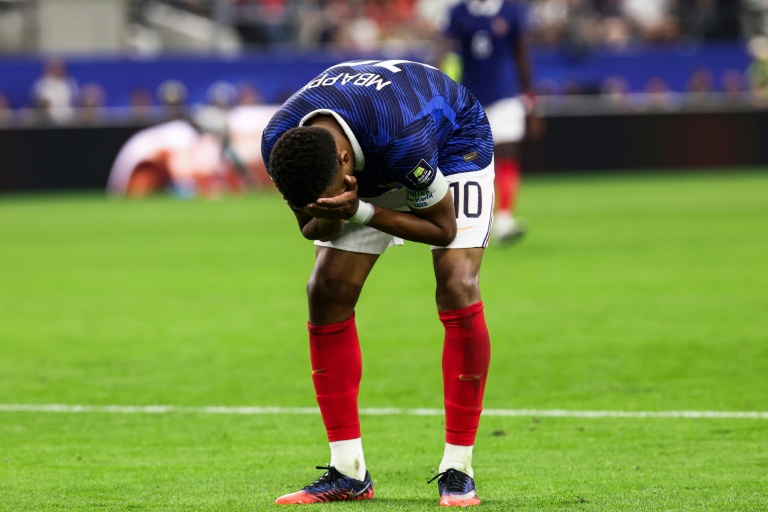
French Grandeur Crumbles: Spain’s Masterclass Halts Mbappe’s World Cup Bid
POLICY WIRE — Arlington, Texas — For a fleeting stretch, they were football’s new Romantics—all daring runs and goals that hit the net like sonic booms. Then, in the Texas heat, the music stopped....

POLICY WIRE — Arlington, Texas — For a fleeting stretch, they were football’s new Romantics—all daring runs and goals that hit the net like sonic booms. Then, in the Texas heat, the music stopped. France, hailed just days prior as an offensive juggernaut, found its dazzling rhythm silenced. This wasn’t just a loss; it was a comprehensive dismantling, orchestrated by a Spanish side that decided artistry would yield to pragmatism. An entire nation’s soaring expectations — what a burden — simply evaporated.
It was never going to be easy, sure, but few truly predicted the quiet capitulation of Les Bleus. Spain’s collective iron will wasn’t merely formidable; it was an execution of football as strategy, a cerebral chess match where the French, despite their individual brilliance, just didn’t have the answers. For more than 75 minutes, a side featuring the likes of Kylian Mbappe, Ousmane Dembele, and Michael Olise—players who’d rattled in a stunning 16 goals in six matches according to official tournament statistics—failed to register a single shot on target. Imagine that, a potent attacking arsenal rendered utterly inert. That’s not just a bad day at the office; it’s a structural failure, plain — and simple. [QUOTE_PLACEHOLDER]
Didier Deschamps, the veteran architect behind past glories, watched his supposed master plan unravel in painful slow motion. One minute, he’s orchestrating back-to-back finals appearances, the next he’s explaining away an uncharacteristic strategic void. Mbappe himself put a fine point on it, describing a situation where the team kept finding ourselves outnumbered 3-on-2 in midfield. And against Spain, that’s a real problem…When you put it all together, the result is a defeat. It’s a huge disappointment. He added that he didn’t think they played the match they wanted to play — whether tactically, technically, or in terms of our overall performance level. And when you don’t do what you’re supposed to do in a World Cup semi-final, you don’t win. Oof. That’s a candid gut-punch for a national hero.
This isn’t merely about football, is it? Not for a country that uses the pitch as a reflection of its national prowess — and unity. It’s about how rapidly the narrative can pivot. Just yesterday, France stood poised on the cusp of an historic third consecutive World Cup final—a streak almost unprecedented. Now, Mbappe won’t join Brazil’s Cafu in that elite club, instead destined for the less-than-glamorous bronze medal match. The shift in collective mood must be a palpable weight. It’s not unlike the emotional rollercoasters one observes in other passionate nations, say Pakistan, where national sentiment can soar and plummet based on the fortunes of their cricket team or perceived political slights. The intensity, the widespread disappointment across millions of homes, it’s a shared global experience, just with different uniforms.
Deschamps, a man accustomed to the victor’s podium, suddenly found himself confronting a bittersweet end. He’d masterminded a World Cup triumph in 2018, narrowly missed another in 2022. But as a prospective triumph in New Jersey turned to dust, his post-match assessment felt almost detached. It’s not really important on a personal level whether I leave this competition in the semi-final or final, he insisted, avoiding any definitive statement on his future. He still felt extremely happy — and very proud of everything we’ve done with the national team. Yet, you’ve got to wonder about the whispers of a missed tactical opportunity. It feels like history repeating—those fabled Brazil sides of old, overflowing with individual talent but sometimes caught lacking in the cold, hard science of defense. And that, in an international tournament, simply won’t cut it.
📄 POLICY WIRE WHITEPAPER PUBLISHED: PAKISTAN'S NATIONAL SECURITY POLICY PRIORITIES
👉 READ BY CLICKING HEREBut the young superstar, Mbappe, wouldn’t allow the final word to be one of defeat. It was a dream for us to reach the final, he conceded, a statement laced with raw disappointment. But he insisted they must face it with their heads held high. Because football waits for no one. That’s a good lesson, isn’t it? Even if you’re arguably the best player on the planet, the clock keeps ticking. You’ve got to move on, put this failure behind us, — and learn from it. There’s a certain grim determination in that, a quiet understanding that tomorrow, another match looms. And another tournament after that. This isn’t the end, just a very loud, very public stumble.
What This Means
France’s exit from the World Cup semi-finals isn’t merely a sporting footnote; it’s a jarring reminder that even immense talent demands tactical precision and adaptability. For the French Football Federation, this performance, particularly the strategic stasis against Spain’s midfield dominance, will likely prompt an internal review. Deschamps’ vague statements on his future, coupled with the glaring inability to counteract a clear tactical threat, might just hasten a generational change in management. Economically, a final berth for France would have translated into significantly more tourism, merchandising, and advertising revenue—millions of euros in lost opportunity for an economy that’s already juggling various challenges. The psychological impact on a national psyche, particularly after a run of such dominance, could also manifest in subtle ways, impacting everything from national confidence to general morale. Conversely, for Spain, this is a validation of their possession-based, highly strategic approach to the game, sending a clear message to other global footballing powers that meticulous planning and collective intelligence can, and often does, triumph over individual flair. It signals a potential resurgence for a footballing philosophy that many considered outdated by some pundits—a quiet victory for the cerebral over the visceral.