


Deepfake Disarray: AI Images Hijack Australia’s Political Battleground
POLICY WIRE — Canberra, Australia — It started, as so many digital skirmishes do these days, with a click. But this wasn’t just another politician caught in an awkward pose; it was a...

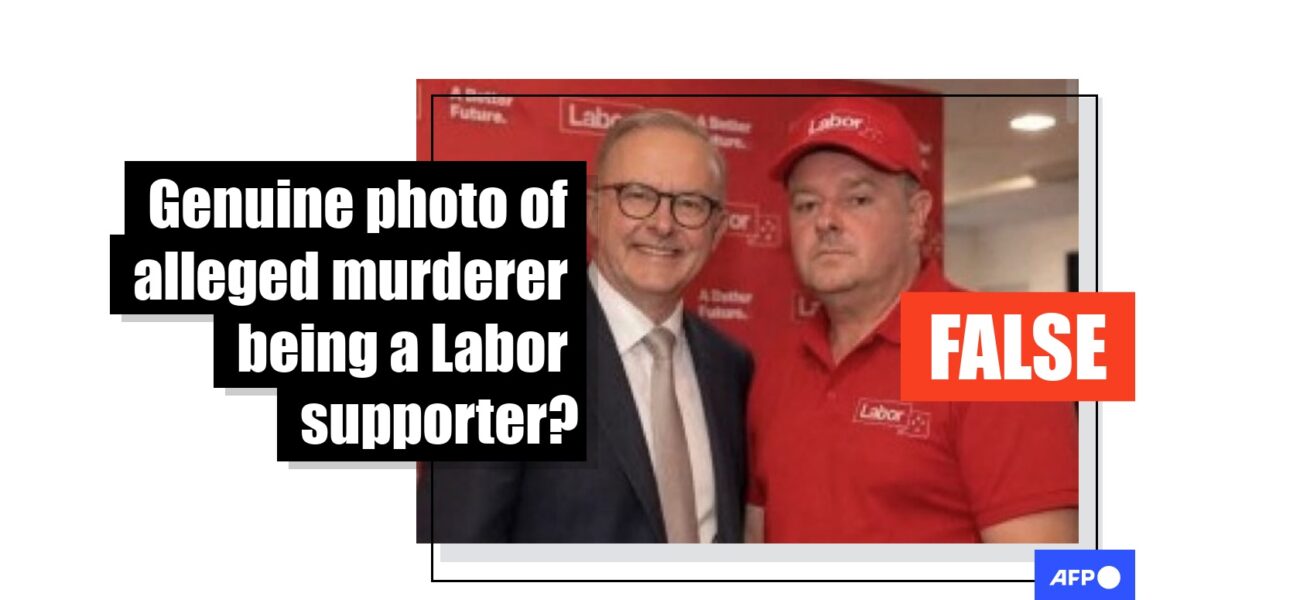
POLICY WIRE — Canberra, Australia — It started, as so many digital skirmishes do these days, with a click. But this wasn’t just another politician caught in an awkward pose; it was a fabrication—a stark, unsettling visual lie—crafted with algorithmic precision. And this isn’t simply about an image, is it? No, this is about the unsettling new front in political warfare: AI-generated disinformation making its audacious debut on Australia’s highly charged electoral stage.
An AI-created image depicting the current Australian Prime Minister, Anthony Albanese, alongside an individual alleged to be a convicted murderer, didn’t just ‘surface.’ It spread like wildfire, carefully fanned across social media channels by elements overtly hostile to the governing Labor party. This wasn’t sloppy Photoshopping, either; it carried enough verisimilitude to confuse, to infuriate, and—most dangerously—to make some folks actually believe it. It’s a calculated jab, hitting hard — and aiming straight for public trust. You see the problem here.
Because, well, that’s what these things are designed to do. To sow discord, to corrode faith in institutions, — and to muddy the already murky waters of political debate. We’re watching the erosion of verifiable reality right before our eyes. And while political smears aren’t new—not by a long shot—the speed, scale, and insidious plausibility that AI now affords them changes everything. It changes the game.
Prime Minister Albanese didn’t mince words, though he perhaps shouldn’t have had to. “This isn’t just about misleading voters; it’s an assault on truth itself,” he declared, his voice strained during a recent press conference. “We won’t stand by while bad actors use sophisticated tools to degrade our public discourse. We’re working through policy options to counter this immediate threat, and frankly, it’s overdue.” He sounded tired, and who could blame him? But the damage, it had already been done.
Meanwhile, the opposition, never one to let a crisis go un-politicized, seized the moment. Peter Dutton, the Opposition Leader, was quick to frame the incident as a symptom of a deeper governmental failing. “Labor’s soft stance on digital platform regulation, it’s clear, has paved the way for this,” Dutton alleged, speaking to reporters from a regional stop. “They talk big about tech, but they’re leaving our democracy vulnerable to these deepfake assaults.” A predictable parry, of course, but not entirely without merit in a regulatory landscape that often lags behind technological advancements. And, let’s be real, he’s not wrong about the vulnerability.
This incident also throws a harsh spotlight on how quickly digital manipulation tactics evolve beyond sophisticated photo editing to autonomous generation. A recent study, published by researchers at the University of New South Wales, indicated that nearly 70% of Australian internet users found it difficult to consistently identify AI-generated political content without explicit disclaimers. It’s not just a niche problem anymore. It’s an issue right here, right now, in the living rooms of ordinary folks who just want to know what’s what.
📄 POLICY WIRE WHITEPAPER PUBLISHED: PAKISTAN'S NATIONAL SECURITY POLICY PRIORITIES
👉 READ BY CLICKING HEREThe Australian case isn’t isolated; it’s a chilling echo of battles waged elsewhere, from developing democracies in South Asia to the intricate, often volatile, political landscapes of the Muslim world. Think about how easily a fabricated image, a deceptively edited video, could inflame sectarian tensions or be weaponized against already marginalized communities—perhaps a migrant community in Australia itself, or an opposition leader in Pakistan—where political discourse already hangs by a thread. The tools developed for local Australian skirmishes can become global weapons in the hands of malicious state and non-state actors alike. It’s an exporting of chaos, isn’t it?
We’ve seen precursors to this, of course, in places like China, where information battles already rage. The ‘Digital Deluge,’ as some call it, mocks real tragedies and obscures truths with terrifying efficiency. This Australian episode isn’t just local political noise; it’s a global siren, warning of what’s to come, everywhere. Democracy’s digital Achilles’ heel, exposed for all to see.
What This Means
This Australian deepfake controversy signals a harrowing acceleration in the global disinformation arms race. For Australia, it fundamentally reshapes upcoming electoral cycles; campaigning can no longer merely be about policy platforms but must also encompass aggressive fact-checking and debunking mechanisms—mechanisms that don’t actually exist in any meaningful, rapid sense right now. The economic implications are also considerable: the need for massive investment in AI detection technologies, digital literacy programs, and the potential for regulatory bodies to levy heavy fines on platforms that fail to police their content adequately. This also raises thorny questions about freedom of speech versus outright fraud, — and where lines get drawn. And it impacts global trust in democratic outcomes. If voters can’t trust what they see, if political narratives are constantly open to such potent, sophisticated forgery, the very bedrock of consensual governance begins to fracture. The world’s nascent democracies, particularly those grappling with recasting their post-authoritarian states, should pay particularly close attention. What starts in a stable Western democracy today could very well unravel a more fragile political experiment tomorrow.
This isn’t a technical glitch; it’s a profound systemic challenge to truth. A truth, it seems, that gets harder to find every single day.