

Ebola’s Unseen March: Congo’s Spreading Crisis Ignites Global Health Alarm
POLICY WIRE — Kinshasa, DRC — Another dawn, another health crisis. While much of the global lens remains fixated on geopolitical flashpoints and market tremors, a quieter, more insidious threat just...

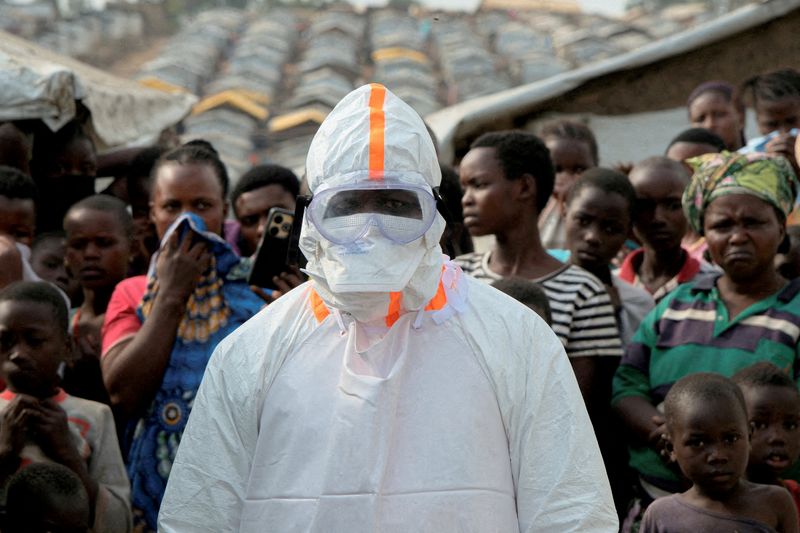
POLICY WIRE — Kinshasa, DRC — Another dawn, another health crisis. While much of the global lens remains fixated on geopolitical flashpoints and market tremors, a quieter, more insidious threat just extended its reach across the Democratic Republic of Congo. It’s not a fresh skirmish or an electoral upset, but the expansion of a viral enemy—Ebola—now slithering into provinces previously untouched, demanding an urgent recalibration of what constitutes a priority on the international stage.
This isn’t about mere contagion; it’s about governance. And it’s about the relentless toll on a nation already battered by conflict — and economic precarity. This isn’t their first rodeo with this pathogen. The nation has faced these cycles of terror before. But this current surge—where the outbreak
spreads to two more provinces [QUOTE_PLACEHOLDER]
—suggests a frustrating replay, a grinding inability to contain the predictable chaos that follows the pathogen’s vector.
Officials, both domestic and international, aren’t exactly shouting from the rooftops (because they’ve seen this before). But the implications are stark. Spreading to more areas simply stretches already threadbare resources even thinner. Imagine the logistical nightmare—cold chain storage for vaccines in equatorial heat, getting vital equipment into areas where roads are often little more than suggestions, and then, the human element: community resistance, mistrust, and the plain exhaustion of dealing with endless calamity.
And let’s not forget the geopolitical undertones here. A volatile Congo, constantly on the brink, suddenly contending with an uncontrolled epidemic? It doesn’t exactly stabilize the region. Neighboring nations are always on edge, knowing the porous borders mean little when an invisible killer is on the move. For context, historical data shows that global health crises disproportionately affect countries with weak governance, with the World Health Organization (WHO) reporting that over 70% of major infectious disease outbreaks in the past decade originated in low-income settings. That’s a stark figure, a damning indictment of global health equity.
For nations far removed, perhaps in South Asia or the broader Muslim world, these African health emergencies might feel distant. But they shouldn’t. Pakistan, for instance, grapples with its own significant public health challenges, from polio eradication efforts to waterborne diseases in crowded urban centers. The strategies employed to combat outbreaks, manage public perception, and deploy medical interventions in environments marked by poverty, conflict, or low trust —they’re not dissimilar. Both regions highlight the need for robust health infrastructures that can respond without crumbling. When international health organizations are pulled thin, trying to contain an outbreak in Congo, it affects resource allocation globally. Aid that might otherwise bolster programs in Pakistan or Indonesia, or contribute to resilience efforts in fragile states in the Middle East, is redirected to the most acute emergencies. It’s a zero-sum game, often, for critical funding — and expert personnel.
Because every new provincial spread means more vectors, more potential for mutations, and a greater risk of global travel disruption. We’ve seen that movie, haven’t we? It’s a costly, brutal blockbuster that nobody wants a sequel to. The DRC’s challenges are, in essence, the world’s challenges—amplified, concentrated, and ticking.
📄 POLICY WIRE WHITEPAPER PUBLISHED: PAKISTAN'S NATIONAL SECURITY POLICY PRIORITIES
👉 READ BY CLICKING HEREOne struggles to avoid a sense of weary resignation watching these cycles. Decades of humanitarian efforts, medical breakthroughs, and scientific innovation—they frequently crash against the rocks of political instability and chronic underfunding in nations that need them most. You’d think we’d learn, right? But the script keeps playing out, tragically.
What This Means
This latest territorial gain by the Ebola virus in Congo isn’t just a grim health update; it’s a political pressure test for the DRC’s fragile central government and a significant challenge to regional stability. For President Tshisekedi’s administration, managing this expanding crisis becomes another delicate balancing act amidst security concerns in the east and upcoming electoral pressures. They’ve got their hands full.
Economically, prolonged outbreaks cripple local commerce, deter investment, — and exhaust state coffers. Small businesses shutter. Farmers can’t reach markets. Communities—they’re just isolated further, amplifying existing poverty. International donors, often fatigued by Congo’s persistent woes, face renewed calls for support, competing with myriad other global crises, from the Sahel to Ukraine. The cost isn’t just measured in human lives—it’s measured in lost GDP and derailed development, years of progress just evaporating.
It also underscores a broader, uncomfortable truth about global health security: it’s only as strong as its weakest link. As long as any nation struggles with basic public health infrastructure and security, infectious diseases will exploit those vulnerabilities. This puts distant, developed nations on notice, too. It’s not just a humanitarian issue; it’s a cold, calculated risk assessment. And neglecting these localized outbreaks, treating them as contained unfortunate events, simply invites more widespread calamity down the road. They can’t just wish it away, can they? The global community really needs to decide if it’s going to continuously react to crises, or proactively invest in robust health systems. There’s a link to broader European security concerns here, too, in how resources are stretched thin across seemingly disparate crises, ultimately impacting overall stability.
For regions like South Asia, with dense populations and evolving public health needs, Congo’s struggle serves as a potent reminder of preparedness—the urgent, continuous necessity to strengthen disease surveillance, community engagement, and rapid response mechanisms. The cost of neglect, after all, is almost always far greater than the cost of prevention. And sometimes, you just can’t outrun it.
Just look at how global markets reacted during earlier pandemic scares. Or think about the immense political capital invested in containment. What happens when multiple major outbreaks occur simultaneously, pulling at the limited resources of the World Health Organization and other crucial agencies? It’s not a question of ‘if’; it’s ‘when’. These outbreaks aren’t just isolated events. No, they’re rehearsals. A terrifying dress rehearsal for the next, bigger challenge. And how nations, rich and poor, cooperate—or fail to—will determine the eventual human cost. This isn’t an isolated problem. No way. The world’s just gotten smaller, you see, — and pathogens don’t care about borders. They really don’t.