


The Price of ‘History’: FIFA Carves Up World Cup Final Field, Fans Pay the Cost
POLICY WIRE — EAST RUTHERFORD, N.J. — It used to be sweat, glory, and perhaps a torn jersey after the final whistle. Now, a sliver of the playing field from football’s most prestigious match might...

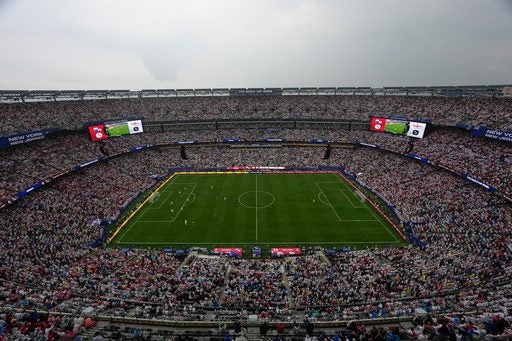
POLICY WIRE — EAST RUTHERFORD, N.J. — It used to be sweat, glory, and perhaps a torn jersey after the final whistle. Now, a sliver of the playing field from football’s most prestigious match might just be another expensive memento in your glass cabinet. FIFA, long perceived as less a global sports federation and more a ruthlessly efficient merchandising machine, isn’t just selling exorbitant tickets for the upcoming 2026 World Cup final at MetLife Stadium; they’re dissecting the very ground where history will supposedly be made and flogging it in pieces.
It’s a peculiar brand of souvenir, isn’t it? Not a replica trophy, not a signed ball, but actual grass—dirt and all—from a patch of ground that players will have only just trod upon. This commercial move isn’t merely an aside; it’s a telling snapshot of modern elite sport, where everything, even the hallowed turf, possesses a tangible price tag. They’re asking $450 per segment of the turf, creating a cottage industry around a product that, until recently, was just… soil and vegetation.
The marketing patter, unsurprisingly, pulls no punches in its grandeur. Consumers are promised the chance to “Own a genuine piece of football history with an authentic 2026 FIFA World Cup Piece of the pitch, permanently preserved in a premium acrylic with a USB keepsake,” according to the organization’s online store. Because, naturally, a piece of turf wouldn’t be truly historic without a USB tucked alongside it. It makes you wonder what kind of digital immortality is stored on that tiny drive—perhaps an authenticity film, they say, suggesting a sort of bureaucratic validation for a glorified patch of sod.
They’ve framed it like a relic, declaring that “Each piece contains an original fragment of the iconic Final playing surface, making it a unique collectible that celebrates one of the world’s greatest sporting events.” The packaging alone sounds like an art exhibit description: “the acrylic USB features an authenticity film, while offering a sleek, contemporary display piece. Presented in a premium hinged shoulder box with striking spot UV detailing, this exclusive item is designed for collectors, fans, and football enthusiasts alike.” It’s quite the mouthful for something destined, for most, to sit gathering dust.
This initiative surfaces just as questions about the playing surface’s quality already hang in the New Jersey air. Players and coaches have apparently already voiced their criticisms regarding the MetLife field, which usually sports an artificial surface for the New York Giants and Jets NFL games. But hey, don’t sweat the actual playing conditions, you can still buy a piece of the problematic turf, right?
And then there’s the logistical quirk: “Orders will not be shipped until after the FIFA World Cup 2026 Final,” because you can’t exactly sell turf before it’s played on, can you? Oh, and delivery? It’s restricted. Fans in the Middle East, in burgeoning football markets like Pakistan or Indonesia, aren’t currently on the shipping manifest. Just United States and Europe for now—a telling limitation on who gets to literally own a piece of this global game’s high-value fragments.
It begs the question: what exactly are we collecting here? Scarcity is a powerful driver of perceived value, but this move feels less about heritage and more about maximizing every last cent from an event that’s already costing an arm and a leg. FIFA, which has become increasingly expert in turning sentiment into currency, knows exactly what it’s doing. Don’t forget, they’re already charging regular tickets for the final at up to an eye-watering $32,970 (Associated Press), and even more for hospitality packages—a figure that would make most working-class football fanatics in, say, Karachi or Lahore, balk and then probably laugh.
But there’s a certain crude genius to it. They’re selling scarcity. They’re selling a narrative of participation, however abstract, for those who can afford the entry price. And because football fandom knows no national boundaries, you can be sure someone, somewhere, will pay.
📄 POLICY WIRE WHITEPAPER PUBLISHED: PAKISTAN'S NATIONAL SECURITY POLICY PRIORITIES
👉 READ BY CLICKING HEREWhat This Means
This micro-sale of turf isn’t just a quirky anecdote; it’s a clear signal of the intensifying commercialization gripping global sports organizations, particularly FIFA. It illustrates a deep pivot from sport as spectacle and community-builder to sport as a high-margin business entity, eager to extract value from every conceivable touchpoint. This isn’t a new phenomenon, but it’s gotten sharper, more aggressive.
Economically, it underscores the hyper-segmentation of the fan base. There’s the super-rich, paying tens of thousands for a seat. There are the mid-tier collectors, dropping hundreds on an acrylic-encased grass stub. And then there’s everyone else, consuming via television, distanced by both geography — and cost. It creates a palpable divide, almost creating a separate class of elite fans whose devotion is measurable by their financial outlay, not their passion alone. And this financial barrier to entry, whether for a ticket or a piece of ‘history,’ inherently excludes vast populations in the developing world, regions where football isn’t just a game but a cultural phenomenon.
Politically, this kind of extreme monetization, particularly by an organization accused of past impropriety, raises questions about the allocation of resources and profits. Who truly benefits from these colossal sporting events — and their granular merchandising? Is the focus on grassroots development, or is it solely on maximizing revenue for the organizing body? Because these prices — and these bizarre collectibles certainly don’t suggest a lean, fan-first operation.
For nations aspiring to host such events—many of them in the Global South, from Morocco to potential bids from countries in Southeast Asia or the Gulf—these tactics highlight the colossal financial commitments involved. It’s not just stadiums and infrastructure; it’s an entire ecosystem of commercial demands, from broadcast rights to these almost comically precise monetization efforts, that must be satisfied. It makes the prospect of hosting a World Cup an increasingly distant, perhaps even irresponsible, aspiration for many, deepening the inequality in global sports access and participation.
It’s all part of the big business of football, where even a patch of turf becomes a product, commodified and curated for the paying customer. A very strange kind of legacy, indeed.