

Dimon’s Gilded Exit Strategy: From Wall Street Citadel to Academia’s Ivory Tower
POLICY WIRE — New York, USA — It isn’t always about the money, even for the architects of global capital. Sometimes, after decades orchestrating billions and navigating crises, the high priests of...

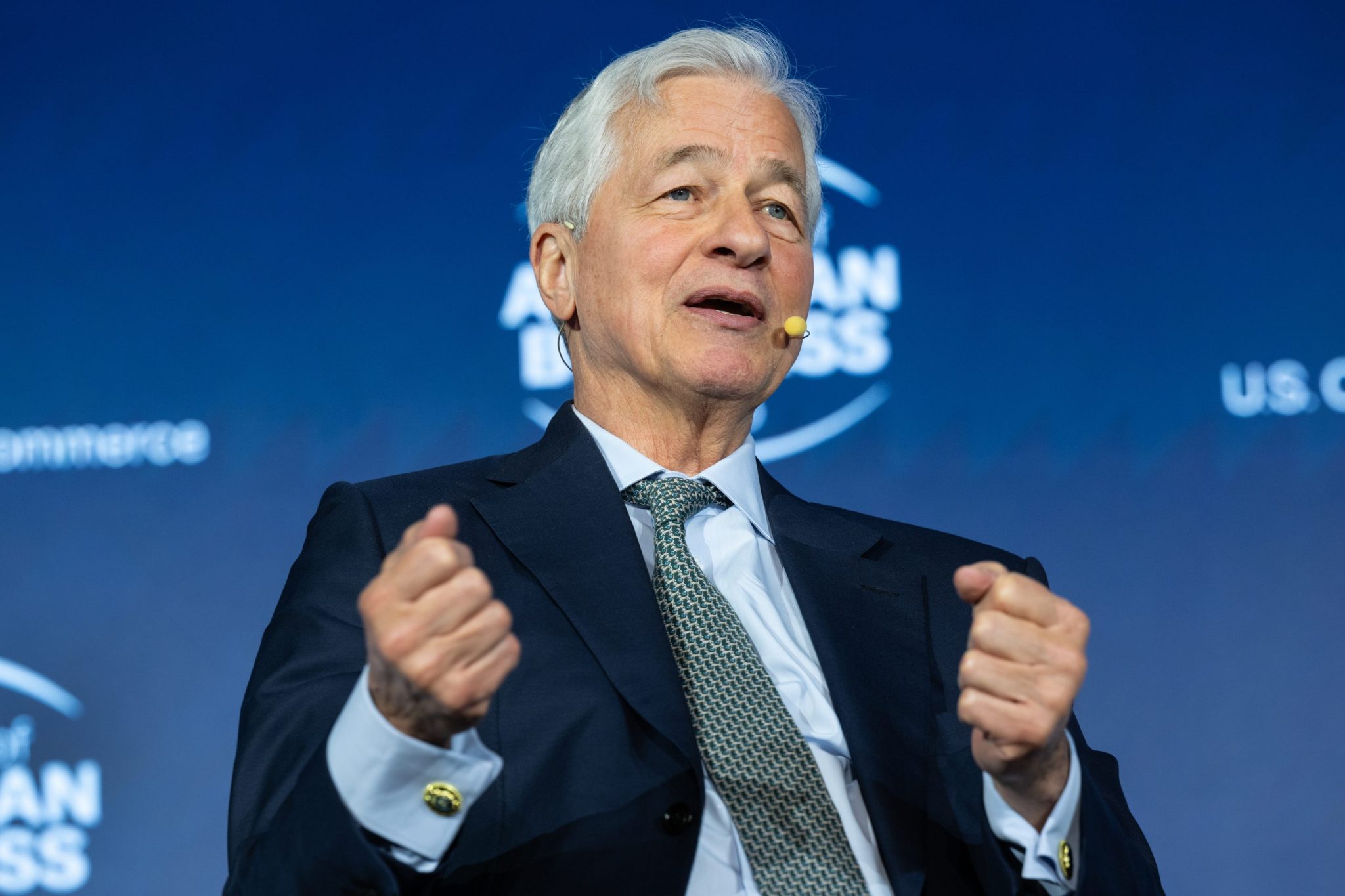
POLICY WIRE — New York, USA — It isn’t always about the money, even for the architects of global capital. Sometimes, after decades orchestrating billions and navigating crises, the high priests of finance turn their gaze to less quantifiable pursuits. The notion of stepping away—really stepping away—from the helm of a banking titan like JPMorgan Chase seems almost unfathomable for Jamie Dimon, a figure as entrenched in Wall Street’s landscape as the NYSE itself.
But that’s exactly the horizon he’s reportedly surveying. Not an easy decision, this, considering he’s been at the firm for years, serving as CEO since 2005. It’s a colossal run, — and now, the chatter indicates a new chapter. What does one do after shaping the contours of an industry? It turns out, even for those at the financial zenith, there’s a surprising attraction to the world of words — and wisdom.
The rumor mill’s humming, suggesting that when Dimon does eventually decamp from his perch atop the financial behemoth, he isn’t planning a quiet retirement fishing or playing golf—though one wouldn’t blame him. No, instead, he’s apparently looking at ventures into the literary realm and perhaps even the hallowed halls of academia. [QUOTE_PLACEHOLDER], sources familiar with the matter indicate.
It’s a peculiar transition, from boardrooms thick with M&A discussions to classrooms bustling with fresh-faced hopefuls. But then, the man has stories. Lord, he has stories. A financial crisis or two under his belt, certainly a book or two there. Imagine those lectures—they wouldn’t just be about efficient market hypotheses. They’d be gritty, firsthand accounts of navigating economic storms.
For financial centers around the globe, especially those in developing economies, leadership changes at institutions like JPMorgan aren’t mere gossip. They can send jitters or signals of shifts in lending priorities, investment appetites, or even strategic partnerships. Consider Pakistan, for instance, a nation constantly navigating its own complex economic realities. Stability in global financial leadership can translate to more predictable foreign investment flows or, conversely, a sudden change could mean re-evaluation of exposure to emerging markets. They’ve got to think about things like this—it’s part of the global chessboard. Any whiff of instability at such a critical node resonates down the chain, hitting nations with weaker financial resilience hard. Pakistan, like many South Asian economies, relies on robust, consistent international financial relationships. A fresh pair of eyes at JPM could either stabilize or disrupt established dialogues.
But the focus right now is on Dimon’s post-banking aspirations. It’s not just a passing fancy; he’s reportedly [QUOTE_PLACEHOLDER] to embark on these new endeavors. For many, after a lifetime of the merciless grind that’s high finance, the lure of sharing insights, shaping young minds, and penning memoirs becomes strong. It’s about legacy, perhaps. Or maybe, it’s just about having something genuinely different to do on a Tuesday morning.
Average tenure for CEOs in the S&P 500, by the way, hovers around seven years, according to data compiled by Equilar and The Associated Press. Dimon’s run blows past that by a country mile. His protracted leadership means a deeper institutional memory, but also, one assumes, a heightened sense of the weight he carries, and the vacuum he’ll leave. That’s a lot of institutional knowledge heading towards a syllabus — and a publishing deal.
And let’s not forget the sheer intellectual capital. To lead such an expansive, multi-faceted organization—it’s not just numbers. It’s people, politics, geopolitics, regulation. A book written by him would likely not just be a tell-all, but a dense analysis of modern capitalism from an insider’s view. You’d imagine it would sell pretty well.
Because ultimately, when you’ve had the kind of influence he has, retirement isn’t really an option—it’s just a career pivot. A rebranding exercise, if you will. From master of the universe to a sage with tenure — and a best-seller list on the mind.
What This Means
Dimon’s contemplation of a book deal and teaching positions signifies a broader trend among powerful corporate executives: the post-CEO phase as a second, often equally impactful, public career. For the financial world, his departure, whenever it eventually occurs, represents the close of an era, but not necessarily a seismic shift for JPMorgan itself. These institutions are designed for continuity. The real political — and economic implications lie in the messaging. A high-profile figure like Dimon transitioning to an intellectual and advisory role underscores the perceived value of experience and the shift of influence from purely executive functions to thought leadership. Economically, this means a likely torrent of memoirs and university lectures from retiring giants, providing insider perspectives that could subtly influence future policy or market perception. For developing economies, particularly those within the South Asian bloc struggling with governance issues and attracting long-term foreign direct investment, the kind of counsel offered by figures like Dimon in post-retirement roles could be highly sought after. They’re looking for stability and expertise—and he’s got both. His exit, then, isn’t just an internal JPMorgan affair; it’s a recalibration of where a certain type of power and influence resides within global finance.