


Manhattan’s Microbe Miasma: Legionnaires’ Outbreak Exposes Elite Vulnerability
POLICY WIRE — New York, USA — When invisible bacteria lay siege to one of the world’s most rarefied neighborhoods, Manhattan’s Upper East Side, the real story isn’t just about...

POLICY WIRE — New York, USA — When invisible bacteria lay siege to one of the world’s most rarefied neighborhoods, Manhattan’s Upper East Side, the real story isn’t just about microbes. It’s about trust, blame, and the grimy underbelly of urban public health that even unlimited budgets can’t entirely disinfect.
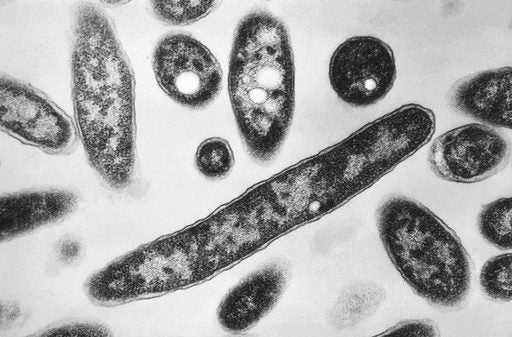
For weeks now, an unseen threat, Legionella bacteria, has been making its rounds. Not through back alleys or forgotten corners, but rather through the very cooling systems designed to make luxury high-rises tolerable in summer. But there’s a flicker of light: New diagnoses are slowing, officials said Tuesday. Still, the source, the actual villain, remains frustratingly elusive. [QUOTE_PLACEHOLDER]
It’s a peculiar irony, isn’t it? The same polished facades that house unparalleled wealth can unwittingly become vectors for a potentially deadly disease. We’re talking 60 cases reported, with 49 patients needing a hospital bed, though 34 of those folks have since gone home. City Health Commissioner Dr. Alister Martin told a virtual briefing that all of these things together paint an encouraging sign. But his message landed awkwardly—some might say politically—given the context.
Just the day before, City Council Speaker Julie Menin, herself an Upper East Sider (a Democrat, too), reportedly hadn’t pulled her punches. She complained that the Health Department wasn’t doing — and disclosing enough. A message seeking comment was sent Tuesday to Menin’s office, a classic political dance step that signals less transparency than one might hope. Because in New York, a health crisis always seems to intersect with City Hall posturing.
The city’s number crunchers say two new cases were diagnosed from samples taken last Thursday through Saturday. That’s a drop, a big one actually, compared to as many as 11 per day from earlier samples. So, yes, progress, even if the grand pronouncements of relief feel a tad premature when nobody knows *where* it came from. This isn’t just some abstract threat, remember. It’s a nasty form of pneumonia. And no, you can’t catch it from your neighbor — it’s not person-to-person spread. Just those tiny, contaminated water droplets floating in the air. Little death clouds, you could call them.
Officials have swept through all 183 cooling towers in the area, which, by the way, included the Guggenheim Museum and high-rent Park and Fifth Avenue apartment houses. Seventy-six of those beasts tested positive on first-round checks. Those tests, Martin reminded everyone, don’t differentiate between live bacteria and dead ones, which, if you think about it, makes for quite a large, confusing dragnet. Fifty-seven buildings, including the esteemed Guggenheim, have completed required cleanups. Draining and disinfecting — a high-tech flush, if you will. The remaining 19 are due to do the same by Thursday. You’ve gotta wonder, with all that money swirling around, why are these fundamental infrastructure checks so complicated, so reactive?
📄 POLICY WIRE WHITEPAPER PUBLISHED: PAKISTAN'S NATIONAL SECURITY POLICY PRIORITIES
👉 READ BY CLICKING HEREThey’ve learned something from past mistakes, though. A year back, over 100 people got sick in Harlem, — and seven died. That time, the sources included cooling towers at a city-run hospital — and even the city’s own public health lab. It’s a bitter pill to swallow when the guardians of public health become unintentional spreaders. This year, the city decided not to hold off on ordering cleanups, ditching the wait for two-week-long second-round tests for live bacteria. It’s a faster response, for sure, even if it feels like bolting the stable door after a couple of particularly sick horses have already escaped.
What This Means
This isn’t just about a disease or its temporary containment. It’s a stark, unblinking mirror reflecting global realities of urbanization, infrastructure decay, and the ever-present political tug-of-war that accompanies any crisis. An outbreak in one of New York’s wealthiest enclaves sends a shudder far beyond Manhattan. Because if this can happen there, with all that resources at its disposal, imagine the silent struggles in densely populated, rapidly developing cities in, say, South Asia. Consider Karachi, a metropolis with millions and often stretched public health systems, facing comparable challenges with aging water infrastructure, population density, and fluctuating building codes. These aren’t exotic diseases anymore; they’re global constants, silent saboteurs in our modern lives.
Economically, repeated public health scares chip away at civic trust and can cost real money — from lost tourism, reduced commerce, to emergency response expenditures. Politically, they expose fault lines between elected officials, public servants, and the populace, often escalating into blame games rather than collaborative solutions. It’s a reminder that beneath the glittering skyline, a complex, vulnerable ecosystem hums along. According to the U.S. Centers for Disease Control — and Prevention, the illness is fatal in about 10% of cases. That single statistic, chilling in its simplicity, puts an extremely grim reality into perspective, making the politics of blame feel all the more petty.
And for anyone thinking these issues are confined to New York, or any singular place, think again. Urban resilience—or lack thereof—is a universal narrative playing out in varying degrees of urgency across every major city, from New York to Islamabad.