


Covert Glances: Special Counsel’s Probe Pierces Legislative Privacy
POLICY WIRE — Washington, D.C. — A hushed tremor, often mistaken for just another congressional skirmish, is now rattling the very foundations of American legislative privacy. It isn’t the...

POLICY WIRE — Washington, D.C. — A hushed tremor, often mistaken for just another congressional skirmish, is now rattling the very foundations of American legislative privacy. It isn’t the usual back-and-forth about policy disagreements or electoral machinations. This feels different, more intimate—a quiet, pervasive encroachment that ought to raise eyebrows from dusty Senate halls to bustling digital bazaars of Islamabad.
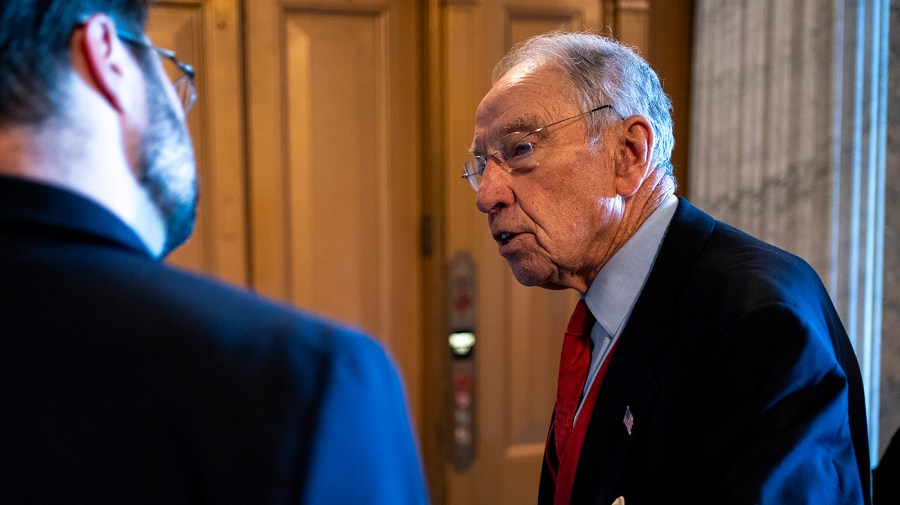
Senator Chuck Grassley, that perennial hawk on government transparency, recently dragged into public view some rather uncomfortable assertions. He contends he possesses documentation—not just hearsay, mind you, but actual paper trails or their digital equivalent—confirming that Special Counsel Jack Smith’s investigation team undertook a review of legislators’ text messages. Forty-four lawmakers. Just let that sink in. This isn’t some rogue FBI agent on a fishing expedition; it’s a special counsel’s apparatus digging into the digital chatter of elected officials.
But it’s about more than just the numbers, or the names involved. It’s about the unsettling precedent such actions create. Imagine, if you can, the sort of chills this sends down the spines of congressional aides, thinking their casual messages, their professional correspondence, could all be fair game. What does this do to candor, to honest political discourse, when a looming prosecutorial eye might be sifting through private exchanges? It’s corrosive to the legislative process, making everyone a potential subject under silent, unseen scrutiny.
The Special Counsel’s mandate is serious business, to be sure. His team operates within parameters, though those parameters sometimes appear to stretch with astonishing elasticity. [QUOTE_PLACEHOLDER] as the senior senator put it. A rather stark summary, isn’t it? One could almost hear the rustle of constitutional parchment—the hallowed separation of powers—fluttering uneasily.
And let’s be frank, this isn’t just an internal American problem. When the world looks at Washington, it often sees the purported gold standard for democratic institutions. Tales like this, though, they don’t exactly bolster that image. It’s hard to preach about transparency or privacy safeguards to nations like Pakistan or Indonesia—where state surveillance is often a more overt, acknowledged, and sometimes weaponized reality—when one’s own political bedrock appears so vulnerable to the judicial-executive gaze. Such incidents, no matter the context or justification, can be spun by detractors abroad as hypocrisy, giving cover to their own overreaches. It’s a perception problem wrapped in a constitutional crisis.
This situation speaks to a broader unease. How much surveillance is too much? What safeguards remain for legislators when the very agents of the government can peek into their private electronic communications? We’ve seen, time and again, how government overreach, even when seemingly justified, can morph into unintended consequences. Data from the Electronic Frontier Foundation (2023) indicates that nearly 65% of Americans are concerned about government surveillance of their digital communications. That’s a majority with valid worries. This kind of action simply pours fuel on an already burning public trust deficit.
The specifics of the content of these messages remain under wraps for now, of course. Was it pertinent to a larger investigation? Was it merely a sweep? The public isn’t privy to those details, which only exacerbates the sense of unease. But Grassley says he has records, and that’s usually enough to trigger a good deal of probing inquiry—which, incidentally, is what a healthy democracy requires when its own representatives’ communications are on the digital chopping block.
📄 POLICY WIRE WHITEPAPER PUBLISHED: PAKISTAN'S NATIONAL SECURITY POLICY PRIORITIES
👉 READ BY CLICKING HEREIt’s a curious state of affairs. Lawmakers, guardians of the nation’s laws, suddenly find themselves subject to a digital dragnet usually reserved for more explicit targets. It changes the dynamic. It chills conversation. It makes one wonder if democracy, in its noble pursuit of justice, isn’t sometimes eating its own tail.
What This Means
This revelation from Senator Grassley isn’t merely political theater; it’s a potential landmine for the principle of separation of powers. From a political perspective, it amplifies cries of prosecutorial overreach and executive branch intrusion into legislative affairs. It gives ammunition to those who argue the Department of Justice and its various investigative arms wield too much unsupervised power, potentially setting off a fresh wave of calls for increased oversight, if not outright legislative restrictions on investigative scope regarding Congress.
Economically, while not directly impactful on markets, the underlying erosion of trust and perceived stability can have subtle but long-term effects. A government viewed as internally surveilling its own legislative body, particularly by its citizens and international observers, doesn’t project the image of a transparent, robust democracy crucial for attracting foreign investment or maintaining global influence. Foreign governments and investors observe how core institutions function, and a perception of internal chaos or overreach can indirectly make a nation seem a less reliable partner or a riskier economic environment. This narrative, particularly in regions like South Asia and the broader Muslim world already sensitive to issues of government transparency and data privacy, could complicate diplomatic efforts or even trade relationships, casting a shadow on the reliability of American democratic norms and the integrity of its institutions.
But the biggest implication, the quiet one, is the long-term chilling effect on congressional independence. If lawmakers must operate under the assumption that their private communications, however innocuous, could become evidence, it could stifle honest deliberation, encourage circumvention through less secure means, and ultimately degrade the very frank discussions necessary for effective governance. And that, frankly, serves no one.