


Bipartisan Brawl: House Democrats Torch GOP over Gun Stance Amidst Global Scrutiny
POLICY WIRE — Washington, D.C. — The cacophony of a capital city, usually a symphony of orchestrated diplomacy and measured rhetoric, occasionally erupts into raw, unscripted moments. A recent...

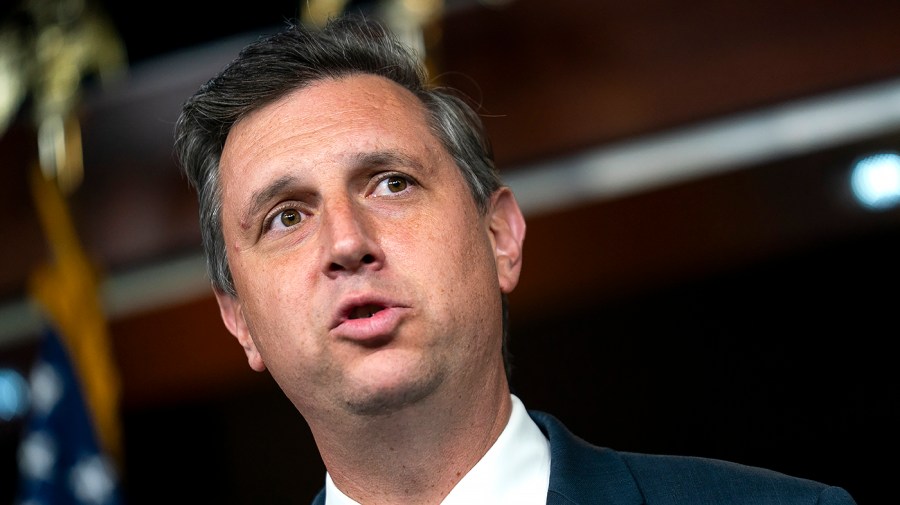
POLICY WIRE — Washington, D.C. — The cacophony of a capital city, usually a symphony of orchestrated diplomacy and measured rhetoric, occasionally erupts into raw, unscripted moments. A recent exchange on Capitol Hill wasn’t a policy debate; it was a detonation. One of the nation’s representatives — a House Democrat, mind you — didn’t just disagree with a Republican counterpart; he uncorked a verbal broadside over America’s incessant struggle with gun violence, pushing the theatrical spectacle of governance into sharp, unforgiving relief.
It’s not just a dust-up among D.C. types; it’s a bellwether. And what does it foretell? A deeply fractured legislative body, perpetually unable or unwilling to bridge the chasms between its own members, especially when it comes to issues literally steeped in blood. The Republican, Senator Markwayne Mullin, found himself squarely in the line of fire. We’re talking about an unvarnished, highly public dressing down from the Democratic side of the aisle—a rare public tantrum—over a policy impasse that’s gone from critical to frankly, grotesque.
This isn’t about politeness anymore, is it? It’s about frustration boiled over, spilling out onto the polished floors of power. The outburst, reportedly fueled by the raw trauma of another string of mass shootings across the country, points to a broader American predicament. This isn’t just about internal squabbles; it’s about the image the United States projects to a world already grappling with its own complex instabilities. Countries like Pakistan, often criticized for their own domestic security challenges or perceived lack of governmental unity, might well watch such antics from Washington with a grim sense of irony or even schadenfreude. They see the West, once touted as a stable paragon, consumed by its own internal contradictions.
Because frankly, what we’re seeing is a governing crisis. America’s chronic inability to enact meaningful gun legislation stands in stark contrast to nearly every other developed nation. In 2023 alone, the Gun Violence Archive, a non-profit research group, reported over 650 mass shootings across the United States. That’s an average of almost two a day—a hard statistic that just hits different when it’s not an abstract number, but a direct impact on communities, on families.
The Democratic member’s impassioned critique suggested Mullin’s actions or inactions—depending on where you sit on the legislative divide—were pushing them, the legislative branch itself, right into the unenviable glare of public attention. There was a specific expletive-laden phrase used, pointing to the renewed media focus. It was an indictment, a guttural yell that said, essentially, [QUOTE_PLACEHOLDER]. It wasn’t about debate tactics; it was a primal scream for legislative consequence.
And then there’s the broader context: the perceived legislative stagnation in a deeply polarized House — and Senate. You’ve got the Republicans often invoking Second Amendment rights as absolute—a red line no one crosses. Democrats, conversely, are typically pushing for more stringent gun control measures, from universal background checks to bans on assault weapons. The gap is not just wide; it’s a chasm, growing wider with each new tragedy. It’s not a question of intent sometimes; it’s a question of basic function.
📄 POLICY WIRE WHITEPAPER PUBLISHED: PAKISTAN'S NATIONAL SECURITY POLICY PRIORITIES
👉 READ BY CLICKING HEREThis particular congressional blow-up offers a gritty, unvarnished look at how raw nerves have become, how high the stakes feel when children are dying in schools and shoppers are being gunned down in supermarkets. It’s less C-SPAN and more street theater, a stark demonstration of the very public unraveling of congressional decorum that often precedes — or reflects — a deeper societal breakdown.
What This Means
The fiery exchange on Capitol Hill is more than just political theater; it’s a significant indicator of America’s political health, with palpable international ramifications. Economically, persistent domestic instability—epitomized by unresolved gun violence—can erode foreign investor confidence, particularly when compared to nations perceived as more stable or predictable. Major political parties, especially Republicans, might find their global standing diminished if their stance on gun control continues to appear an outlier in the international community. This affects trade negotiations, diplomatic leverage, — and even alliances. From a policy standpoint, the continued stalemate suggests that a legislative solution to gun violence remains elusive, forcing states and municipalities to implement patchwork regulations. This lack of a unified federal approach makes the nation seem indecisive, which other states—particularly in the Muslim world—may interpret as systemic weakness, potentially affecting counterterrorism cooperation or strategic partnerships. A nation consumed by internal strife, visible on the world stage, struggles to assert its diplomatic influence when it can’t even seem to solve its own problems, leading to questions about reliability as an international partner. The spectacle certainly doesn’t help American efforts to promote democracy abroad, does it?
It’s an object lesson in how domestic discord radiates outwards. Foreign adversaries can spin these episodes into narratives of American decline; allies might privately express frustration at the perceived paralysis. This kind of overt public vitriol chips away at the mystique of American leadership. It suggests that even the simplest common-sense measures, which much of the world takes for granted, remain hostage to deep-seated ideological battles within its own halls of power. It makes one wonder if such dramatic clashes can actually jolt policymakers into meaningful action, or if they’re just another blip on the evening news cycle. It makes you really think, doesn’t it? The spectacle might entertain, but the underlying rot? That’s what really hits. You want the whole picture? Think about how similar societal frictions might play out in Lahore or Istanbul, with varying results. When domestic issues boil over, they don’t stay domestic for long. They bleed into every facet of a country’s international presence.