


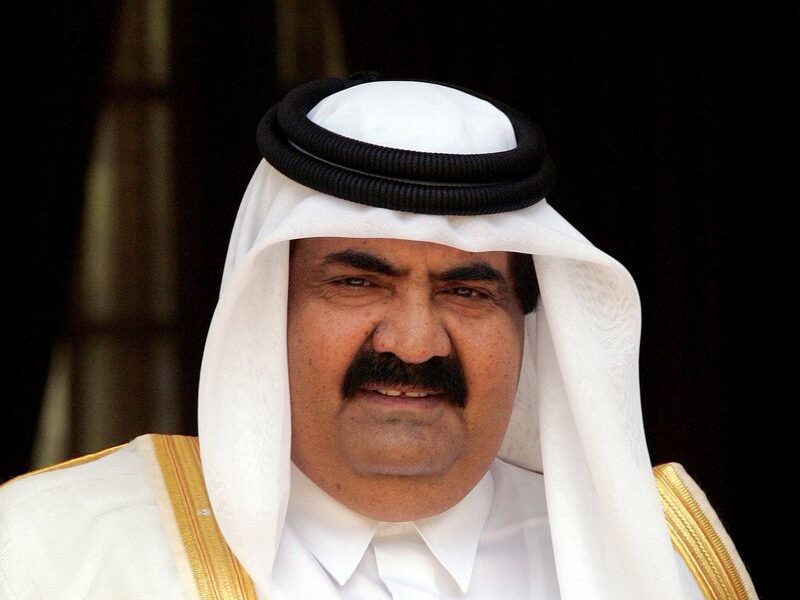
Qatar’s Seismic Shift: Reflecting on a Modernizer’s Reign Amidst Desert Sands
POLICY WIRE — Doha, Qatar — While other monarchies in the region clung to slow evolution, Qatar’s transition, largely engineered by one man, felt less like development and more like an outright...

POLICY WIRE — Doha, Qatar — While other monarchies in the region clung to slow evolution, Qatar’s transition, largely engineered by one man, felt less like development and more like an outright detonation. But a silent detonation, mind you, its tremors reshaping the Arabian Peninsula and, frankly, much of the wider Muslim world, for decades. Now, the architect of this grand experiment has departed the stage.
It’s an odd thing, contemplating the legacy of someone remembered primarily for how he assumed authority — and then how he later relinquished it. There wasn’t some slow build, you see. Instead, the story often circles back to the bloodless coup that saw him depose his own father in 1995. A neat trick, if you can pull it off without the usual fireworks. He was described by observers as a moderniser who seized power, and boy, did he live up to the moniker. His two-decade tenure, give or take, reshaped everything in this postage-stamp nation of Qatar. [QUOTE_PLACEHOLDER]
During his rule, Hamad wasn’t just building skyscrapers. He was building an entire geopolitical personality, funded by gas — lots — and lots of gas. We’re talking obscene amounts. Just to put a fine point on it, Qatar holds roughly 13% of the world’s proven natural gas reserves, making it the third-largest holder globally, according to data from the U.S. Energy Information Administration. That’s a lot of fuel for ambition, for better or worse. And he used it to catapult Qatar onto the world stage. They invested globally, from European banks to Hollywood studios. They even established Al Jazeera, creating a media powerhouse that fundamentally altered how news was consumed, debated, and even manipulated, across Arabic-speaking nations and beyond. Talk about throwing your weight around.
But how does one square that particular circle? You seize power in a fashion often deemed “old guard†and then you proceed to transform your nation into a high-tech, global player, a state that plays host to international conferences and commands diplomatic clout disproportionate to its size. He wasn’t shy about projecting Qatari influence, backing various factions and causes across the Middle East and North Africa, much to the chagrin of its larger, more conservative neighbors.
And his approach resonated far beyond the Gulf. In Pakistan, for example, a nation often wrestling with its own identity and regional allegiances, Qatar’s ascent served as a curious, often complex, counter-narrative to Saudi Arabian hegemony. Doha became a destination for political dialogue, a sort of neutral ground that felt less burdened by historical baggage for certain regional players. Pakistan’s relationship with the Gulf has always been a nuanced dance between petrodollars, religious kinship, and geopolitical strategy, and Hamad’s Qatar added another layer to that intricate negotiation. They’ve invested there, certainly, and you can bet that strategic alliances have always been on Doha’s radar, much like any state punching above its weight.
It’s interesting, too, that his abdication in favor of his son, Sheikh Tamim, was itself a move virtually unheard of in a region rife with hereditary succession, where rulers typically hang on until the very end. That transfer, a deliberate and relatively smooth transition, defied tradition, sending a message about planned stability, about looking ahead. He stepped aside, — and for a strongman who came to power via a coup, that’s quite the swan song.
📄 POLICY WIRE WHITEPAPER PUBLISHED: PAKISTAN'S NATIONAL SECURITY POLICY PRIORITIES
👉 READ BY CLICKING HEREWhat This Means
The passing of Sheikh Hamad bin Khalifa Al Thani, while perhaps not sending immediate shockwaves through current Qatari governance — since he’d already stepped down — serves as a moment for re-evaluating the foundation of modern Qatar. His reign wasn’t just about resource extraction; it was a conscious, almost brazen, reshaping of a desert nation into a soft-power titan. What you have here is a blueprint for how immense wealth, combined with audacious strategic planning, can project influence across continents.
For South Asia and the broader Muslim world, Qatar’s diplomatic forays under Hamad offered alternatives to traditional alliances, allowing smaller players a different table to sit at. We’re talking about a guy who bet big on media, sports, and brokering peace (or at least conversations) where others feared to tread. But there’s a downside to that high-wire act. The animosity from Saudi Arabia and the UAE, culminating in the 2017 blockade, stemmed directly from the assertiveness he cultivated. So, while his vision crafted a rich and influential state, it also left a legacy of delicate regional balancing acts for his successor to manage.
His departure forces us to ponder the longevity of such an aggressive foreign policy, and how a nation’s sheer economic power can challenge, or perhaps only momentarily disrupt, deeply entrenched regional hierarchies. Capital’s unwritten rules always catch up. He reshaped a desert, alright, but the geopolitical sands around it remain as shifty as ever. The impact of his policies, both domestically progressive and externally controversial, will continue to echo across the Gulf and beyond for years to come. Because power, as they say, never really dies; it just finds a new, often quieter, form.