

Stadium Showdown: Court Clears Field, But Ball’s Still Up in the Air for New Mexico United
POLICY WIRE — ALBUQUERQUE, N.M. — It was a win, undoubtedly. The appeals court handed New Mexico United a decision, saying a land grab—or rather, a rezoning—at Balloon Fiesta Park was perfectly above...

POLICY WIRE — ALBUQUERQUE, N.M. — It was a win, undoubtedly. The appeals court handed New Mexico United a decision, saying a land grab—or rather, a rezoning—at Balloon Fiesta Park was perfectly above board. Neighbors, of course, had pushed back, suggesting the local officials had skipped a few crucial steps in the whole rezoning charade. But hey, the court shrugged; it’s legal. Victory snatched from the jaws of procedural quibbles, right?
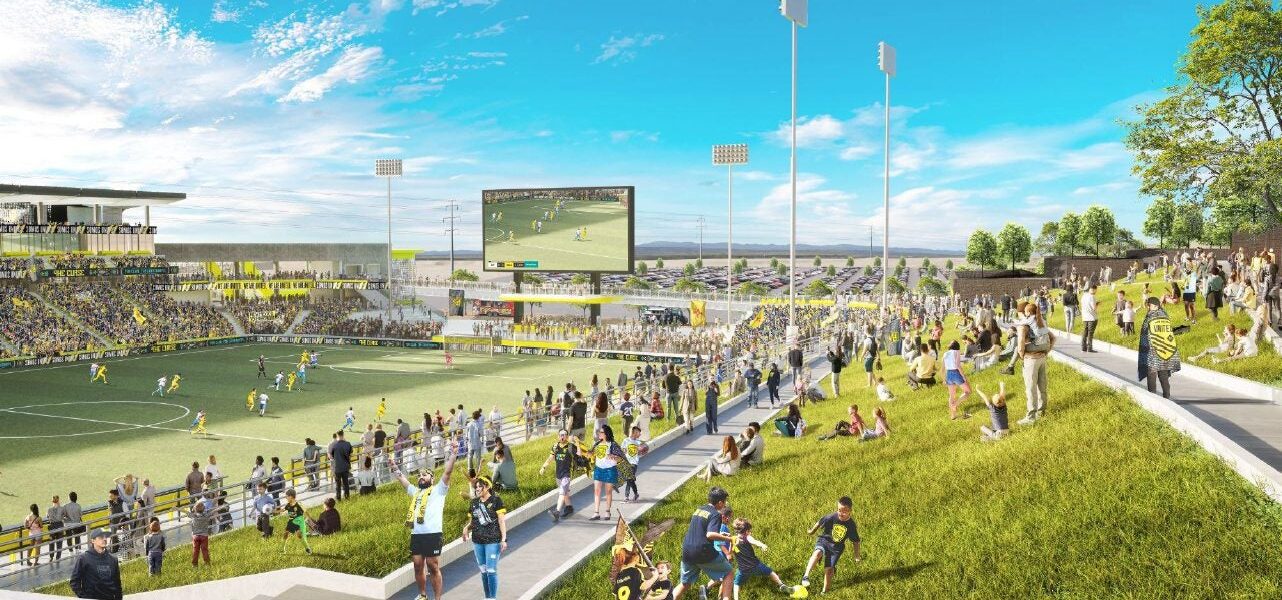
Only, like many a well-executed header that sails wide of the net, this legal triumph feels strangely anticlimactic. Because here’s the kicker, the bit that drains all the high-stakes drama from the judicial pronouncement: the team, New Mexico United itself, probably won’t even build there. The club offered no comment on Tuesday, which, let’s be honest, often means there isn’t much to comment on. It’s possible the team might not even need a stadium at Balloon Fiesta Park, was the official, if rather muted, takeaway from a scenario that has dragged on for months. [QUOTE_PLACEHOLDER]
It’s a strange theater, isn’t it? Communities grapple with municipal decisions, ordinary folks dig deep into their pockets for legal fees to challenge what they see as overreach, and the courts meticulously dissect regulations—all for a potential outcome that has, in the meantime, quietly pivoted elsewhere. Organizers behind the redevelopment of the New Mexico State Fairgrounds have floated the possibility of building a stadium for the United at that location instead. So, while justice, or at least a court’s interpretation of legality, was served, its actual impact on the cityscape could be minimal, a footnote in the grander scheme of Albuquerque’s urban development chess game.
And those neighbors, bless their litigious hearts? They could still potentially escalate their case to the New Mexico Supreme Court. But for what? To fight against a stadium that, by all accounts, might never rise from the dust at Balloon Fiesta Park anyway? It becomes less about preventing a stadium and more about affirming a principle, perhaps, or merely proving a point, no matter how Pyrrhic the ultimate victory.
Such urban planning squabbles, often veiled as legal disputes, aren’t exclusive to the arid landscapes of New Mexico. You see similar battles over land use — and public resources playing out globally. In rapidly expanding urban centers from Lahore to Kuala Lumpur, civic groups and residents frequently contend with opaque rezoning decisions, where public spaces or long-standing neighborhoods are eyed for new infrastructure or commercial ventures. Property rights become fluid, definitions of public good subjective. The court rejected the appeal from neighbors who questioned the steps taken during the rezoning process—a common thread in these global development narratives, where process, not just outcome, often forms the crux of dissent.
📄 POLICY WIRE WHITEPAPER PUBLISHED: PAKISTAN'S NATIONAL SECURITY POLICY PRIORITIES
👉 READ BY CLICKING HEREAnd let’s not overlook the economic undertones. Major sporting facilities, while touted as catalysts for growth, are also monumental financial undertakings. Industry analysts estimate a contemporary stadium for a professional soccer outfit like New Mexico United could easily cost north of $100 million. A 2022 report by the Stadium Development Institute estimated that the average legal cost for a challenged rezoning initiative regarding public land usage for private sports ventures hovers around $3 million, a figure that scarcely includes the lost opportunity costs or the emotional toll on the affected residents. It’s a big chunk of change for something that, ultimately, may just be a diversion.
But the real spectacle here, isn’t just the court ruling or the prospect of a new venue. It’s the constant churn of possibility, the fluidity of municipal plans, and the almost casual dismissal of a hard-won court case by the very entities it ostensibly benefited. It’s a good reminder that in the arena of city politics and large-scale development, few things are ever truly settled until the concrete is poured. For now, the ball’s still in play, just on a different pitch than initially expected. One might almost call it fandom’s fervor writ large on a municipal budget line.
What This Means
This ruling, though technically a victory for the United, presents a classic example of political entropy. The court affirmed a process, not necessarily a project. The immediate political implication is a temporary assuaging of anxieties for local government officials who might’ve faced backlash over an overturned rezoning. But this calm is likely fleeting. Moving the proposed stadium to the State Fairgrounds—a different beast entirely in terms of land use and public perception—will undoubtedly kick off a fresh round of local squabbling. We’ll see new neighbor groups forming, fresh legal challenges, and likely a completely different set of political calculations for the city council. The economic angle, too, gets muddied. Public investment, often justified by the long-term benefits of anchor developments, relies on stability — and clarity. This whole saga injects uncertainty, making it tougher to secure future public-private partnerships. Don⋵t forget the lingering costs of such litigation; they’re never truly gone. Ultimately, it’s a textbook case of how good intentions for economic development can become entangled in a bureaucratic and legal labyrinth, leading to potential delays and escalating costs, much like a protracted infrastructure project one might see debated in Karachi or Dhaka, where civic oversight is constantly tested by ambitious urban expansion plans.