


Fandom’s Fervor: How Sporting Triumphs Mask Regional Anxieties on a Global Stage
POLICY WIRE — Raleigh, USA — When the collective exhale of a state is audible, something bigger than a ball game is usually afoot. It's never just about who wins or loses—or who gets a shiny...

POLICY WIRE — Raleigh, USA — When the collective exhale of a state is audible, something bigger than a ball game is usually afoot. It's never just about who wins or loses—or who gets a shiny trophy—it's about us, isn't it? It's about belonging. Because amidst the ceaseless churn of international incident reports and economic data, a strange phenomenon occurs in places like North Carolina: a sudden, powerful surge of local pride, all hinged on the athletic feats of young men and one very loud fan base. And this week, a scattering of ESPY nominations have amplified that tribal yell, offering momentary distraction from, well, everything else.
It’s the usual story. Athletes, having done athlete things, now vie for mainstream accolades. We’re talking about collegiate stars — and an entire NHL team here. Former NC State soccer whiz, Donavan Phillip, grabbed a nod for best college athlete. You wouldn’t know it, but he now plays for the Colorado Rapids. Likewise, Duke’s Cameron Boozer—basketball, naturally—made the cut too. He just got selected third in this year's NBA draft. A formidable field indeed, completed by Penn State wrestler Mitchell Mesenbrink and Heisman winner Fernando Mendoza of Indiana University. [QUOTE_PLACEHOLDER]
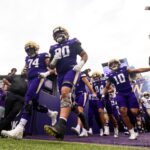
Phillip's ascent wasn't exactly sudden, though. NC State men's soccer head coach Marc Hubbard spoke on it. A dry assessment, really, but telling. The nomination itself, he mentioned, was "Another first. I haven't had an ESPY nomination for one of our guys." But it feels bigger. It does. Hubbard, who’s only in his second year, noted Phillip's "remarkable" growth. First year, "he scored six goals. And then, obviously, last year, scored, scored a lot. More than tripled his production," Hubbard detailed. In the 2025-2026 season alone, Phillip bagged 19 goals. His team even reached the NCAA Division I Men's College Cup, making it to the national championship match against the University of Washington. Quite the run, that. And even with all that, the coach feels "he hasn't reached his full potential yet." Phillip's agents—and presumably his mother—must concur. It's about being better, too. "We're very proud of what we've done so far. And very much harp on trying to be better people make better players," Hubbard observed. Noble sentiments, you might say.
But beyond the individual talents, the Carolina Hurricanes ice hockey team — Caniacs, they call 'em — also garnered national attention. A nomination for Best Team, after a Stanley Cup-winning 2025-26 season. And they didn’t just win; they really won. This championship, claimed in Las Vegas, brought the whole state—or at least the eastern part of it—to a full-throated roar. You wanna know about emotional investment? Hear it from superfan Mike "Big Mike" Whiting: "I remember starting the countdown. I couldn't finish. Tears just started coming out." Caniacs everywhere surely felt that. And talk about long-term potential: Whiting heard "one guy saying the Hurricanes have the best situation to repeat in any team since the 82-83 Islanders." Strong words, those. This squad, according to Whiting, just gets it. "This team has been together for so long. The core of the team feels like more of a team that, you know, their community can get attached to."
📄 POLICY WIRE WHITEPAPER PUBLISHED: PAKISTAN'S NATIONAL SECURITY POLICY PRIORITIES
👉 READ BY CLICKING HERETheir competitors in the Best Team category? A lineup that includes the 2025 Los Angeles Dodgers and the 2025-26 New York Knicks—a team that managed to break a 53-year championship drought. According to sports analytics firm StatMuse, this was the second-longest active drought in major North American sports prior to their win. Talk about stakes! Anthem singer Adam Lee Decker believes the Hurricanes are just getting started: "I feel like we're on the brink of a dynasty." Raleigh, North Carolina, stand by for global domination, then. "It's going to mean the world to Raleigh. It's going to mean the world to North Carolina. It's going to be great!"
What This Means
It's a familiar cycle: a regional win provides an ephemeral gloss over what are often more complex local issues. Think about how these sporting moments—the shared highs and lows—act as cultural pressure valves. When civic budgets are strained, infrastructure crumbles, or political squabbles fester, the communal catharsis of a championship win is surprisingly potent. It temporarily redirects collective energy. And in an increasingly fragmented world, these sporting spectacles become one of the few remaining legitimate avenues for unadulterated, unironic civic pride. Consider Pakistan, for instance, a nation often grappling with internal strife — and external perceptions. When their cricket team performs well on the international stage—say, at a World Cup—the surge of nationalistic unity, the feeling of shared identity, is immense. It's a temporary cessation of differences, a shared narrative of triumph. This isn't unique to the subcontinent, of course, but for developing nations, it takes on a particularly sharp edge, almost as if validating their place on a world stage where they feel, for a moment, recognized for excellence in something universally understood. Here, in the United States, that sentiment is slightly less existential but no less visceral. It helps local economies, too, if only marginally. People buy jerseys, they flock to victory parades, — and they talk. And talking, in a hyper-connected age, has a strange economic currency all its own. Talent, in sports as in economics, often migrates. But for a fleeting season, it belongs to the collective heart of a city.