


Cleveland’s Perpetual Dream: Another LeBron Chapter, or Just Wishful Thinking?
POLICY WIRE — Cleveland, USA — Not every fairytale gets a third act. But sometimes, when the script feels tired and the last performance fell flat, the old star—even if greyer around the...

POLICY WIRE — Cleveland, USA — Not every fairytale gets a third act. But sometimes, when the script feels tired and the last performance fell flat, the old star—even if greyer around the temples—still holds sway. Cleveland’s faithful, after a financially disappointing 2025-26 season that left them trailing even their once-eclipsed rivals, the New York Knicks (who, for the record, won the championship), are once again caught in that familiar cycle: the LeBron James rumor mill. And this time, it feels almost… inevitable.
It’s less a question of talent, more of gravity. The basketball universe, it seems, just keeps pulling James back to where it all began, regardless of the years—or the growing collection of playoff losses—stacked against him. His longevity, an almost singular anomaly in professional sports, is frankly baffling. At 41, when most NBA luminaries are years into broadcasting gigs or comfortably retired on tropical shores, James remains one of the most sought-after players in the league.
It’s an economic anomaly too; a market still clamoring for a product that defies traditional shelf-life expectations. [QUOTE_PLACEHOLDER]
Because, let’s be honest, the Cavaliers really bungled their previous run. After dealing for James Harden midway through the season, their hopes ballooned, only to be spectacularly deflated by the Knicks in the Eastern Conference Finals. So, for many, the idea of King James riding in to salvage another season isn’t just about winning games; it’s about restoring an almost-mythical narrative, even if that myth gets a bit heavier with each passing year. You can’t fault them, really. They’re still chasing ghosts.
Now, we’ve got team legends like Austin Carr wading into the speculation, stirring the pot with cautious optimism. He knows, perhaps better than anyone, what James means to the franchise—and its bottom line. He’s been around for all the ups, — and definitely for the many downs. Carr offered a revealing thought on SiriusXM NBA Radio: His presence will bring a lot of opportunities for us. Even though he’s 41 or 42, you still have to respect him on the floor. That opens space, — and that’s what we need,
Carr said on SiriusXM NBA Radio about a potential Cavs-LeBron reunion. It isn’t exactly a ringing endorsement of prime athleticism, is it? More like an acknowledgment of a residual gravitational pull—a Black Hole, perhaps, where defensive attention disappears.
But this isn’t the youthful phenom who burst onto the scene in 2003. And it’s not even the slightly grizzled, title-chasing veteran from 2014-2018. This is a James whose influence is perhaps more cerebral, more strategic, less about jaw-dropping dunks and more about orchestrating space. It’s a pragmatic view from within the Cavaliers organization, tempering the almost-religious fervor of the fan base. But what else would you expect?
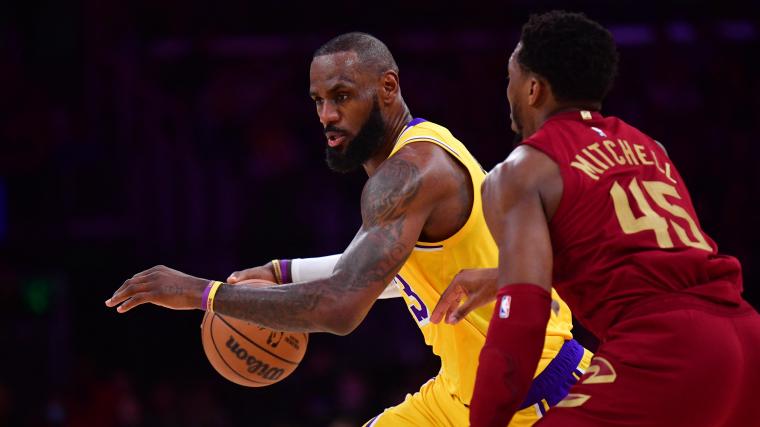
The burden, should he return, won’t fall solely on his broad shoulders this time. Donovan Mitchell and Evan Mobley? They’re going to be carrying the real weight, the day-to-day grind. James, it seems, would be more of a maestro, directing traffic and opening lanes, using his veteran guile rather than sheer physical dominance. It’s an arrangement that speaks volumes about the shifting landscape of elite sports, where experience can sometimes be more valuable than explosive youth—though preferably, you’d want both.
📄 POLICY WIRE WHITEPAPER PUBLISHED: PAKISTAN'S NATIONAL SECURITY POLICY PRIORITIES
👉 READ BY CLICKING HEREThe economic ripples of such a move, though, are far from subtle. A name like LeBron James still guarantees eyeballs, jersey sales, — and broadcast revenue. That’s a universal truth, whether it’s an NBA superstar or, say, the enduring appeal of cricketing legends in Pakistan. Just as a Shahid Afridi or Virat Kohli still command immense attention and economic pull long after their prime, the commercial power of such figures transcends mere athletic performance. The global sports media industrial complex—it’s got an insatiable appetite for star power, even if that star’s brightest luminescence has dimmed just a touch. These aren’t just athletes; they’re economic engines, their every move tracked, dissected, and monetized worldwide, from Lahore to Los Angeles. But, for now, the Cavaliers are still in wait-and-see mode. The anticipation, however, is already costing millions in digital impressions — and brand equity.
What This Means
A third LeBron James homecoming isn’t just a sentimental sports story; it’s a political and economic power play for Cleveland. Politically, it energizes a local population, boosting civic morale and offering a distraction from more mundane municipal woes—a strategy not unfamiliar to political leaders everywhere who leverage popular culture to connect with constituents. Think of the psychological uplift, the perceived validation it offers a region struggling with post-industrial narratives. Economically, the impact is undeniable: a guaranteed surge in ticket sales, merchandise revenue, local business patronage around the arena, and perhaps most importantly, media market visibility.
Consider the broader economic implications of star athletes across the Muslim world and South Asia, particularly in nations like Pakistan. High-profile athletes, often regarded as national icons, possess incredible leverage to drive investment, attract sponsorships, and even influence national branding. Their presence in a league or on a team can be a significant draw for tourism — and international business interest. James’s potential return to Cleveland isn’t just a basketball move; it’s an economic stimulus package disguised as a celebrity transfer, promising tangible financial benefits for the city, much like the broader, soft-power economic diplomacy exerted by beloved sports figures in other global contexts. It’s about more than basketball; it’s about municipal prestige and bottom-line economics, all wrapped up in a familiar narrative arc.