


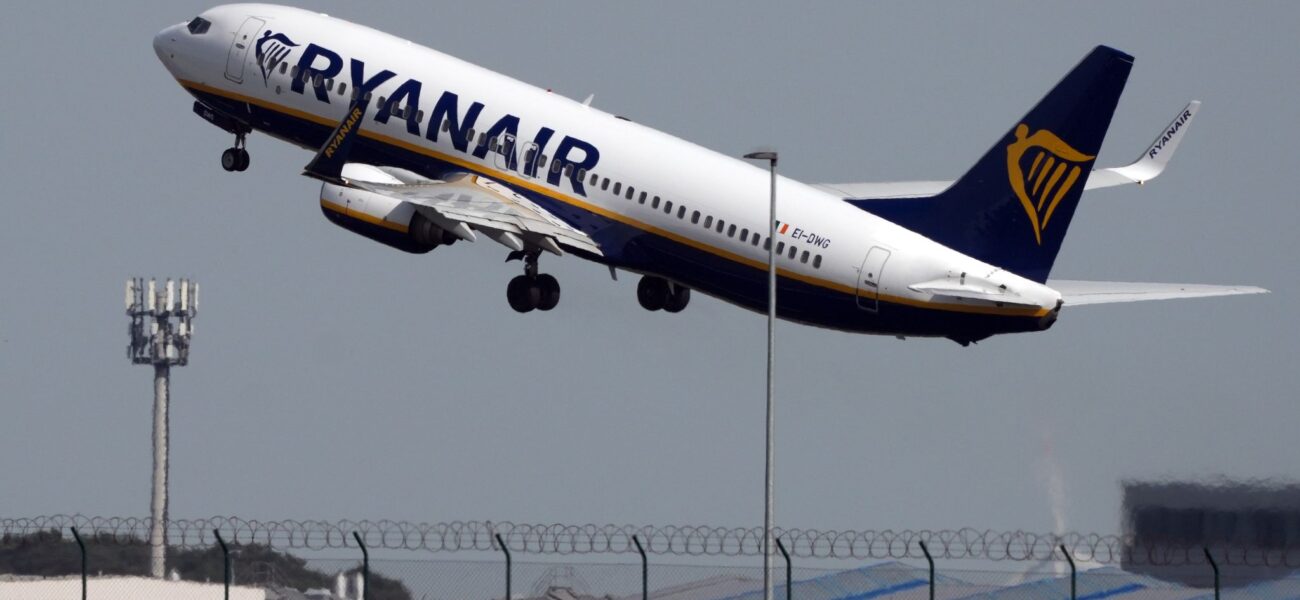
Europe’s Skies, Fractured Trust: Ryanair Incident Exposes Aviation’s Thin Air Margin
POLICY WIRE — London, UK — Most of us don’t really think about the invisible barrier that keeps us from the vacuum at 30,000 feet. We just trust it’s there. That’s the implicit...

POLICY WIRE — London, UK — Most of us don’t really think about the invisible barrier that keeps us from the vacuum at 30,000 feet. We just trust it’s there. That’s the implicit bargain you strike when you shell out forty quid for a Ryanair flight to some sunny escape. But sometimes, that faith gets rattled. Shaken, really.
It’s an image straight out of a disaster movie, yet it was painfully, terrifyingly real: a man clinging for life, nearly ripped from his seat by the sudden, savage force of a decompression. That’s what unfolded aboard a flight from Manchester, headed to Tenerife, earlier this week, sending a stark, chilling reminder that even the most routine of journeys can veer into the absurdly perilous. For passengers, it wasn’t just a bump in the air; it was a visceral brush with the outer limits of physics, played out in an economy-class cabin. That plane had to divert to Frankfurt Hahn, its scheduled path — and indeed, its structural integrity — compromised.
But how does a cabin ‘burst’? Because that’s what happened. Accounts from on board describe an explosive sound, a sudden drop in altitude, and the frantic scramble for oxygen masks. One window panel, or a portion of it, just gave up the ghost. Sarah Carter, whose husband, Rob, was seated closest to the compromised window, recounted the horror in hushed tones to Policy Wire. “He was just… gone,” she whispered, the memory still fresh — and raw. “He wasn’t in his seat anymore. He was against the window, the force was just incredible. I thought that was it. That’s how close we came.” The man, whose sheer presence of mind (or perhaps just sheer dumb luck, and a fast-acting crew) saved him from a truly grim end, suffered ear injuries. Others on board battled intense ear pain, nosebleeds, — and the gnawing anxiety that follows such a violent disruption.
And what of the regulatory watchdogs meant to ensure such terrifying occurrences remain in the realm of fiction? Officials are, predictably, on the case. “Every rapid decompression incident, however rare, triggers a thorough investigation into structural fatigue, maintenance records, and operational protocols,” stated a terse representative from the European Union Aviation Safety Agency (EASA), who asked not to be named due to ongoing inquiries. “We’re committed to understanding the precise mechanics of this failure to prevent recurrence.”
But for budget airlines, this isn’t just an engineering glitch; it’s a reputational hit. Passengers, whether jetting from Lahore to London or from Marrakech to Munich, instinctively assess risk when booking. Ryanair, for all its market dominance as Europe’s largest low-cost carrier, already operates on a knife’s edge of public perception—its safety record often viewed through the prism of its famously no-frills service. A single, dramatic incident like this reverberates, perhaps disproportionately. “You fly budget, you accept certain trade-offs,” observed a senior policy advisor from the International Air Transport Association (IATA), speaking anonymously. “But structural integrity isn’t supposed to be one of them. Public trust is fragile, especially in an industry that demands absolute confidence.” According to the Aviation Safety Network, incidents involving significant depressurization are rare, representing less than 0.5% of serious aviation occurrences globally, but their impact on passenger psychology is considerable.
📄 POLICY WIRE WHITEPAPER PUBLISHED: PAKISTAN'S NATIONAL SECURITY POLICY PRIORITIES
👉 READ BY CLICKING HEREIn a world grappling with hyper-connectivity — and global mobility, the incident’s echoes aren’t confined to Europe. Families across Pakistan and other South Asian nations rely on budget carriers for connecting flights, whether for employment in the Gulf or visiting relatives in Europe. The confidence—or lack thereof—in European safety standards affects a vast network of global travelers. When an airline known for its competitive pricing has a structural integrity issue, it casts a long shadow over the entire ecosystem of affordable global transit. It breeds a peculiar fiscal fury among consumers who pay less but expect safety as a given.
What This Means
This episode won’t immediately ground Ryanair’s entire fleet. Don’t be silly. But it *will* certainly spark a new wave of introspection, potentially forcing stricter inspections across Europe’s often cut-throat low-cost airline sector. For the traveling public, already weary from post-pandemic chaos and often skeptical of budget operators, it compounds a growing sense of unease. Economically, while one incident rarely craters an airline, a pattern could dent consumer confidence, shifting travel choices towards full-service carriers or even alternative transport, even for a short haul. Politically, European regulators will face renewed pressure to demonstrate their oversight is robust, not just on paper but in the very skies above the continent. It forces a critical look at the tension between competitive market pressures — and non-negotiable safety benchmarks. The global implications? A shared understanding of air safety standards, with a greater scrutiny placed on maintenance, extends to every passenger, regardless of their origin or destination. If you’re a passenger, whether from Manchester or Karachi, that’s what you’re paying for: the belief that the fuselage won’t just decide to spontaneously ventilate itself mid-flight.