


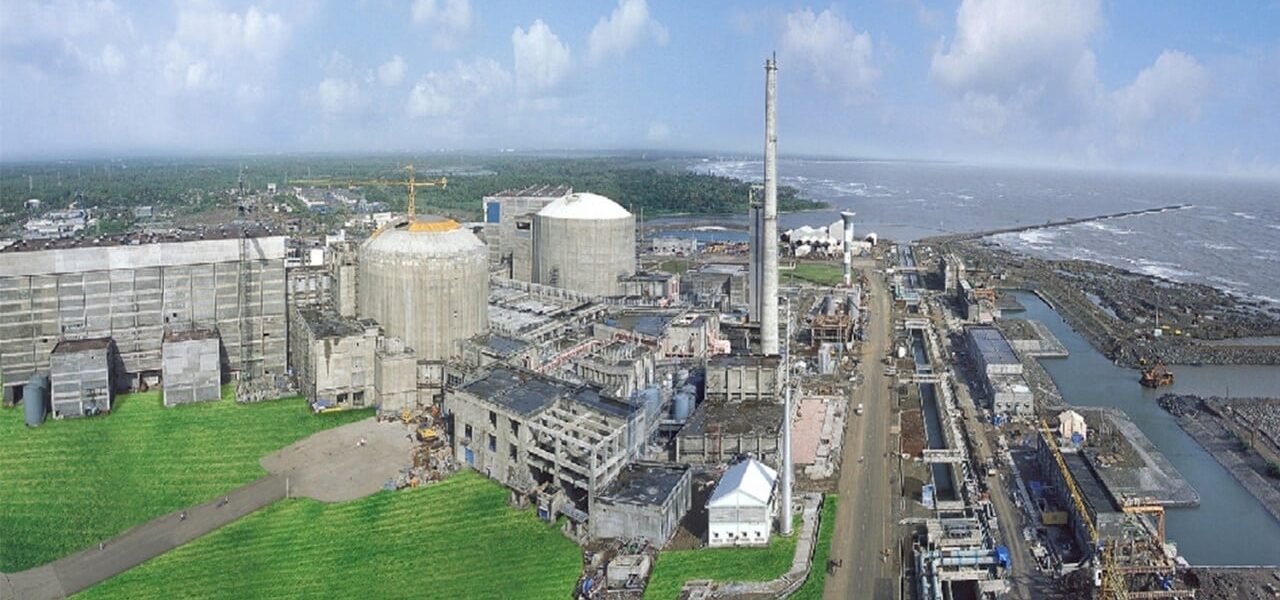
Canberra’s Yellowcake Diplomacy: A Geopolitical Gambit in the Indian Ocean
POLICY WIRE — Canberra, Australia — It wasn’t the kind of high-drama headline that sets the world ablaze, nor a geopolitical earthquake visible from space. But for folks who track the...

POLICY WIRE — Canberra, Australia — It wasn’t the kind of high-drama headline that sets the world ablaze, nor a geopolitical earthquake visible from space. But for folks who track the subterranean currents of power, a quiet agreement hatched last week between Australia and India speaks volumes. We’re talking about yellowcake here, the kind of stuff that lights cities—or worse, starts wars.
For years, folks in New Delhi have grappled with [QUOTE_PLACEHOLDER]. It’s the kind of long-term problem that haunts developing nations striving for industrial might and energy independence. This isn’t just about flipping a switch; it’s about powering an entire, burgeoning subcontinent. The very guts of India’s nuclear future—the actual fuel—has been a simmering question for ages, caught in a tangle of international politics and past nuclear ambitions (to put it mildly). It’s always been a tough nut to crack, trying to balance clean energy goals with global non-proliferation concerns. And they’ve certainly got ambitions, too.
So, the deal finalised with Australia last week? It’s huge, providing part of the answer to that persistent question. Australia, holding approximately 28% of the world’s recoverable uranium resources (Source: World Nuclear Association), has basically opened its vaults. This grants New Delhi access to [QUOTE_PLACEHOLDER], — and frankly, it’s been a long time coming. Years of diplomatic arm-wrestling—understandably—stalled things. Nuclear safeguards, or the lack thereof, caused significant international heartburn. But now? That’s all changed.
But the real juice here, the hidden meaning behind the paperwork, goes beyond kilowatt-hours. Experts suggest that the agreement will absolutely help India shore up fuel security for its planned nuclear expansion. No arguments there. What’s not said so loudly, what’s read between the lines, is that it’s also [QUOTE_PLACEHOLDER]. It’s a powerful nod towards India’s growing stature in the Indo-Pacific, a clear sign that major powers are willing to—let’s just say—accommodate its needs. It’s not a small thing when you’re talking about a commodity as politically charged as uranium. Trust, after all, isn’t freely given, especially in this game.
And here’s where things get complicated, particularly for Pakistan, sitting right next door. Anytime a major regional player like India beefs up its energy security, especially with something nuclear, its neighbors watch with extreme scrutiny. Historically, the nuclear programs of both India and Pakistan have been inextricably linked, a decades-long dance of deterrence and escalation. This uranium pipeline could be viewed by Islamabad as yet another tilt in the regional power balance—real or perceived—even if India’s stated intent is purely peaceful energy generation. But when have such intentions ever completely assuaged old rivalries? Regional security architectures are fragile things, — and any significant shift can set off alarm bells.
📄 POLICY WIRE WHITEPAPER PUBLISHED: PAKISTAN'S NATIONAL SECURITY POLICY PRIORITIES
👉 READ BY CLICKING HEREOne might wonder if this arrangement, carefully brokered and strategically significant, isn’t just swapping one set of problems for another. You see, while Australia provides the raw material, it’s not simply an economic transaction. It’s embedded deeply within broader geopolitical alliances, an increasingly multi-polar world trying to counterbalance emerging forces. Because, let’s be honest, nothing happens in a vacuum when you’re talking about nations like these.
What This Means
This uranium deal isn’t merely an energy supply chain solution; it’s a diplomatic tightrope walk with significant regional and international ramifications. Politically, it strengthens India’s hand, enhancing its image as a responsible—yet rising—nuclear power on the global stage, one whose energy demands cannot be ignored. Economically, securing a reliable uranium source from Australia could substantially de-risk India’s long-term energy projections, potentially attracting further foreign investment into its nuclear infrastructure. They’re investing heavily, too.
But the undercurrents are strong. For South Asia, the perception of an emboldened India, even in its civilian nuclear sector, will invariably influence Pakistan’s strategic calculus. Islamabad watches these moves keenly, ever conscious of its own security doctrine. This dynamic could compel Pakistan to reassess its own energy and strategic postures, perhaps seeking similar deals, or focusing on indigenous solutions. It isn’t a direct trigger for an arms race, no, not immediately, but it adds a fresh layer of complexity to already frosty relations. Any agreement concerning proliferation-sensitive material like uranium demands scrutiny, even when framed as ‘civilian’—history’s full of blurry lines. It shows that in today’s fractured world, even energy deals carry an enormous amount of political weight, reshaping regional power dynamics with every ton of yellowcake exchanged.