

From Hardwood to High Office: The Bizarre Pathway of Modern Political Ascension
POLICY WIRE — Washington, D.C. — We once watched sports for the sheer athleticism, a temporary escape from the mundane, or perhaps, for those of us with a keen eye, a metaphor for geopolitical...

POLICY WIRE — Washington, D.C. — We once watched sports for the sheer athleticism, a temporary escape from the mundane, or perhaps, for those of us with a keen eye, a metaphor for geopolitical machinations. But now? Now the court’s quite literally morphing into a launchpad for the Oval Office, or at least, the residence adjacent to it. It’s a brave new world, — and it smells faintly of locker rooms and campaign rallies.
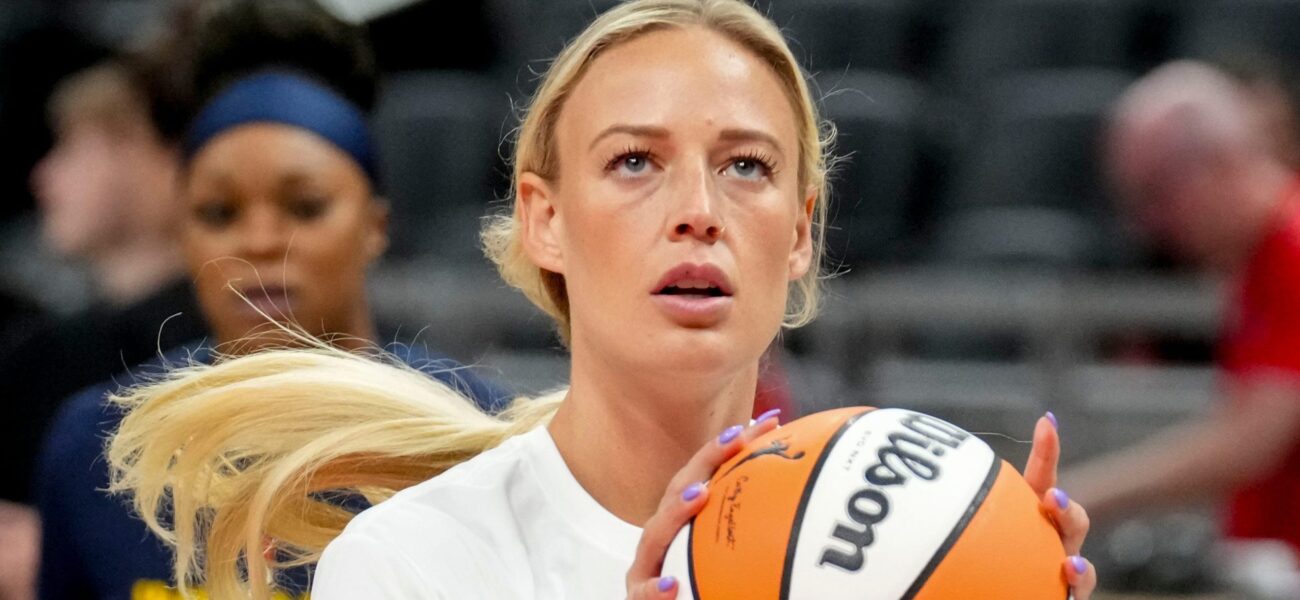
Take Sophie Cunningham. Until recently, she was primarily known for playing ball, albeit with increasing visibility. Her game for the Indiana Fever, where she’s embraced the role of Clark’s “enforcer,” caught eyeballs, certainly. But it wasn’t just her on-court performance that saw her star power rise enormously. We’re talking about an entire cultural juggernaut here, almost dizzying in its scope. She’s launched a podcast, joined USA Network as an active player analyst, and, wouldn’t you know it, even debuted as a UFC ring girl. Oh, — and yes, she became a meme, of course. This ain’t your grandma’s athlete; this is a brand, a multifaceted enterprise capable of navigating multiple, often contradictory, media ecosystems.
But here’s where the netball gives way to real politics. Cunningham has also shown a willingness to talk about controversial issues in the WNBA, even when comments get her into trouble. That takes a particular kind of temperament, a media savvy often found more in political war rooms than on professional basketball rosters. And while she’s apparently bristled from at fans linking her to the MAGA movement or Donald Trump directly (some fans call her “MAGA Barbie”), a recent non-answer — a masterful deflection, if you ask me — regarding the current administration, using her viral finger-pointing meme, set tongues wagging. It just reignited talks about her political affiliations. In short, she’s not just playing a game; she’s playing the game, the grand one.
And because this is America, and our national conversation always circles back to presidential ambition, an ESPN Page 2 writer, Chuck Klosterman, finally put the thought into words. He has predicted that Cunningham will be on a presidential ticket within the next 25 years. This isn’t just idle chatter; it’s a bellwether for the increasingly blurred lines between celebrity — and statesmanship. Klosterman, in an appearance on The Bill Simmons Podcast, wasn’t shy about it. “Sophie Cunningham … I’m going to say 2050, is going to be Vice President of the United States,” he declared, without a hint of genuine trepidation. He conceded, “I don’t know what party she’ll be in, I don’t know anything about her political views. But she will be the vice presidential candidate, at least the candidate.” Quite the prognostication, isn’t it?
Why this athlete, specifically? Klosterman mused, [QUOTE_PLACEHOLDER] That [QUOTE_PLACEHOLDER] seems to be the golden ticket these days, never mind any inconvenient policy papers. Because, in this attention economy, likability often trumps substance.
Now, in fairness, we probably ought to take Klosterman’s prediction with a grain of salt, considering his immediate admission that he knows little about her political leanings or ambitions. That said, what used to be a caveat now sounds like a job description. We’re in a cultural climate where celebrities have become prime Presidential candidates—they’ve always been; it’s just more pronounced now—and with the White House already having been home to one female vice president, Cunningham could end up being a pretty savvy prediction. It points to a deep, perhaps irreversible, shift in what we expect, or what we’ll accept, from our leaders. And she seems willing to get her hands dirty both on the court — and when it comes to dealing with the media.
📄 POLICY WIRE WHITEPAPER PUBLISHED: PAKISTAN'S NATIONAL SECURITY POLICY PRIORITIES
👉 READ BY CLICKING HEREWhat This Means
This evolving narrative, the seamless segue from sports celebrity to political prospect, presents some rather stark political and economic implications. Politically, it further erodes the traditional pipeline of public service—no long stints as governor or senator needed, just a sufficiently compelling personal brand. We’re moving towards a politics of personality, where a well-curated social media presence might hold more sway than years of policy experience. A 2023 study by the Institute for New Media Research indicated that 62% of young American voters (18-34) report getting most of their political news through non-traditional, entertainment-focused platforms.
For onlookers in Islamabad or Jakarta, the sheer theatricality of American politics has always been a point of fascination, sometimes confusion. The idea that a basketball player, famous for aggressive play and modeling gigs, could be taken seriously as a vice-presidential candidate speaks volumes about America’s current political landscape. It paints a picture of a nation where performative appeal often overshadows policy depth, and that perception, whether accurate or not, colors global perspectives on U.S. soft power and governance. When the discourse blurs entertainment and governance so aggressively, it invites an entirely different kind of scrutiny—and sometimes, skepticism—from abroad.
Economically, it’s about monetizing attention. Political influence becomes another revenue stream, integrated into the personal brand’s diversified portfolio. One day it’s brand endorsements; the next, it’s policy proposals. It highlights an emerging reality where politicians aren’t just leaders but, arguably, influencers—commanding vast swathes of public attention, which is, in the digital age, a form of capital itself. This blending of spheres isn’t new—we’ve seen former presidents leverage their media platforms for continued influence—but it’s certainly accelerating, creating a strange marketplace for political legitimacy. It makes you wonder: if a professional athlete can be Vice President in 2050, what kind of qualifications will they ask for by 2075?